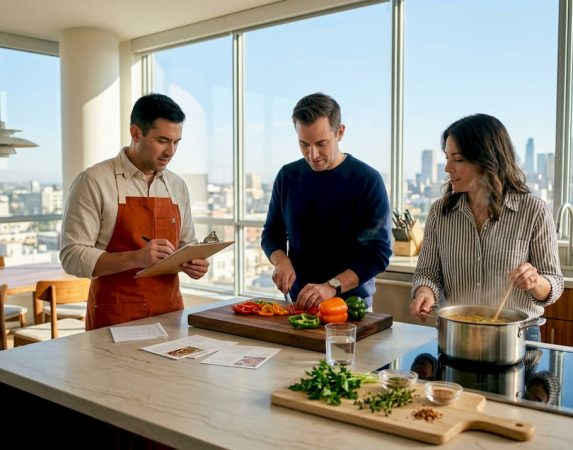
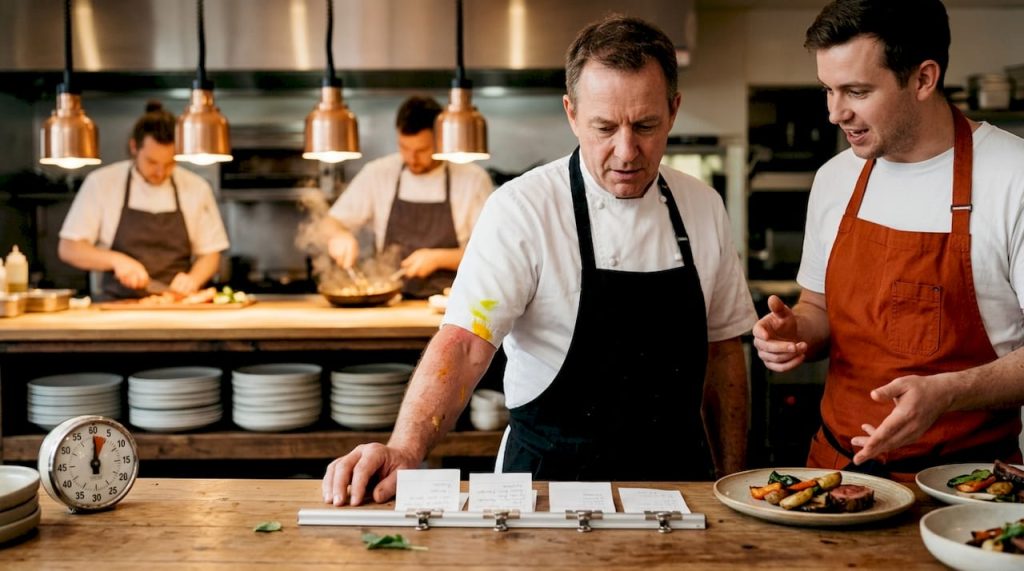
Shared cooking does something measurable to a team. Research confirms that shared meals boost wellbeing by 0.2 points on a standardized scale, a gain comparable to economic improvements in quality of life. Yet many culinary leaders still treat team dynamics in cooking as a soft skill, something nice to have rather than a strategic lever. That framing is wrong, and expensive. Whether you’re running a brigade kitchen or designing a team-building program, understanding how communication, role clarity, trust, and collaboration intersect inside cooking environments is the foundation of every high-performing culinary team.
| Point | Details |
|---|---|
| Social cooking improves wellbeing | Sharing at least one more meal weekly produces measurable gains in wellbeing and team cohesion. |
| Role clarity reduces service failures | Clearly defined stations and responsibilities cut errors and prevent mid-service confusion. |
| Psychological safety unlocks performance | Teams that speak up without fear report problems earlier and adapt faster under pressure. |
| Communication layers matter | Combining verbal cues, hand signals, and digital systems reduces noise and cognitive load during service. |
| Experiential activities build empathy | Cross-training and role rotation grow mutual respect faster than any classroom briefing. |
“Team dynamics” is not jargon for good vibes. In a culinary context, it refers to the live system of communication, trust, role behavior, and coordination that determines whether 200 covers go out on time or fall apart at the pass.
The traditional brigade system, developed by Auguste Escoffier, gave every cook a defined station and a clear chain of command. That structure solved a real problem: coordinating many specialists under extreme time pressure. But modern kitchens favor a flatter model where cross-trained staff rotate stations weekly, reducing burnout while building what operators now call total kitchen knowledge. Flexibility, not just discipline, drives performance.
The psychological layer is equally real. Psychological safety in kitchens is not about being soft. It is the ability to flag a mistake or voice a concern without fear of humiliation. When that safety exists, errors get caught before they reach the guest. When it does not, staff go quiet and problems cascade.
Here is how traditional and modern kitchen team structures compare across the factors that matter most:
| Factor | Traditional brigade | Modern adapted model |
|---|---|---|
| Hierarchy | Rigid top-down chain of command | Flatter, with shared leadership at stations |
| Specialization | Fixed station expertise | Cross-trained generalists with rotation |
| Communication | Verbal commands, strict formality | Hybrid verbal, digital, and non-verbal cues |
| Error reporting | Suppressed by fear of rank | Encouraged through psychological safety norms |
| Staff flexibility | Low, station-specific | High, reduces burnout and coverage gaps |
| Team cohesion | Earned through tenure and rank | Built through collaboration and shared experience |
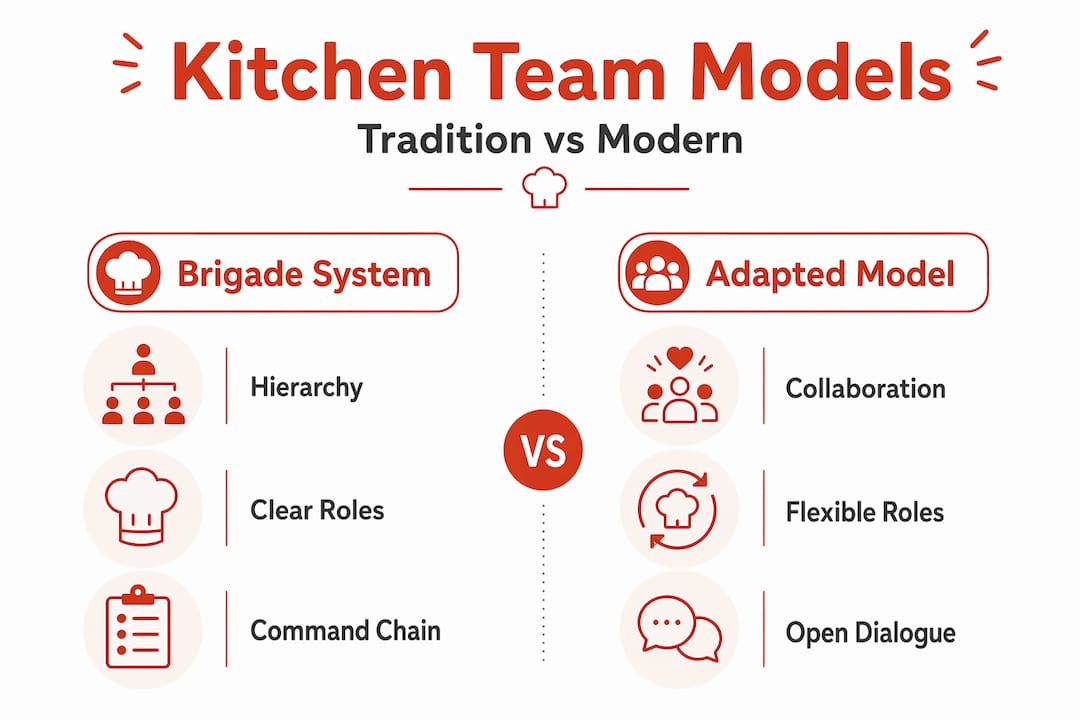
Understanding which model you are actually running, or which blend, is step one to intentional improvement.
Experiential learning works because it puts people in situations where they need each other to succeed. Cooking team-building events improve empathy and social bonding in ways that role-play exercises and lectures simply do not replicate. When a line cook runs the expo station for an afternoon, their entire relationship with the front-of-house changes.
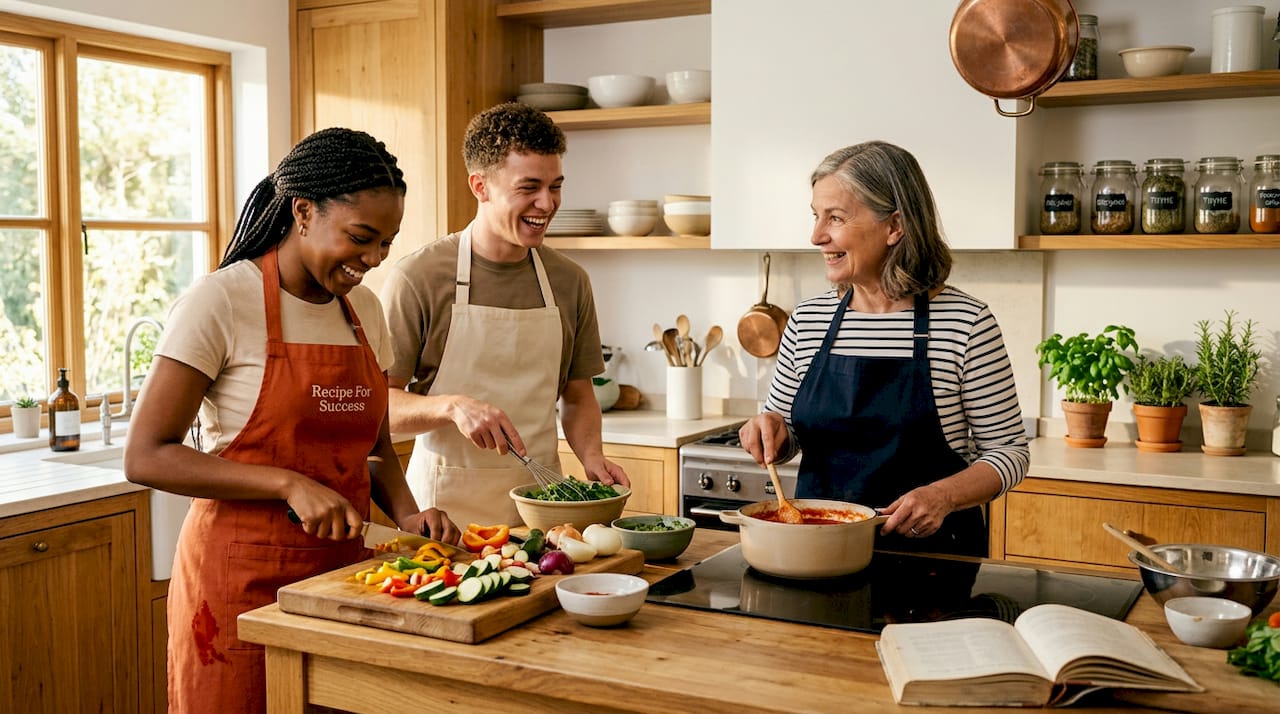
Cross-training programs increase mutual respect among kitchen staff because they replace assumption with direct experience. A pastry cook who has prepped the fish station once will never complain about ticket timing the same way again.
Effective collaborative cooking activities include:
Pro Tip: When designing these activities, mix roles intentionally. Put your most senior cook with your newest hire and give the newer team member a decision-making role. The output will be uneven, but the relationship gains will be lasting.
Research on shared meals and cognitive health reinforces why these activities matter beyond just fun. Social eating is as important to cognitive function as nutrition itself. Building cooking rituals into your team culture is an investment in how well your people think and connect.
A professional kitchen runs on layered communication, and getting those layers wrong is the fastest way to turn a Friday night service into controlled chaos.
The most effective kitchens use what researchers call a hybrid communication architecture. That means combining verbal commands, hand signals, push-to-talk radio, and digital kitchen display systems so that no single channel becomes a bottleneck. Each method has a specific function: verbal for real-time coordination, non-verbal for quiet acknowledgment, digital for order tracking and allergy flagging.
Miscommunication triggers cascading service failures, especially between the front of house and back of house. An 86 notification that does not reach the floor becomes a complaint. An allergy flag that bypasses the expeditor becomes a health incident. Building redundancy into your communication system is not overcautious. It is professional.
Here is a practical setup for a high-volume kitchen:
Pro Tip: Noise pollution is a real performance drain. Assess your kitchen’s decibel environment during peak service and identify which communication channels break down first. That is your biggest operational vulnerability.
Culture in a kitchen is not what you post on the staff board. It is what the executive chef does when a prep cook makes a mistake on a Saturday rush.
The TEAMS Code framework from Unilever Food Solutions offers a practical anchor for building positive kitchen culture. It centers on trust, empathy, accountability, mentorship, and safety. What makes it useful is its insistence that vulnerability from leaders is not weakness. It is the prerequisite for psychological safety in the team.
Practical leadership behaviors that sustain strong group dynamics in cooking environments:
Pro Tip: Managing multi-generational teams means recognizing that your sous chef and your newest culinary school graduate have fundamentally different expectations about feedback, recognition, and hierarchy. Neither is wrong. Your job is to create a system that serves both.
Not all team-building cooking events are created equal. The ones that actually shift cooking team collaboration have a clear operational intention behind the fun.
When designing or selecting a culinary team-building experience, match the format to the gap you are trying to close.
| Format | Best for | Key benefit | Ideal group size |
|---|---|---|---|
| Competitive cook-off | High-energy teams needing trust under pressure | Decision-making, role negotiation | 10 to 30 |
| Collaborative set menu | Cross-department groups | Communication and shared ownership | 8 to 20 |
| Chef-led technique workshop | Skill building with social bonding | Respect for expertise, shared learning | 6 to 16 |
| Family meal rotation | Ongoing internal team culture | Ownership, pride, cost awareness | Any size |
| Tasting and critique session | Culinary teams needing honest feedback practice | Constructive communication habits | 6 to 12 |
After any event, build in 15 minutes of structured reflection. Ask teams to name one thing they noticed about how the group communicated and one thing they would change. Reflection is where experiential learning solidifies into behavior change. Without it, you just had a fun afternoon.
Pro Tip: Measure impact by tracking two things before and after: a quick team communication survey and error rates during service for the following four weeks. The correlation is usually visible and gives you concrete data to justify future investment.
Explore culinary team building ideas for specific formats that map to real operational goals.
I’ve watched a lot of well-intentioned kitchen leaders run team-building events that feel great in the moment and change nothing by Monday. Here is what I’ve learned separates the ones that stick from the ones that evaporate.
The biggest mistake is treating team dynamics as a one-time fix. You run the event, the team laughs, bonds form over a shared plate of food. Then service resumes under the same communication habits, the same unchecked hierarchy, and the same deferred conflict. The event was real. The follow-through was absent.
What I’ve found actually works is treating the cooking experience as a diagnostic, not a solution. When I observe a team during a collaborative cooking activity, I am watching who speaks first, who defers without contributing, who takes over when pressure builds, and who goes quiet when something goes wrong. That is live data about your team’s communication structure and psychological safety. The activity surfaces what daily service hides.
The other thing I’d push back on is the assumption that the brigade system is inherently the problem. Structure is not the enemy of positive team dynamics. Rigidity is. The leaders I respect most run tight ships with clear expectations and also create enough safety that a line cook can say “I think we have a problem” without bracing for impact.
Blend the two. Build the structure. Protect the safety. Then cook something together and watch what you learn.
— David
Recipeforsuccess designs chef-led culinary team-building experiences built specifically for professional kitchen teams and corporate groups who want results, not just a fun night out.
Whether your team needs to sharpen communication, rebuild trust, or develop cross-role empathy, our programs are built around the principles covered in this article. Explore our culinary team-building challenge to see how a structured, facilitated cooking event can shift the way your team works together. Ready to see the difference? Start cooking with us and turn your next team gathering into something that actually moves the needle.
Team dynamics in cooking refers to the patterns of communication, role behavior, trust, and coordination that determine how effectively a culinary team performs together under pressure.
Shared cooking activities require real-time communication, role negotiation, and mutual support, building empathy and respect faster than most classroom or meeting-based approaches.
Psychological safety means team members can flag mistakes or voice concerns without fear of humiliation, a condition that structured feedback and leadership vulnerability actively build.
A quarterly structured experience paired with ongoing micro-practices like family meal rotations and post-service debriefs delivers more lasting benefit than a single annual event.
An effective event has a clear team development goal, mixed role groupings, a facilitated reflection period, and measurable follow-up tied to real service performance metrics.