Corporate events built around food have a way of cutting through the usual awkwardness faster than any icebreaker exercise. Yet most event planners and executives keep recycling the same catered dinner or happy hour format, and teams notice. The search for truly innovative culinary event ideas has never been more pressing. When you upgrade the experience, you upgrade the connection. What follows is a practical, creative guide to the culinary event formats that actually move the needle on team bonding, company culture, and lasting engagement.
| Point | Details |
|---|---|
| Match format to goals | Choose between immersive, interactive, or thematic formats based on whether you prioritize bonding, creativity, or skill-building. |
| Pacing is a design tool | Timed entry slots and synchronized service reduce friction and create a more cohesive shared experience for participants. |
| Place-based themes go deeper | Seasonal and location-specific narratives create stronger team connections than generic food themes. |
| Interaction beats observation | Hands-on cooking challenges and collaborative tasks consistently outperform passive dining for team engagement. |
| Operational feasibility matters | The best culinary event concept fails if the venue, budget, or logistics cannot support it. |
Before you book a chef or pick a theme, you need a clear picture of what success looks like for your team. The culinary events industry, sometimes called experiential gastronomy, covers everything from passive tasting dinners to full-blown cooking competitions. The format you choose should reflect your goals, not just what looks exciting in a brochure.
Start by asking these questions:
The best events align thematic cohesion with operational reality. A stunning concept that falls apart at the execution stage leaves a worse impression than a simpler idea done perfectly.
Pro Tip: When evaluating creative food event concepts, write down three words that describe how you want your team to feel at the end of the event. Use those words as a filter for every decision, from the menu to the venue lighting.
This is where experiential gastronomy gets genuinely exciting. Immersive dining goes beyond good food. It wraps the entire meal in a sensory environment designed to suspend disbelief, reduce distractions, and draw people together.
The Hypnos-style dinner format is one of the most compelling models in this space. Guests sit at 11 seats for two hours with staggered 20-minute entry slots and service choreographed like a performance. Every gesture, every pour, every course follows a ritualized sequence. The result is choral participation. Everyone experiences the same moment at the same time, which creates a shared memory that generic dinners simply cannot manufacture.
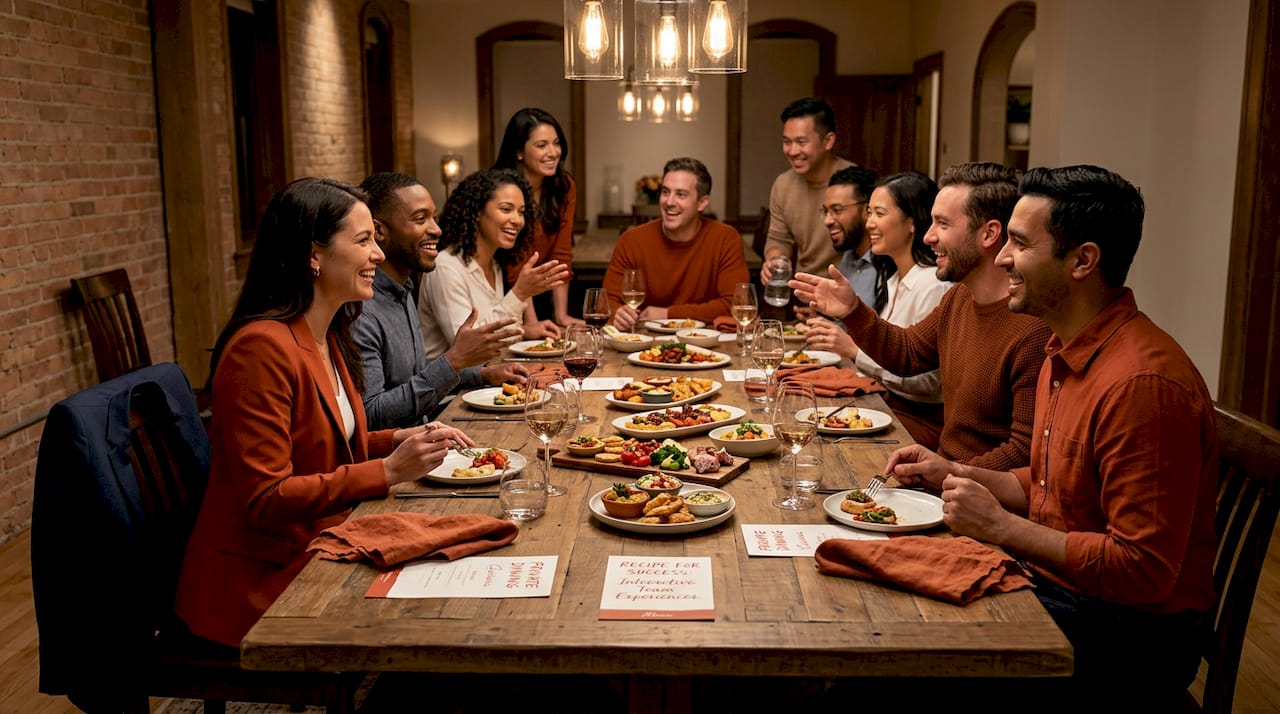
Timed entry and synchronized service also reduce social friction. Guests who might normally cluster with familiar colleagues are guided into a collective rhythm, breaking down the invisible barriers that persist even in tight-knit teams.
Other standout formats worth your attention:
The common thread across all of these is that variety and discovery throughout the event matter more than the menu itself when it comes to keeping people engaged and eager to return.
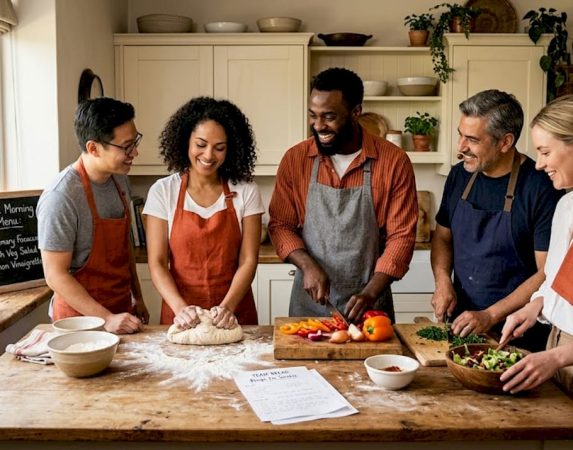
If immersive dining is about being transported, interactive cooking is about rolling up your sleeves and building something together. This is the format that culinary team-building activities are built around, and it is consistently the most effective option for strengthening relationships within corporate groups.
Here are four formats that deliver real results:
Chef-led cooking classes with team-based tasks. A professional chef divides the group into small teams, each responsible for one component of a larger dish. The meal only works if every team succeeds. That shared dependency mirrors real workplace dynamics in a low-stakes, high-fun environment. Picking the right recipes for this format is more nuanced than it looks. Dishes that are too simple remove the challenge. Dishes that are too technical create frustration.
Food station challenges with customizable outcomes. Set up multiple stations with ingredients and a brief. Teams create their own dish within a loose framework. This format rewards creativity and gives quieter team members a chance to lead in their area of strength. It is one of the most flexible food tasting event ideas for mixed-skill groups.
Cooking competitions with friendly judging. A structured cooking competition format works particularly well for companies with competitive team cultures. Keep the judging criteria fun and subjective. “Best presentation” and “most creative use of ingredients” land better than technical scores that create winners and obvious losers.
Narrative-driven shared meals. Build a meal around a story. A Mediterranean night where each course represents a different port of call. A harvest dinner where every dish traces back to a single local farm. When food tells a story, conversation flows naturally, and the event becomes something people actually talk about later.
Pro Tip: Design your culinary event workflow so that teams spend no more than 15 minutes waiting between active tasks. Dead time is where energy goes to die at corporate cooking events.
Not every format works for every team. This comparison gives you a quick reference for matching the right experience to your specific situation.
| Format | Best team size | Interaction level | Budget range | Ideal for |
|---|---|---|---|---|
| Immersive multisensory dinner | 10 to 30 | Moderate, guided | High | Executive retreats, culture events |
| Black-light themed dinner | 15 to 50 | Low to moderate | Medium | Creative industries, holiday parties |
| Open-fire cooking festival | 50 or more | Low to moderate | High | Large company gatherings, offsites |
| Chef-led cooking class | 10 to 40 | High | Medium | New team onboarding, team bonding |
| Cooking competition | 20 to 100 | Very high | Medium | Sales teams, quarterly kick-offs |
| Farm dinner with exploration | 20 to 60 | Moderate to high | High | Leadership retreats, culture-building |
Immersive formats reward smaller groups. The more intimate the setting, the more powerful the shared experience. Open-fire and festival-style programs scale beautifully but require significant venue logistics and coordination across multiple activity zones.
Thematic coherence matters more than most planners expect. An event with a clear narrative thread, whether that is place, season, or story, consistently outperforms a well-catered event with no connective tissue. Seasonal food event themes give you that thread built in. A winter harvest dinner, a spring farm tour, or a summer open-fire night all carry an emotional context that a generic “team dinner” never can.
For teams that have done multiple corporate events and are looking to surprise people, the chef-led experiences that blend structured instruction with open-ended creativity tend to generate the strongest feedback. People love learning something real, not just playing pretend chef.
I have seen beautifully designed events fall flat because the pacing was off. And I have seen simple cooking nights become genuinely memorable because someone thought carefully about the story they wanted to tell.
The formats that create lasting team bonds share one quality: place-based narratives with physical exploration paths before the meal. When people move through a space and discover where their food comes from, they arrive at the table with something to talk about. The conversation is already alive before the first course lands.
My honest take on operational feasibility is this: ambition is good, but execution is everything. I have watched teams get seduced by a spectacular concept and underestimate what it takes to pull it off. Start with a format your venue and budget can fully support, then push the creativity within those constraints.
The biggest mistake I see is treating the food as the event. The food is the vehicle. Connection is the destination.
— David
If you are ready to move past the standard catered dinner, Recipeforsuccess makes the next step easy. Their culinary team building programs are built specifically for corporate groups who want real engagement, not just a nice meal. Every experience is chef-led, fully facilitated, and customizable to your team’s size, culture, and goals.
Whether you are planning an executive retreat, a quarterly offsite, or a company-wide celebration, Recipeforsuccess offers collaborative cooking experiences designed to spark creativity and strengthen relationships. Their team handles the logistics so you can focus on showing up and enjoying the experience alongside your colleagues. Visit Recipeforsuccess to explore formats, browse program options, and start cooking up something your team will actually remember.
An innovative culinary event goes beyond good food to create a shared experience through immersive design, pacing, and storytelling. Formats that engage multiple senses and encourage participation consistently outperform passive dining.
Cooking competition formats divide participants into small teams with a shared cooking challenge, judged on creativity and collaboration rather than technical skill. They work especially well for competitive team cultures and larger groups of 20 or more.
Immersive multisensory dinners with limited seating, around 10 to 30 participants, create the strongest shared experience for small groups. The intimate format makes every moment feel intentional and personal.
Thematic coherence ties every element of the event together into a story, making the experience more memorable and emotionally resonant. Seasonal or place-based themes give teams a shared reference point that keeps conversation flowing naturally.
Yes. Cooking competitions and multi-station challenge formats scale well to groups of 50 to 100 participants. Festival-style open-fire events with rotating chefs and themed stages work effectively for even larger gatherings.