If you’ve ever stared at a pile of groceries and had no idea what to do next, you are not alone. Learning how to start cooking at home feels intimidating at first, but the truth is that a few simple tools, two or three reliable recipes, and a willingness to try will get you further than you think. This guide strips away the noise and gives you exactly what you need to build real confidence in the kitchen, one meal at a time.
| Point | Details |
|---|---|
| Start with minimal equipment | A sharp knife, cutting board, skillet, and saucepan cover almost every beginner recipe you will need. |
| Master four core techniques | Sautéing, roasting, simmering, and seasoning unlock hundreds of everyday meals without advanced skills. |
| Practice a small recipe set | Rotating 2 to 3 simple recipes builds familiarity and real confidence faster than trying something new every night. |
| Prep before you cook | Setting up ingredients in advance (mise en place) reduces stress and prevents most common beginner mistakes. |
| Home cooking pays off fast | Cooking at home just a few nights a week leads to measurable health and mental well-being improvements within weeks. |
Before you cook a single thing, you need the right foundation. The good news? You do not need much. A sharp chef’s knife, cutting board, heavy skillet, and medium saucepan cover 99% of beginner recipes without expensive equipment.
Resist the urge to fill your cart with a mandoline, a stand mixer, or a set of specialty pans. Those tools have their place, but buying them early pulls your attention away from learning actual skills. Focus on quality over quantity.
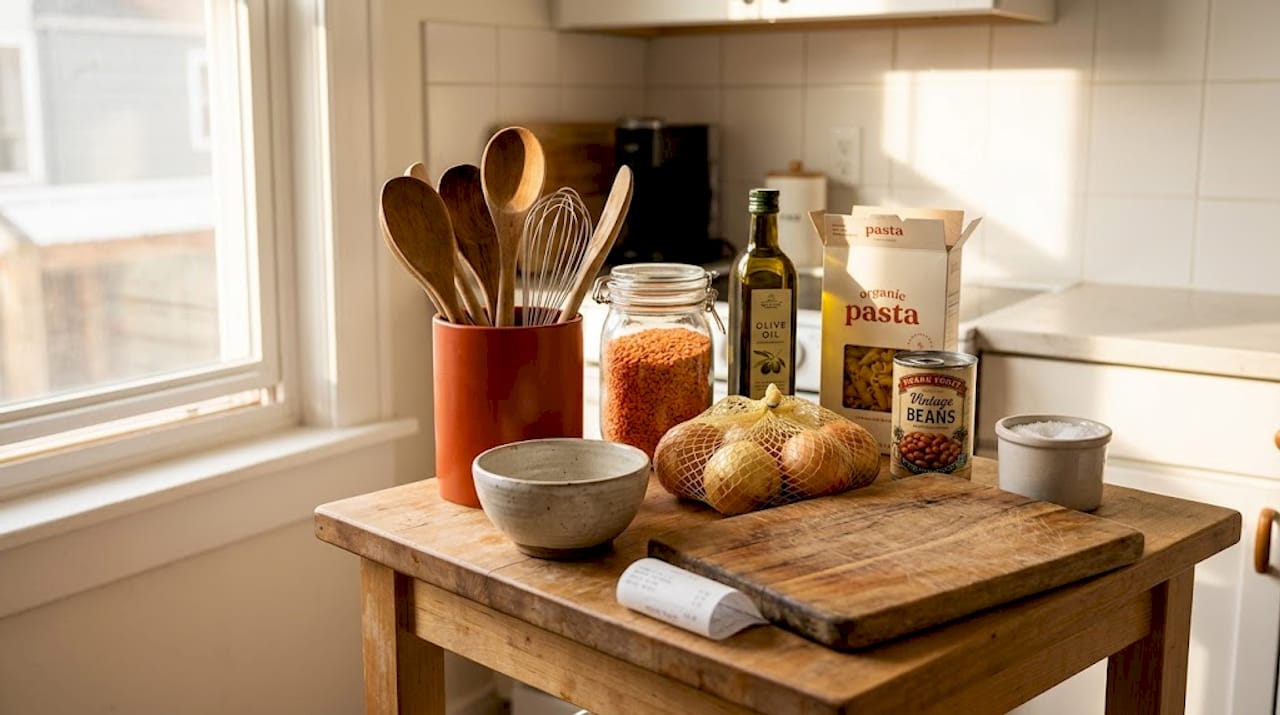
Stock these and you can make hundreds of simple meals:
With these on hand, you can make pasta, soups, grain bowls, stir-fries, and more without a last-minute grocery run.
| Tool | Why you need it |
|---|---|
| Chef’s knife (8-inch) | Handles chopping, slicing, and mincing for almost every recipe |
| Cutting board | Protects your counters and keeps prep safe |
| 10-inch skillet | Perfect for sautéing, frying, and one-pan meals |
| Medium saucepan | Ideal for soups, grains, pasta, and sauces |
| Sheet pan | The easiest way to roast vegetables and proteins |
Pro Tip: Set up your mise en place before you turn on the stove. Prepping ingredients in advance prevents the frantic multitasking that causes burning and missed steps. Chop everything, measure everything, and then cook.
Here is something most beginner cooking guides get wrong: they teach recipes instead of techniques. Recipes are just combinations of a handful of core methods. Learn those methods, and you can cook almost anything.
Sautéing, roasting, simmering, and seasoning are the four techniques that unlock most common weeknight meals. Here is what each one means in practice.
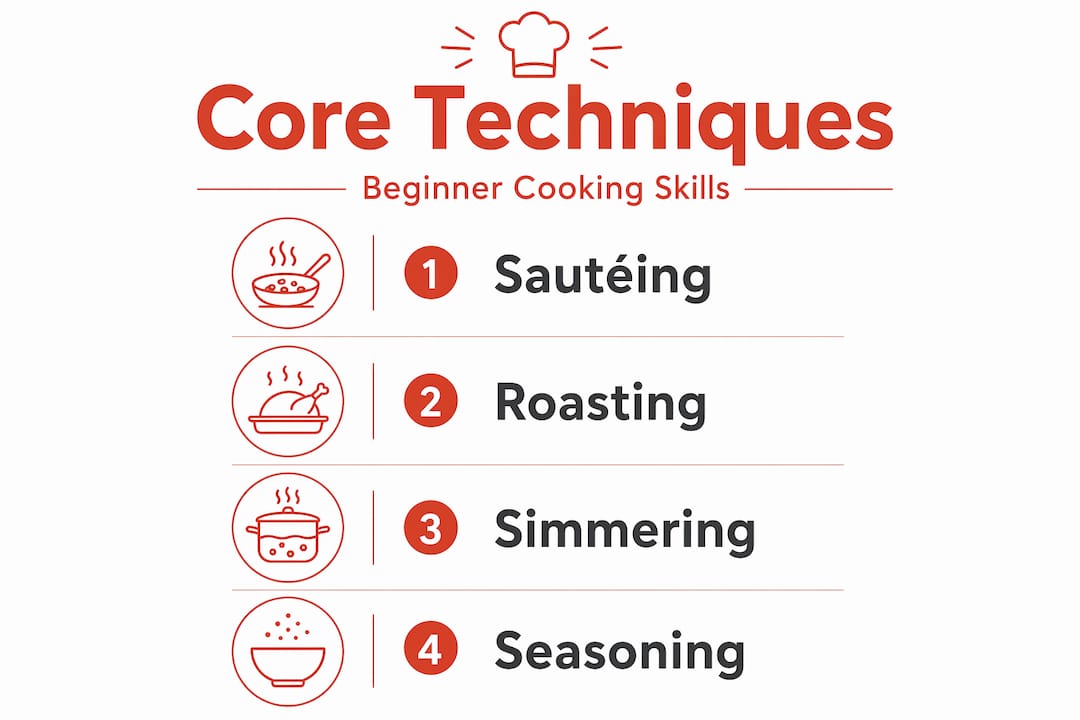
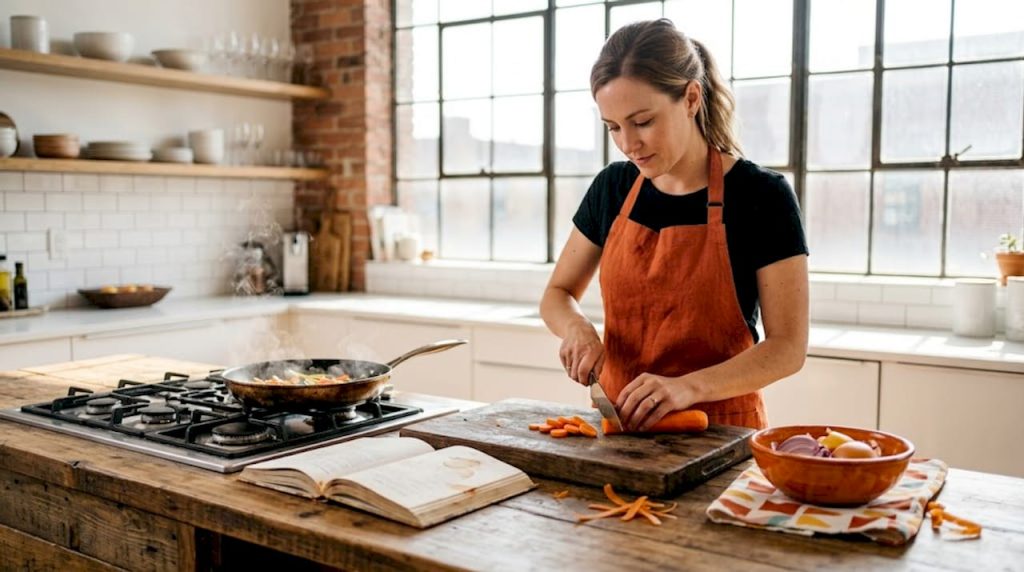
Sautéing means cooking food quickly in a hot pan with a small amount of fat. Think garlic and onions going into a pan before you add anything else. Medium-high heat, a little oil, and constant attention. This builds the flavor base for soups, pasta sauces, and grain dishes.
Roasting means cooking food in a hot oven, usually between 400 and 425°F. It is the easiest hands-off method for vegetables and proteins. Toss your broccoli or chicken thighs in oil and salt, slide them onto a sheet pan, and let the oven do the work. The dry heat concentrates flavor in a way that steaming or boiling cannot.
Simmering means bringing a liquid to a gentle, low bubbling point. This is how you make soups, dal, tomato sauce, and braised dishes. The key is patience. A hard boil makes things tough; a slow simmer makes them tender and rich.
Seasoning is the skill that separates good food from bland food. Seasoning throughout the cooking process produces better flavor than adding salt only at the end. Add a pinch of salt when you start your aromatics, taste as you go, and adjust before you serve.
Starting with lower heat reduces errors like burning or unevenly cooked food more than any other single habit. Use this as your starting guide:
When in doubt, go lower and adjust upward. You can always add heat. Burnt food cannot be saved.
Pro Tip: Listen to your pan. A soft sizzle means the right temperature for most sautéing. Silence means the pan is too cool. A loud, aggressive crackling means it is too hot. Your ears are a surprisingly reliable cooking tool.
The biggest trap beginners fall into is variety. You try a new recipe every night, never get good at any of them, and wonder why cooking feels hard. The better path is repetition. Selecting 2 to 3 simple, overlapping recipes and practicing them repeatedly builds real kitchen familiarity fast.
Here is how to get started with your first set of recipes:
Some meals are forgiving enough to build real confidence quickly:
Pro Tip: Starting slow and focusing on one recipe at a time builds confidence better than rushing into complex meals. Resist the pressure to impress anyone, including yourself, in the first week.
Most cooking frustration comes from a handful of repeated errors. Recognizing them early saves you a lot of bad meals.
The kitchen is one of the few places where making mistakes is the actual curriculum. Every burnt pan and underseasoned bowl teaches you something a perfect meal cannot.
Patience is a cooking technique. When a recipe says “cook until softened,” it means cook until actually softened, not until you get bored watching. Trust the process, and your results will improve faster than you expect.
The benefits of home cooking go well beyond saving money on takeout, though that is real too.
Cooking more than twice a week reduces intake of fats, sugars, and sodium compared to restaurant meals. Most people notice better digestion and less bloating within two weeks of making the switch. You control what goes in your food, which means less hidden sugar, less excess salt, and more vegetables.
The mental benefits are just as significant. Home cooking supports stable blood sugar, better sleep, and emotional bonding, positively affecting mood. Cooking gives your brain something tactile and focused to do, which is why so many people describe it as genuinely relaxing once they get past the intimidation.
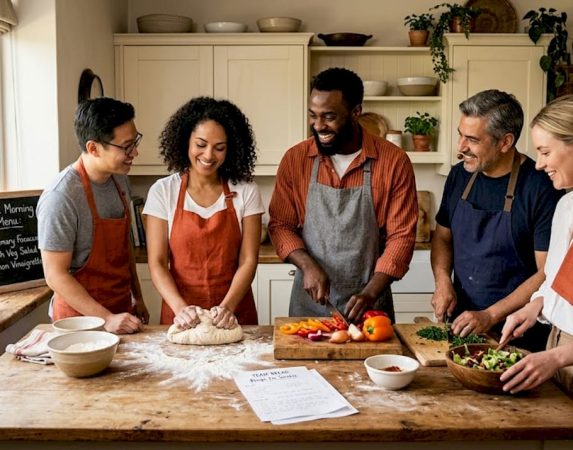
Cook with others and the rewards multiply. Whether it is a partner, a roommate, or a friend who stays for dinner, food made at home creates the kind of shared moments that step-by-step meal prep and restaurant visits rarely replicate. There is something powerful about cooking a meal from scratch and sharing it with someone else.
The long-term picture is also worth noting. People who cook at home regularly tend to eat more variety, maintain healthier weights, and spend significantly less on food. The habit compounds in your favor the longer you keep it up.
I have worked with hundreds of first-time cooks, and the pattern is almost always the same. They hold back. They wait until they “know more” before they try something. They apologize before serving a plate. And the irony is that the cooks who progress fastest are the ones who dive in imperfectly, burn a pan or two, and treat it as information rather than failure.
In my experience, the biggest obstacle in the kitchen is not technique. It is self-judgment. People compare their first attempts to restaurant meals or polished cooking videos, and of course the comparison does not flatter them. But those videos do not show the 50 times the chef made that dish before it looked effortless.
What I have found actually works is focusing on process over outcome in the early weeks. Did you taste and adjust? Did you prep before you cooked? Did you pay attention to the heat? If yes, you are developing skills, even if the dish did not turn out perfectly. Skills stick. Perfect dishes do not teach you anything.
The joy of cooking comes in layers, much like good seasoning. At first, it is satisfaction at feeding yourself. Then it becomes curiosity about flavors. Then it becomes creativity. Let it build at its own pace, and you will cook for the rest of your life.
— David
If you are excited about getting into the kitchen and want to accelerate your learning in a fun, supported environment, Recipeforsuccess has something worth exploring. Their culinary team building experiences are chef-led, hands-on, and designed to build real confidence through doing, not watching.
Whether you are looking to sharpen your skills through workplace cooking classes or want to experience the joy of cooking alongside others through chef-led culinary events, Recipeforsuccess brings people together around food in the best possible way. It is a fantastic next step for anyone who wants to go from beginner to genuinely capable cook with a group cheering them on.
You need a sharp knife, cutting board, skillet, and saucepan. Stock your pantry with oil, salt, garlic, onions, and a few dry goods and you can make hundreds of simple meals.
Scrambled eggs, pasta with olive oil and garlic, and roasted vegetables are great starting points. They teach core techniques like heat control and seasoning without requiring many ingredients or steps.
Pick two or three simple recipes and repeat them instead of trying something new every night. Repetition builds muscle memory and confidence faster than variety does for beginners.
Underseasoning is the most common beginner mistake. Salt your food during cooking, not just at the end, and taste as you go to adjust flavors before serving.
Most beginners feel noticeably more confident after two to four weeks of cooking three to four times per week. Consistency matters far more than how complicated the recipes are.