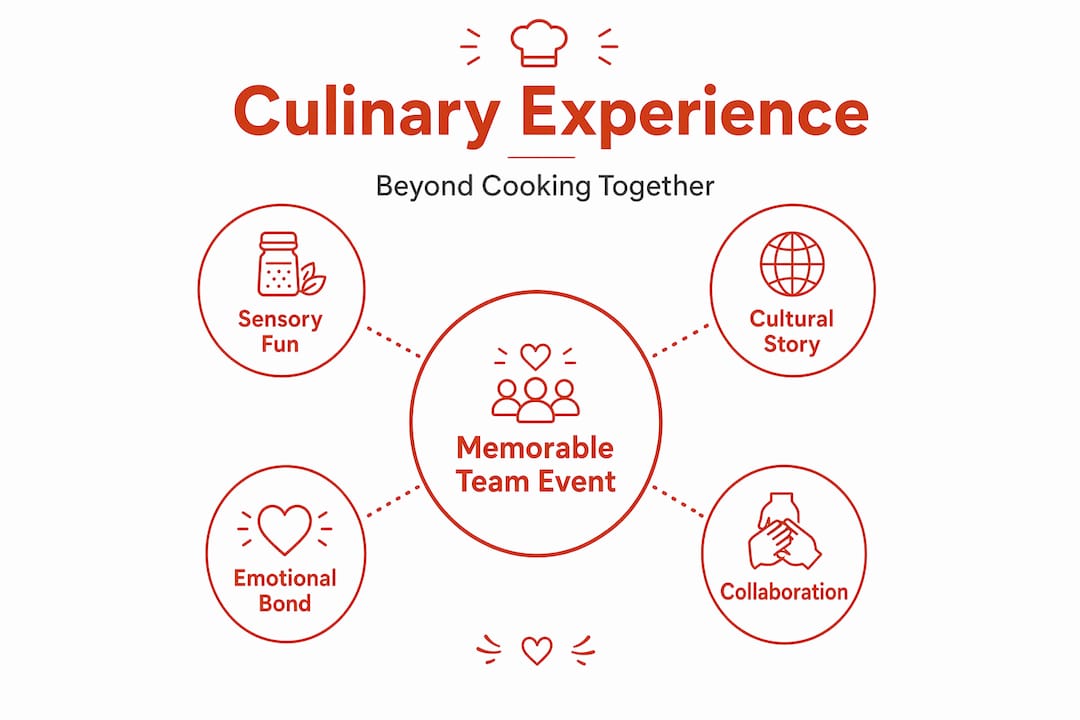
Most corporate event planners book a cooking class and call it team building. But defining group culinary experiences accurately changes everything about how you design, facilitate, and measure them. A group culinary experience is not simply a meal shared in the same room, and it is not a cooking tutorial where everyone chops vegetables in silence. At its core, it combines sensory engagement, cultural storytelling, emotional connection, and intentional collaboration. Get that definition right, and you stop planning events and start creating moments your team will actually remember.
| Point | Details |
|---|---|
| Beyond food and cooking | True culinary experiences integrate sensory, cultural, and emotional dimensions that simple meals or classes do not deliver. |
| Dietary inclusion is design work | Proactively managing food preferences before the event prevents exclusion and creates a more cohesive group experience. |
| Interactive beats passive | Goal-aligned, hands-on culinary formats produce measurable teamwork gains; passive dining does not. |
| Shared meals build wellbeing | Eating together regularly is linked to higher wellbeing scores and stronger team trust across global research. |
| Recurring rituals compound results | One-off events spark connection; repeated low-pressure food rituals sustain it over time. |
Most people picture group cooking classes when they hear “culinary team event.” That framing undersells what these experiences can do. According to research on gastronomic experience, these events are fundamentally multisensory and culturally situated, meaning the taste, smell, texture, story behind ingredients, and the people preparing them all contribute equally to the experience.
Think about what separates a chef-led culinary tour from a generic food tour. The chef-led format creates smaller, interactive group experiences with deep cultural, sensory, and educational engagement. Participants learn why a dish exists, where its ingredients come from, and what it means to the people who created it. That narrative layer is what converts a cooking activity into a shared culinary experience.
For corporate teams, this distinction matters a great deal. When you design an event around cultural context and emotional engagement rather than just a recipe, you give participants something to connect over beyond the task itself. Three elements define genuinely immersive group culinary experiences:
Pro Tip: When briefing a culinary vendor, ask specifically how they incorporate storytelling and cultural context into the session. If the answer is vague, the event will likely feel like a cooking class, not a culinary experience.
When sensory, cultural, and emotional engagement combine intentionally, the result is something far more memorable than a fun afternoon in a kitchen. That is the standard worth designing toward.
Here is where most planners leave money on the table. You spend weeks choosing a venue and a chef, then you send out a generic dietary form two days before the event. Food preference management is not an afterthought. It is a design variable, and organizer-led group dining decisions research makes that clear.
A 2026 Springer study on group restaurant recommendation found that organizers must actively anticipate and manage incompatible preferences to find solutions that actually satisfy team members. Trying to resolve conflicts on the day of the event is too late. Here is a process that works:
When you treat preference coordination as part of the collaborative menu selection process rather than a logistical footnote, participants feel seen. That sense of being included before the event even starts sets the emotional tone for everything that follows.
Not all team events are created equal. Research is now clear that the format determines the outcome. A 2026 PLOS ONE meta-analysis found that interactive culinary team building formats outperform passive social events when it comes to actual teamwork behavior change. Here is what that looks like in practice.
| Format type | Example | Team building outcome |
|---|---|---|
| Passive social event | Team dinner at a restaurant | Relationship building, low skill transfer |
| Structured cooking class | Recipe-based class, no defined roles | Skill exposure, moderate collaboration |
| Goal-aligned culinary challenge | Timed cooking competition with team roles | High collaboration, measurable performance gains |
| Recurring shared meal ritual | Monthly team lunch with rotating hosts | Sustained trust and relational maintenance |
The data behind goal-aligned formats is compelling. The same meta-analysis found that after-action reviews boost performance by 20 to 25 percent when integrated into team events. That means what happens after the cooking session matters almost as much as what happens during it.
For planners, this translates into three non-negotiable design choices. First, set specific collaboration goals before the event. “Have fun” is not a goal. “Practice cross-functional communication while managing time pressure” is. Second, assign team roles that mirror real-world dynamics, such as a project lead, a communicator, a detail person, and an adapter. Third, build a 15-minute debrief into every session where teams reflect on what they did well and what they would change.
Pro Tip: Frame the debrief as a “recipe review” to keep the culinary theme alive. Ask each team: What ingredient (behavior) made your dish work? What would you add or remove next time?
Exploring food-based team building options that include structured formats and defined roles gives your team the best shot at walking away with skills they can use back at the office, not just full stomachs.
If the collaboration data does not convince a skeptical stakeholder, the wellbeing research might. A 2026 Gallup World Poll covering more than 150,000 respondents found that sharing one meal per week with others is associated with a 0.2-point wellbeing increase on a validated 0 to 10 scale. That may sound modest until you consider it was measured across cultures, income levels, and age groups worldwide.
“People who regularly share meals report higher life satisfaction, stronger social ties, and lower feelings of isolation.” — 2026 Gallup World Poll summary
For teams, the implications are straightforward. Shared culinary experiences are not a soft perk. They are a measurable input to team health. Here is what the research and practice tell us about why this works:
The social bonding benefits of culinary workshops for groups extend well beyond the event itself. The real return on investment shows up in the weeks and months that follow, in smoother collaboration, quicker conflict resolution, and a team that genuinely enjoys working together.
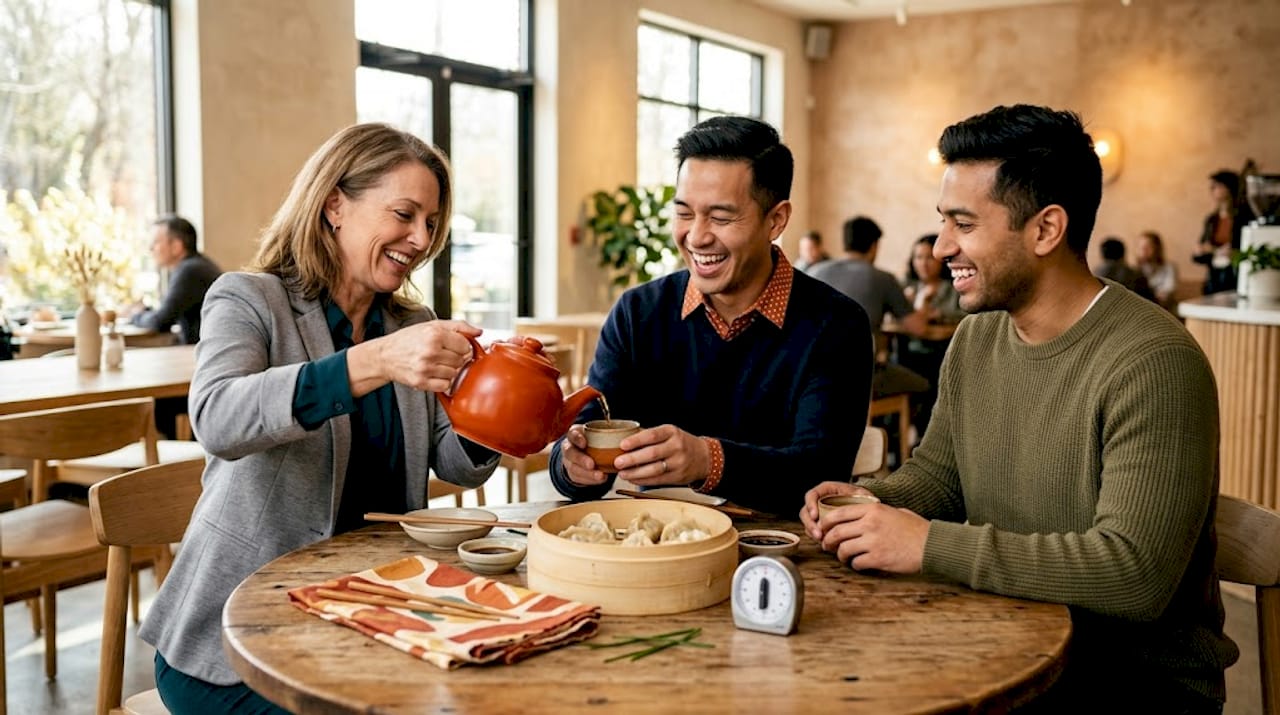
I have worked with enough corporate groups to notice a pattern. Planners focus intensely on the experience itself, the chef, the menu, the venue, and the vibe. What they underinvest in is role design and follow-through.
In my experience, assigning distinct culinary roles like prep lead, station runner, plating lead, and storyteller to team members is one of the highest-leverage moves you can make. Quieter participants suddenly have a defined contribution. Dominant personalities channel their energy into a specific function. The whole group operates more like a real team because they are structured like one.
The other thing I see overlooked constantly is the power of low-stakes repetition. One cooking challenge is a great memory. A monthly shared lunch where a different team member picks the theme becomes a ritual. And recurring shared meal rituals are what actually reduce workplace friction over time. You cannot build a culture of connection with a single event, no matter how well designed.
My honest advice: stop thinking about culinary team events as one-time experiences and start thinking about them as the first step in a recurring food culture for your team. The event opens the conversation. The rituals keep it going.
— David
At Recipeforsuccess, we design chef-led culinary team building programs that go far beyond basic cooking classes. Every session is built around clear collaboration goals, defined team roles, and the kind of cultural and sensory engagement that makes experiences stick.
Our culinary challenge programs are structured to flex around your team size, dietary needs, and collaboration objectives. Whether you are planning a one-time event or building a recurring program, we help you design every detail from menu to debrief. You can also explore our top team building ideas to find the format that fits your group. Your team has real potential. Let us help you bring it to the surface, one dish at a time.
A culinary experience integrates sensory engagement, cultural storytelling, and emotional connection alongside the cooking itself. A cooking class typically focuses on technique and recipe execution without those deeper layers of meaning.
Collect dietary needs at least two weeks before the event, map the conflicts early, and work with your culinary vendor to build a flexible menu where every participant has satisfying options throughout the session.
Yes. Research shows that interactive formats with goal alignment and structured debriefs improve teamwork behaviors and team performance significantly more than passive social events.
One well-designed event is a strong start, but repeated low-pressure shared meal rituals are what build sustained team trust and reduce workplace friction over time. Monthly or quarterly touchpoints compound the benefits.
Functional roles like prep lead, station runner, plating lead, and storyteller give every participant a defined contribution and mirror real-world team dynamics, making the collaboration more meaningful and measurable.