Building a great cooking team takes more than knife skills and recipe knowledge. The successful cooking team traits that separate thriving culinary groups from struggling ones are almost always human qualities: how people communicate, lead, adapt, and support each other under pressure. For team leaders and HR professionals, understanding these traits isn’t just interesting, it’s the difference between a team that produces consistently great results and one that burns out or fractures. This article breaks down exactly what those traits look like and how you can recognize, develop, and hire for them.
| Point | Details |
|---|---|
| Communication drives cohesion | Two-way dialogue where every team member feels heard reduces friction and sharpens operational clarity. |
| Humble leadership outperforms authority | Leaders who delegate, own mistakes, and model calm create psychologically safe teams that recover from pressure faster. |
| Soft skills are non-negotiable | Flexibility, positive attitude, and teamwork are foundational expectations for any effective kitchen staff member. |
| Multicultural onboarding matters | HR must train beyond recipes, building transferable skills and intercultural communication to retain quality as teams grow. |
| Shared food experiences build bonds | Chef-led culinary activities combine social connection with skill exchange, producing lasting engagement improvements. |
Most kitchen communication problems aren’t about volume. They’re about direction. Clear two-way communication where leaders actively make team members feel heard is one of the defining culinary team success factors. When people feel they can voice concerns, ask questions, or suggest improvements without fear, the whole operation runs smoother.
This matters especially during high-pressure service moments. A line cook who spots a supply issue but doesn’t feel safe raising it quickly becomes a liability. A prep team that can flag a process problem before service even starts becomes a genuine asset.
Practical ways to build this into your team’s routine:
Pro Tip: Try assigning a rotating “voice of the team” role during debrief sessions. It shifts the habit of speaking up from a personality trait into a team norm.
When communication becomes a habit rather than an event, your team starts solving problems before they escalate.
Here’s the thing about culinary leadership: technical brilliance in the kitchen does not automatically translate into leadership effectiveness. Leadership success requires communication, delegation, accountability, and morale-building as much as cooking skill. These are learnable traits, but they require intentional development.
Humble leadership is one of the most undervalued qualities you can bring into a kitchen. Research shows a statistically significant relationship between humble leadership and psychological safety, which directly improves how teams recover from service problems. When leaders admit mistakes and model openness, team members do the same.
The four leadership behaviors that make the biggest difference in cooking teams:
“The best kitchen leaders I’ve seen don’t run the tightest ship. They run the one where everyone knows what to do when things go sideways.”
Psychological safety, built through humble leadership behaviors, enables teams to discuss errors openly. That openness is how teams adapt quickly and improve consistently. For HR professionals building culinary programs, this is where leadership development investment pays off most.
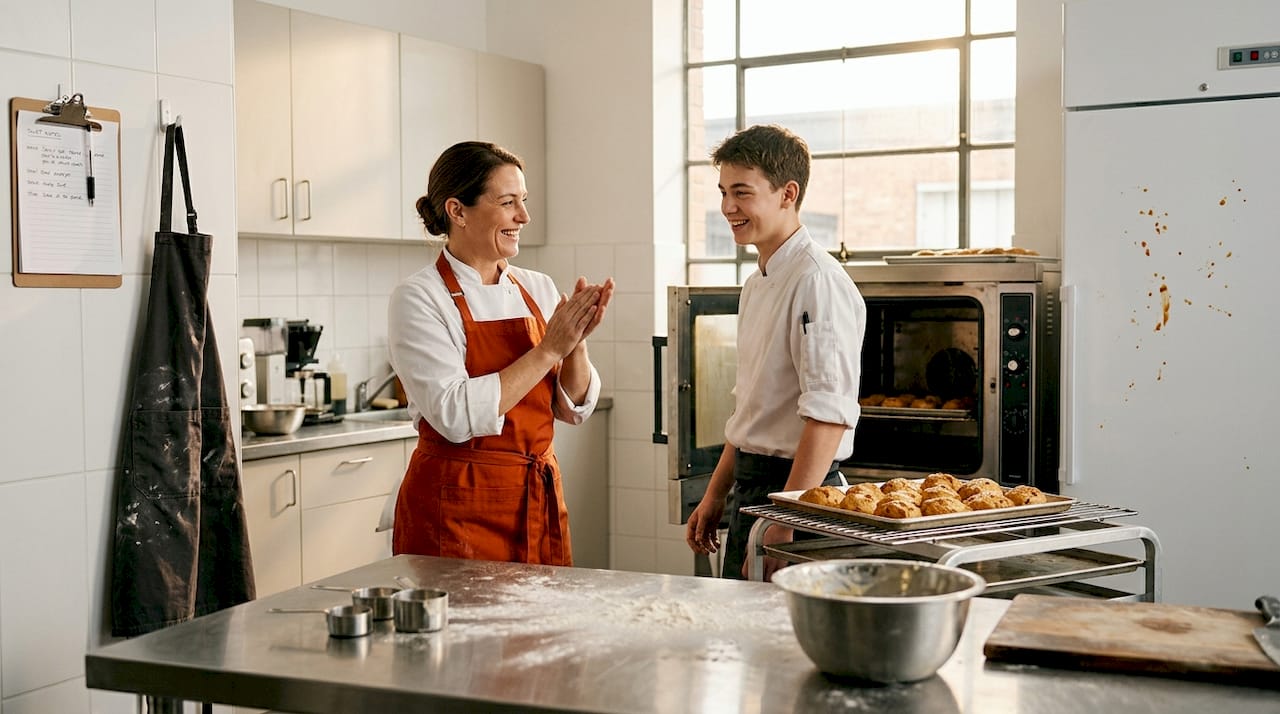
When the orders stack up and a key team member calls in sick, what separates a functional kitchen from a chaotic one is almost never technical skill. It’s the soft skills. Successful kitchen teamwork depends on communication, teamwork, positive attitude, flexibility, and willingness to learn. These aren’t personality bonuses. They’re foundational expectations for any effective kitchen team member.
Here’s how these traits show up in practice:
Pro Tip: During hiring, ask candidates to describe a time they had to cover a role outside their usual responsibilities. Their answer tells you more about flexibility and attitude than any technical test.
Assigning roles based on skills and genuine interests, rather than default seniority, is a practical way to activate these traits. When people work in areas they care about, they show up differently.
Modern culinary teams are often multicultural, and that’s a strength. But it only becomes a strength when HR and team leaders actively support it. Multicultural culinary teams need HR practices that build intercultural competence alongside culinary skills. Relying on recipe documentation alone isn’t enough to maintain quality or cohesion as your team grows.
Here’s a comparison of traditional onboarding versus structured multicultural onboarding in culinary teams:
| Onboarding approach | What it covers | What it misses |
|---|---|---|
| Recipe-only onboarding | Dish specs, plating standards | Intercultural communication, capability transfer |
| Structured culinary onboarding | Visual SOPs, certifications, chef-led mentoring | Context-specific adaptation to real service conditions |
| Integrated multicultural onboarding | Transferable skills, cultural communication, cross-station training | Very little. This is the model that scales. |
The key skills for kitchen teamwork in diverse environments include clear verbal handoffs between stations, shared visual standards that don’t rely solely on language, and cross-training that builds flexibility across different culinary traditions.
For HR professionals, this means designing onboarding programs that treat transferable skills and intercultural communication as core curriculum items, not optional add-ons. Teams built this way show lower turnover and more consistent output quality during busy service periods.
The fastest way to kill a cooking team’s momentum is to make mistakes feel dangerous. When people fear consequences for errors, they hide problems. Hidden problems grow. The entire quality control system breaks down quietly, long before anyone notices.
The essential quality here isn’t perfectionism. It’s accountability without blame. Humble leadership indirectly improves service recovery performance by creating psychological safety, which makes it normal to discuss errors openly and solve them quickly. Teams operating in this environment adapt faster and recover better.
For team leaders, building this culture starts with your own behavior. When you make an error, name it clearly and explain what you’re changing. That models the standard. It tells everyone on your team that mistakes are information, not indictments.
This is one of the most transferable traits of effective kitchen staff to any high-performance team context. The mechanics are the same whether you’re running a restaurant or a corporate project team.
One of the more practical culinary team success factors is what experienced kitchen managers call “load balancing.” The idea is simple: when one station is overwhelmed and another is quiet, capable team members move where they’re needed. This requires both the skill to do multiple jobs and the mindset to prioritize team output over individual routine.
Developing cross-station flexibility is a key part of how to build a strong cooking team. It reduces single points of failure. It builds empathy between stations because people understand each other’s challenges. And it creates a culture of shared ownership that makes the whole team more resilient.
From an HR perspective, cross-training is worth investing in deliberately. Build it into your development calendar. Track which team members can cover which stations. Recognize and reward people who step up when the team needs coverage.
Food is one of the most powerful social connectors humans have. Over half of employees report that sharing food with colleagues is a primary reason they want to attend the office. That’s not a small finding. It means food-centered team experiences have a direct line to attendance, morale, and motivation.
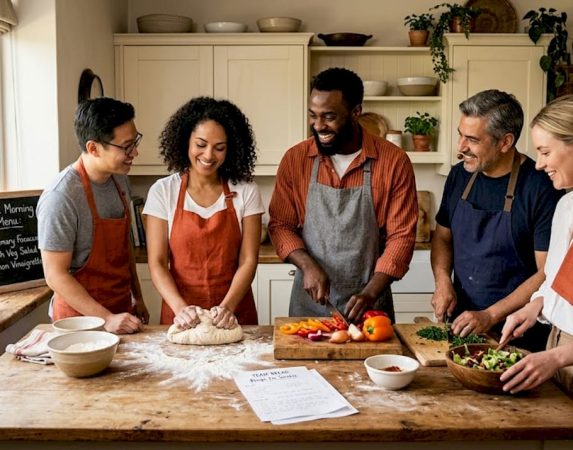
The best culinary team building activities work because they combine social bonding with genuine skill exchange:
Food-based events that combine social bonding with educational components sustain engagement far better than one-off entertainment. A cooking challenge that teaches something new keeps people talking about it the next day. That carry-over effect is what turns a team event into a cultural moment.
For team leaders and HR professionals, this is worth thinking about strategically. The right culinary team building experience isn’t just a nice day out. It’s a targeted intervention that reinforces the communication, collaboration, and morale-building traits your team needs to perform.
I’ve worked alongside a lot of culinary teams over the years, and the pattern I keep seeing is this: the teams that struggle most aren’t short on technical skill. They’re short on psychological safety.
In my experience, the moment a team member decides it’s safer to stay quiet than to raise a concern, you’ve already started losing quality. It happens quietly. One person swallows a problem. Then another. Before long, you have a culture where people execute but don’t contribute. They do the job, but they’ve stopped being invested in the outcome.
What I’ve learned is that the traits that actually build successful culinary teams, communication, humility, flexibility, accountability, can’t be separated from the environment the leader creates. You can’t hire your way to these traits if your environment punishes the behaviors they require. The leader sets the conditions. Everything else follows.
The teams I’ve seen recover best from tough service, high turnover, and low morale all share one thing: a leader who treated mistakes as learning material rather than character flaws. That single trait changes everything downstream. It affects how people speak up, how they cover for each other, and how much effort they put in when no one’s watching.
If I were advising an HR team right now, I’d say: hire for resilience, train for skill, and invest everything you have into leadership culture. That’s where the real recipe for success lives.
— David
If you’ve recognized some of your team’s gaps in these traits, the good news is that all of them can be developed. At Recipeforsuccess, we design chef-led culinary team building experiences specifically to bring these qualities to life. Our programs put teams in kitchens together, working through real challenges that require communication, flexibility, accountability, and collaboration.
Our culinary team building events are built around the traits that actually drive performance, not just a fun afternoon. Whether your team needs a morale boost, better cross-functional collaboration, or a way to welcome new members into your culture, we’ll cook up an experience that fits. You can also explore our range of team culinary ideas to find the format that works best for your group. Let’s get your team in the kitchen and cooking up something great together.
The most critical successful cooking team traits include two-way communication, humble leadership, flexibility, positive attitude, and accountability without blame. These human qualities determine team performance more consistently than technical cooking skill alone.
Effective team communication creates environments where team members voice concerns freely, which reduces errors and improves coordination during high-pressure service periods. Teams with strong communication habits adapt faster and perform more consistently.
Great cooking does not automatically make a great leader. Leadership effectiveness comes from communication, delegation, accountability, and morale-building, and research confirms that humble leadership directly improves team psychological safety and service recovery performance.
HR professionals can structure onboarding to include intercultural communication training, cross-station flexibility development, and leadership programs built around psychological safety. Pairing these with regular culinary team experiences reinforces the soft skills that drive long-term performance.
Yes. Shared food experiences are among the top motivators for office attendance, and culinary events that combine social bonding with skill-based learning produce sustained engagement improvements beyond a single occasion.