Most corporate event planners assume that the best team-building moments happen outdoors, on a ropes course, or in the middle of a trust fall. But here is the truth: those experiences rarely translate back to the office. Workplace cooking classes are changing that conversation in a big way. They put colleagues side by side at a prep station, give them a shared goal, and let real teamwork happen naturally. This guide covers exactly what workplace cooking classes are, why they work so well for building genuine collaboration, and how you can plan one that your team will actually talk about on Monday morning.
| Point | Details |
|---|---|
| Unique team-building format | Workplace cooking classes bring teams together through a collaborative, hands-on culinary experience. |
| Direct communication benefits | Cooking as a group encourages open communication and problem-solving among employees. |
| Flexible formats | Classes can be adapted for in-person, hybrid, or remote teams to maximize participation. |
| Planning is crucial | Careful logistics and menu design ensure dietary needs, engagement, and successful outcomes. |
| Compared to traditional activities | Cooking classes offer distinct advantages over trust falls and escape rooms for building trust and cooperation. |
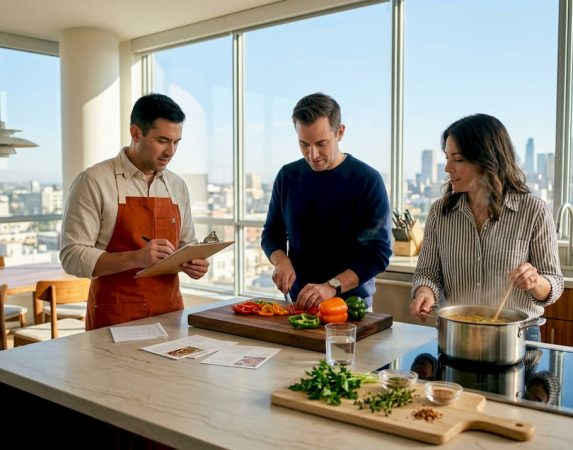
A workplace cooking class is a structured culinary activity designed specifically for a corporate group. It is not a casual potluck or a cooking show you watch passively. Instead, it is a facilitated experience where employees roll up their sleeves, follow a recipe, and work together to produce a meal or dish as a team.
These classes come in several formats, and choosing the right one matters a lot:
| Format | Group size | Energy level | Best for |
|---|---|---|---|
| Hands-on cooking | Small to medium | High | Deep collaboration |
| Chef-led demo | Any size | Medium | Learning focus |
| Culinary competition | Medium to large | Very high | Motivation and fun |
| Themed cuisine night | Any size | Medium to high | Culture and morale |
What sets a workplace cooking class apart from, say, a recreational cooking class at a local culinary school? The key difference is intention. Workplace classes are purposefully designed to build specific team skills, facilitated by professionals who understand both food and group dynamics. As covered in setting up employee cooking classes, the logistics, menu planning, and chef partnerships all need to align with your team’s goals, not just produce a tasty meal.
Professional chefs lead most of these experiences, often partnering with organizational facilitators who keep the group dynamics on track. Some formats lean heavier on the chef’s instruction, while others let the facilitator guide team reflection throughout the cooking process.
After exploring what workplace cooking classes are, let’s look at how these experiences uniquely build stronger teams.
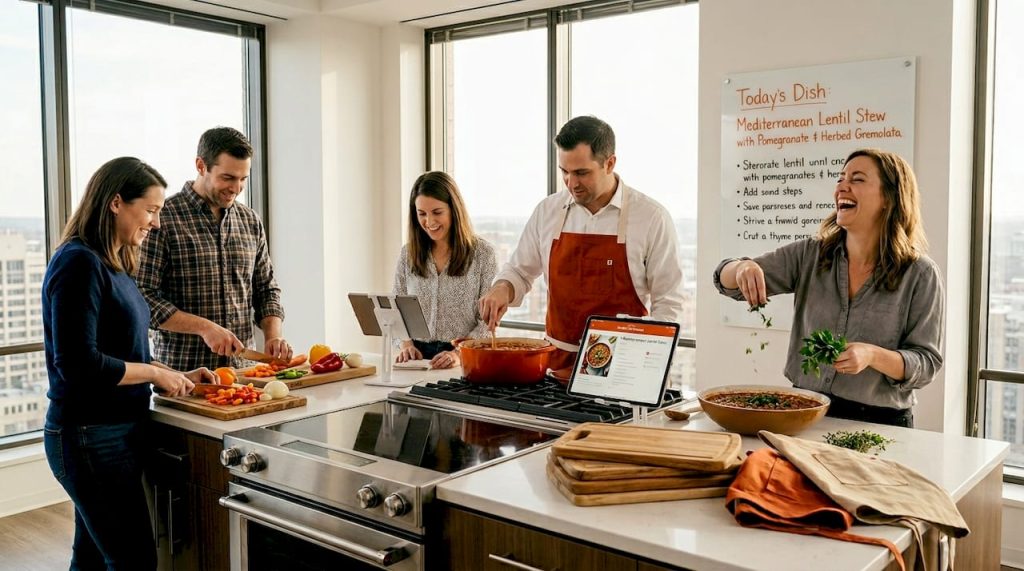
Cooking is one of the most naturally collaborative activities humans do. When you put a team in a kitchen, something interesting happens fast. Everyone has a role. No one can do it all alone. And feedback is immediate: if the sauce is too salty, everyone knows right away.
This is what makes cooking such a powerful metaphor for how great teams operate. The kitchen forces a few things to happen simultaneously:
“Culinary experiences, such as group cooking workshops, are among the most engaging culinary challenges for teams available for corporate groups today.”
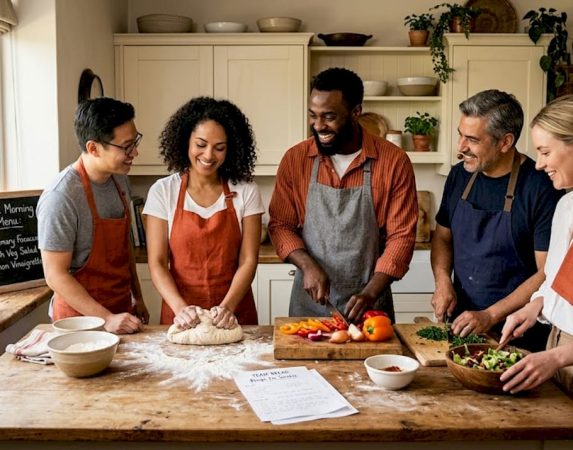
One of the most powerful things cooking does is break down hierarchical barriers. The VP and the junior analyst both have to chop onions. Nobody gets a pass. That equality creates a psychological safety net where people feel comfortable speaking up, asking for help, and even making mistakes. Those are exactly the conditions where real communication skills grow.
Research and facilitator experience confirm that top cooking events for teams build a specific, transferable set of workplace skills:
Compare this to a traditional trust fall. One person falls. One person (hopefully) catches. The group watches. There is no shared output, no creative investment, and no natural opportunity for extended communication. Cooking keeps everyone engaged for the full duration of the experience.
| Activity | Duration of active engagement | Skills built | Transferable to office? |
|---|---|---|---|
| Trust fall | Seconds per person | Trust (narrow) | Rarely |
| Escape room | Full session | Problem-solving | Sometimes |
| Outdoor retreat | Variable | Various | Sometimes |
| Workplace cooking class | Full session | Communication, leadership, empathy, creativity | Consistently |
Knowing how cooking classes drive teamwork, let’s outline how you can organize a successful one in your workplace.
Planning a great culinary team-building event is part logistics, part creativity, and part knowing your audience. Here is a step-by-step approach that works for groups of all sizes.
Define your goals first. Are you trying to break the ice with a newly merged team? Boost morale after a tough quarter? Help leaders practice delegation? Your goal shapes everything from the format you choose to how the facilitator frames the activity.
Choose the right format. Refer back to the table above. A high-energy sales team might love a culinary competition, while a leadership group working on communication might benefit more from a hands-on collaborative session.
Plan your menu thoughtfully. The recipe should be complex enough to require teamwork but simple enough that no prior culinary experience is needed. Avoid meals that require too much single-person focus, like delicate pastry work that only one person can do at a time.
Hire a skilled facilitator. This is where many events fall short. A great chef is not automatically a great facilitator. Look for someone who can balance culinary instruction with group coaching, read the room, and keep energy up throughout. Many providers, like workplace cooking event planning specialists, offer both chefs and facilitators as a package.
Confirm logistics early. Book a space with adequate equipment for your group size. A commercial kitchen rented for the day is ideal, but many facilitators bring portable equipment to your office or event venue. Confirm the number of burners, prep stations, and sink access well in advance.
Gather dietary information proactively. Send a pre-event survey two weeks out. Ask about allergies, intolerances, vegetarian or vegan preferences, and religious dietary guidelines. A good facilitator builds this into the menu so no one feels left out.
Mix up your teams intentionally. Do not let people self-select into groups with their usual desk neighbors. Mixing departments and seniority levels creates more interesting dynamics and builds cross-functional connection.
Build in reflection time. After the cooking (and eating), spend 10 to 15 minutes debriefing as a group. Ask: What worked well? Where did communication break down? What would you do differently? This is where the real learning gets locked in.
Pro Tip: Avoid events that are too long. A 90-minute to 2-hour cooking class hits the sweet spot for engagement. Beyond that, energy and attention tend to drop, especially if the team is cooking after a full workday.
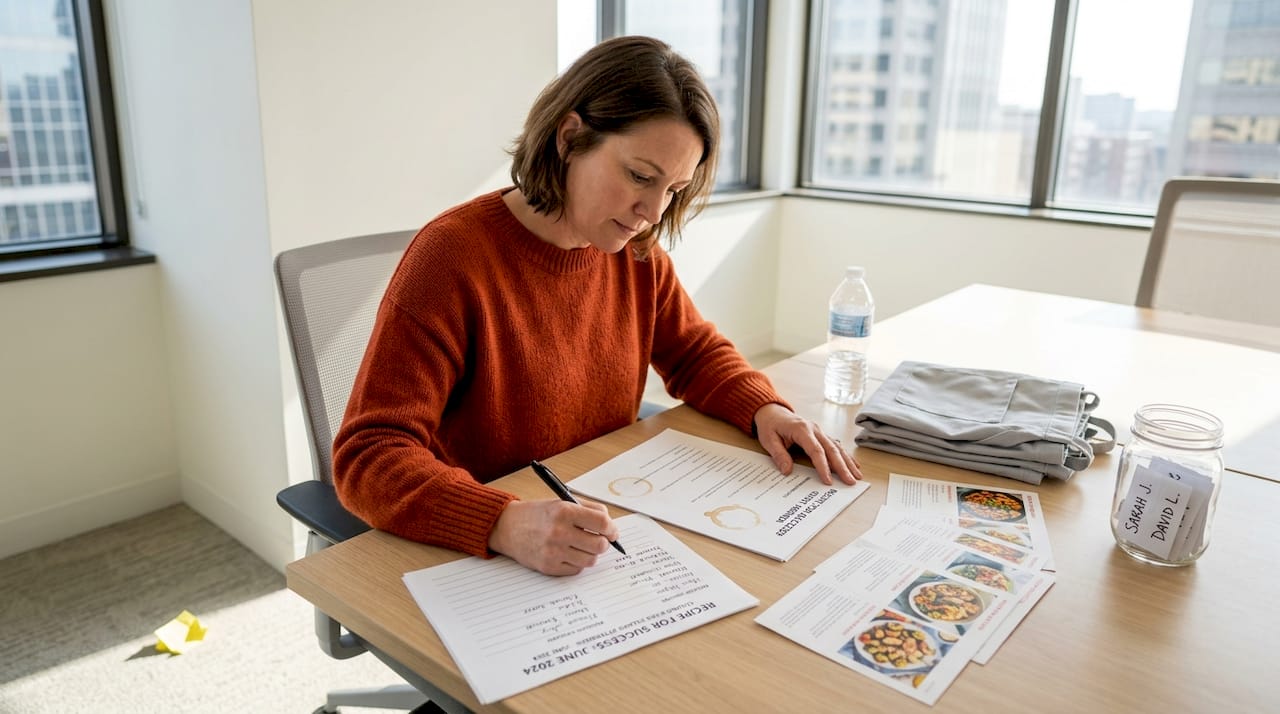
Common pitfalls to watch out for include overcrowding prep stations (aim for no more than five people per station), choosing recipes that are too easy (no challenge means no collaboration), and skipping the debrief entirely (the meal is the vehicle, not the destination).
Once you know how to plan a cooking class, it is smart to see how these stack up against other team-building choices.
Corporate event planners have no shortage of options. Escape rooms, volunteer days, outdoor adventure courses, improv workshops, and trivia nights all have their place. But they are not all created equal when it comes to building communication and lasting collaboration.
Culinary team-building events consistently earn high marks from participants because they combine sensory engagement, real-world skill application, and a shared reward: a delicious meal that everyone made together. The shared meal at the end is not a small thing. Eating together has been a cornerstone of human bonding for thousands of years. It is built into our social wiring.
Here is how workplace cooking classes compare on the metrics that matter most to event planners:
| Criteria | Cooking class | Escape room | Outdoor retreat | Trivia night |
|---|---|---|---|---|
| Active participation | Everyone, all the time | Everyone, all the time | Varies | Mostly passive |
| Skill transfer to work | High | Moderate | Low to moderate | Low |
| Inclusive for all fitness levels | Yes | Yes | Often no | Yes |
| Memorable experience | Very high | High | High | Moderate |
| Dietary/accessibility accommodation | Easy to customize | N/A | Moderate | Easy |
| Naturally breaks hierarchy | Yes | Partially | Partially | Rarely |
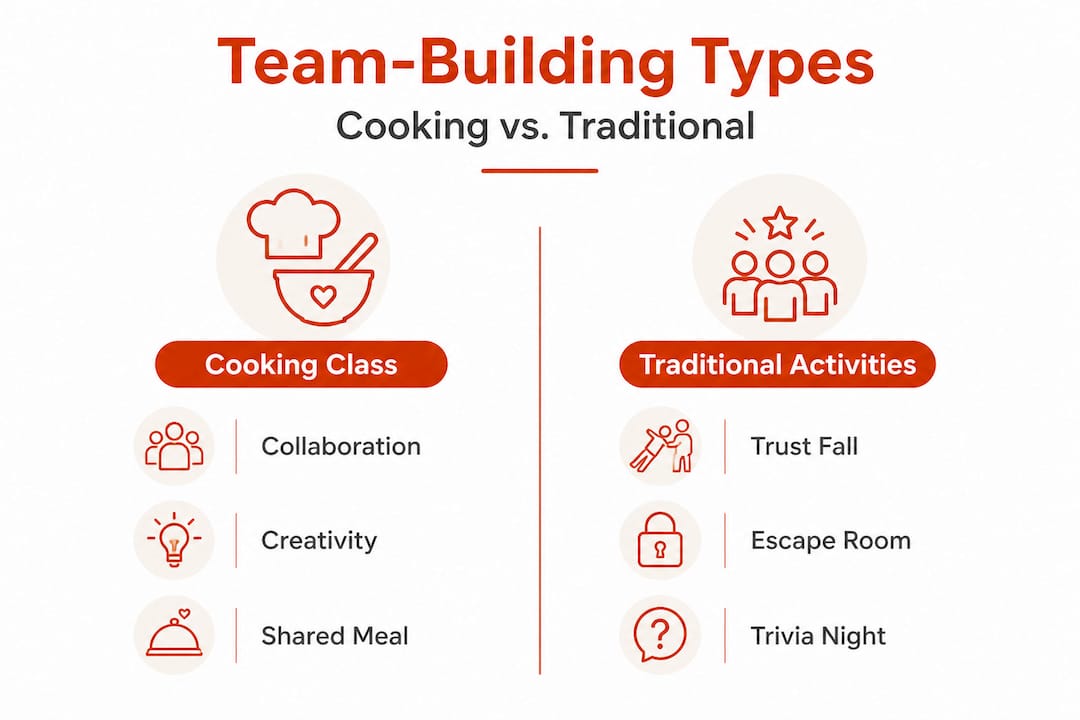
Studies and team-building ideas research consistently show that employees who feel a sense of belonging and shared accomplishment are significantly more engaged at work. Culinary events create both of those feelings in a single session.
That said, cooking classes are not always the right call. If your team needs a high-adrenaline reset or has a significant number of kitchen-phobic participants, you may want to pair a cooking class with another activity. They also work best for groups of 10 to 80 people, though virtual and hybrid formats expand that range considerably.
A useful rule: choose a cooking class when your goal is communication, creativity, or cross-functional relationship building. Choose something else when the primary goal is physical challenge or individual skill development.
Having compared the options, here is a perspective grounded in hands-on facilitation and real culinary experience.
Most team-building activities are designed to simulate challenge. A cooking class creates actual challenge. There is a real fire, real food, real time pressure, and a real outcome. That authenticity is exactly why it works when other activities fall flat.
We have seen it happen repeatedly. A team that barely speaks across departments suddenly finds its rhythm while plating a dish together. A manager who struggles to delegate in meetings learns to let go when four people are waiting on her instruction and the pasta water is boiling over. These moments are not manufactured. They are genuinely earned.
What facilitators who work with chefs in corporate team building know, and what most event planners underestimate, is that the kitchen is one of the most honest environments you can put a team in. There is no hiding behind a slideshow or a conference table. People show up as they are: impatient, creative, generous, bossy, funny, or timid. And then they get to work.
The most powerful outcomes we have witnessed are not the ones the planning document predicted. They are the quiet moments: the junior employee who takes charge of the whole dessert station because nobody else knew what they were doing, the two colleagues from different offices who bond over a shared hatred of cilantro. These are the seeds of real workplace connection.
Our take? The meal is almost beside the point. The magic is in the process.
Ready to make your next team-building event truly memorable? Here is how Recipe for Success can help.
At Recipe for Success, we have spent years turning cooking into genuine workplace connection. Our chef-led programs are designed specifically for corporate teams, and every event is tailored to your group’s goals, size, and energy.
Whether you are looking for a high-energy culinary challenges for your event that sparks friendly competition, or a collaborative hands-on session that deepens communication, we have the format, the facilitators, and the experience to make it happen. Explore our full range of team building programs and find the perfect fit for your next corporate event. Let’s cook up something your team will not stop talking about.
Hands-on cooking, chef demos, and culinary competitions are currently the most favored formats among corporate groups, each offering a different balance of learning and engagement.
Cooking classes require teams to problem-solve, delegate tasks, and give real-time feedback, which naturally breaks down communication barriers and builds habits that carry back to the office.
Yes, experienced facilitators customize menus and recipes based on pre-event surveys, ensuring that all dietary needs are met, as outlined in cooking class logistics guidance.
Most workplace cooking classes run between 90 minutes and 2 hours, which is long enough for meaningful collaboration but short enough to keep energy and focus strong throughout.
Yes, many providers offer virtual or hybrid formats using ingredient kits shipped to remote participants, making it possible for dispersed or global teams to cook and connect together in real time.