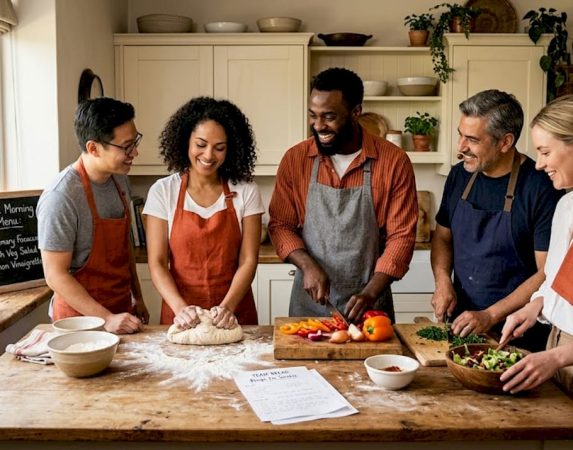
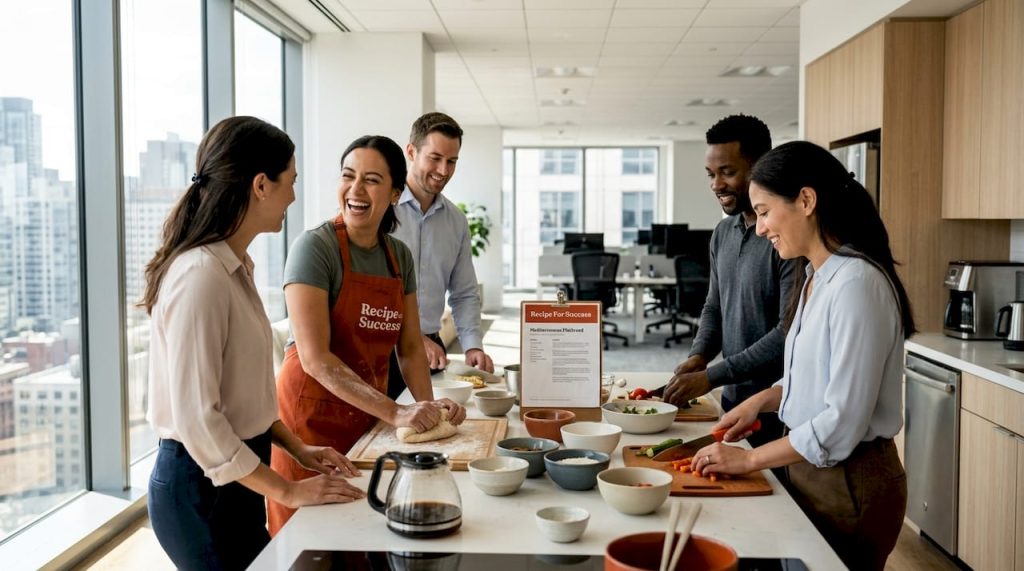
Forget the trust falls and the awkward icebreakers. There’s a more powerful way to bring your team together, and it happens around a cutting board. Sharing meals is linked to greater wellbeing and lower stress, which means cooking and eating together isn’t just enjoyable — it’s genuinely good for your people. Food-based team building takes that idea and runs with it, turning the kitchen into a place where real collaboration happens. In this guide, you’ll learn exactly what it is, how it works, what benefits it delivers, and how to design an experience your team will actually talk about long after the dishes are done.
| Point | Details |
|---|---|
| Shared meals build trust | Culinary team building uses meal-sharing to strengthen workplace relationships and lower stress. |
| Evidence-backed benefits | Research confirms hands-on cooking and eating together improve team autonomy and wellbeing. |
| Practical program design | Tips and proven steps help you craft culinary events that truly engage your team. |
| Sustained impact | Food-based activities deliver lasting change compared to traditional, one-off team building. |
At its core, food-based team building means using hands-on cooking and shared meals as a vehicle for strengthening relationships, improving communication, and building trust among coworkers. It’s not catering. It’s not a lunch-and-learn. It’s an active, participatory experience where your team rolls up their sleeves and creates something together.
Think of it as a practical workshop where the deliverable happens to be delicious. Every chopping task, every timed sauce reduction, every group decision about seasoning requires the same skills your team uses at work: listening, dividing responsibilities, adapting under pressure, and communicating clearly.
The best food-based experiences are built around four pillars:
Understanding why cooking is effective for team building really comes down to these elements. They aren’t artificial constructs designed for a workshop. They’re organic and real.
Traditional team building often feels forced. Ropes courses, escape rooms, and personality assessments have their place, but they often feel disconnected from everyday work. The scenarios are artificial, the stakes are low, and the effects tend to fade quickly once everyone’s back at their desks.
Food-based team building is different because the outcome is tangible and personal. You eat the results. Research shows that culinary workshops measurably improve outcomes like food autonomy, self-efficacy, and social connection — and those gains transfer directly to how people show up at work.
| Feature | Traditional team building | Food-based team building |
|---|---|---|
| Engagement level | Moderate | High |
| Tangible outcome | Rarely | Always (you eat it!) |
| Skill transfer to work | Often low | Strong and transferable |
| Stress reduction | Variable | Consistently positive |
| Memory retention | Fades quickly | Sticks with the team |
| Inclusivity | Can exclude introverts | Naturally inclusive format |
Now that you know what it is, let’s talk about how a typical culinary team building event actually plays out. The structure matters. Each phase of the experience is designed to activate different teamwork skills and create a full arc from strangers to collaborators.
Each of these steps activates something different. Briefing builds psychological safety. Cooking under time pressure builds resilience. Eating together builds belonging. You can explore how this maps to a real experience in our guide on step-by-step team meal prep that creates genuine team connection.
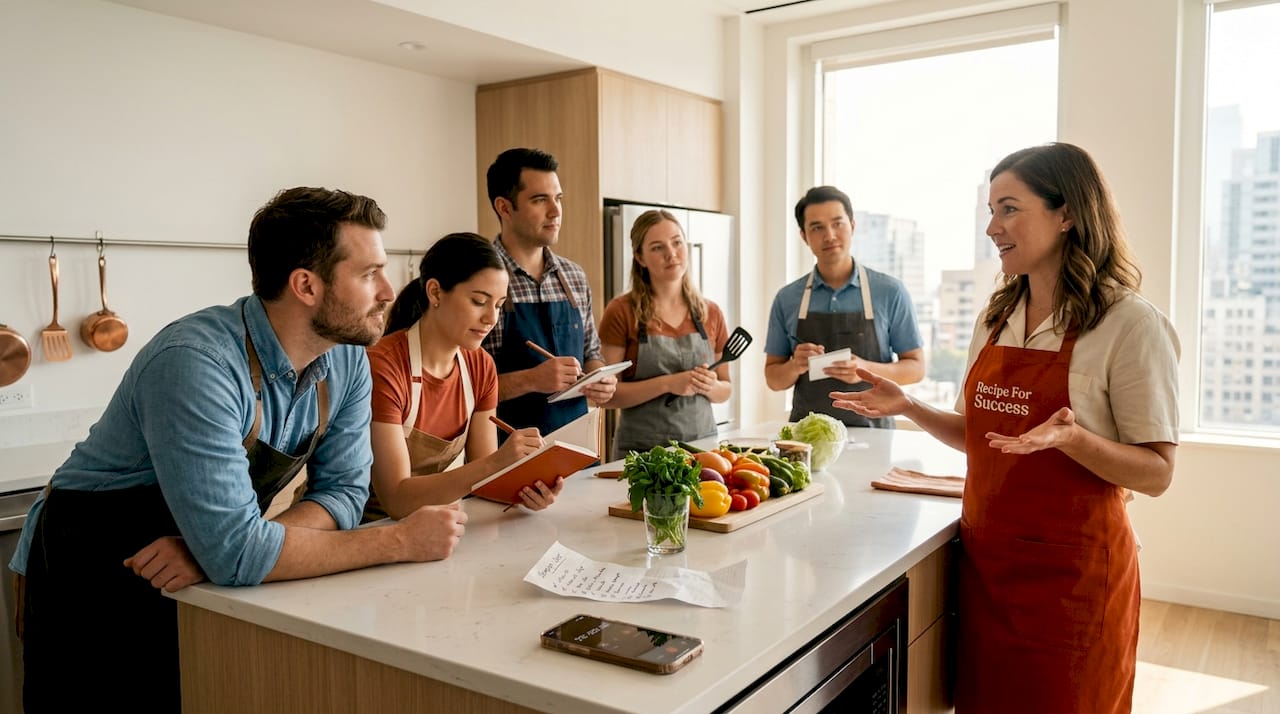
Pro Tip: Ask your facilitator to build in a “strategy moment” before cooking begins — five minutes where the team decides who does what. This mirrors real project kickoffs and dramatically improves both the cooking results and the team dynamics conversation afterward.
The most effective facilitators know how to weave learning moments into the flow without making it feel like a lecture. When your team debates whether to add more chili, they’re practicing negotiation. When someone takes charge of the stove, they’re practicing leadership. It happens naturally, which is why the effects feel authentic. You can read more about effective team building methods and how they apply to culinary formats.
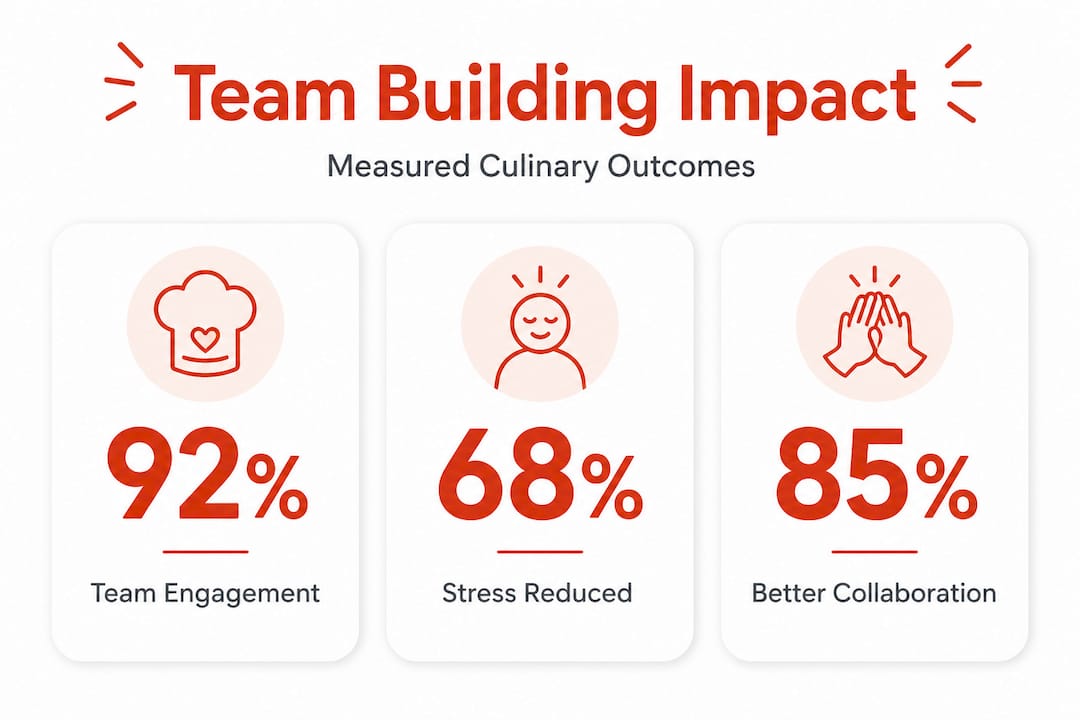
Let’s get specific about what your team actually gains from this kind of experience. The benefits aren’t just “it was fun.” They’re measurable, lasting, and relevant to your organization’s goals.
Cooking requires vulnerability. You don’t always know what you’re doing. You have to ask for help, admit mistakes, and trust your teammates to hold up their end. That’s not a simulation of workplace trust — it IS workplace trust, just in a kitchen context.
“Food-based experiences create the conditions for authentic connection that most professional development programs struggle to engineer. When people cook together, the walls come down naturally.”
Teams that cook together consistently report feeling more comfortable speaking up in meetings, giving feedback, and collaborating on difficult projects. That openness starts at the cutting board.
This is where the research really shines. Eating meals together is strongly linked to improved wellbeing and measurable reductions in stress and sadness. For HR managers dealing with burnout, disengagement, and retention challenges, that’s not a small thing. That’s a direct intervention.
Unlike a one-time workshop that fades from memory by Friday, culinary events tend to stick. Culinary workshops report improvements in food autonomy and health behaviors that persist well beyond the session itself. When a team shares a cooking experience, the memory is sensory, emotional, and social — three things that drive long-term retention.
You can dig deeper into what makes team building effective and how culinary experiences check those boxes in ways traditional formats often miss. For specific program ideas, take a look at top culinary team building events that real teams have loved.
| Benefit | Reported improvement | Timeframe |
|---|---|---|
| Team wellbeing | Significant | Immediately post-event |
| Stress reduction | Measurable | During and after event |
| Social connection | Strong | Lasting effect reported |
| Food autonomy and habits | Notable | Weeks after event |
| Communication openness | Moderate to strong | Ongoing workplace effect |
Knowing the benefits is one thing. Actually planning a great event is another. Here’s how to set your team up for a kitchen win, from format selection to the finer details.
Your first decision is format. Options include:
Each format has its strengths. A single afternoon event works great for team bonding after a big project. A recurring series is better if you want to shift team culture over time.
Browse a range of team building ideas to find the format that fits your team’s size, culture, and goals.
Not every culinary event lands well. Here’s what tends to go wrong and how to avoid it:
Pro Tip: Design team roles that mirror your workplace structure. If someone’s a natural project manager, put them on timeline duty. If someone’s creative, let them handle plating. This makes the experience feel relevant and reveals strengths in a new context.
Here’s something worth sitting with: most team building fails not because the activities are bad, but because they’re separate from how people actually experience connection. We don’t bond over PowerPoints and we don’t form trust in conference rooms. We bond over meals, over shared effort, over moments where we let our guard down.
The kitchen is one of the few places in a professional setting where it’s genuinely okay to not know what you’re doing. That permission to be a beginner — to ask your colleague how to dice an onion — is extraordinarily rare. And it’s where real trust gets built.
We’ve seen teams walk into culinary events as polite strangers and leave as people who actually understand each other. Not because of a debrief or a team assessment, but because they burned the garlic together and laughed about it. Because someone who’s usually quiet in meetings turned out to be an amazing cook, and the whole team saw a new side of them.
That kind of revelation doesn’t happen on a ropes course. It happens when people are doing something real, something sensory, something that has an outcome they all share. You can read the unfiltered version of this from insights from a team building chef who has facilitated hundreds of these moments.
The uncomfortable truth about traditional team building is that it often prioritizes novelty over depth. Food-based experiences do the opposite. They’re familiar — everyone eats — but they create depth through shared vulnerability, shared effort, and a shared table.
If this guide has stirred something up for you — a spark of excitement, a recognition that your team deserves something better than the usual team-building routine — we’d love to help you cook up something special.
At Recipe for Success, we design chef-led culinary experiences that transform teams, one dish at a time. Whether you’re looking for a high-energy culinary team building challenge or want to browse our most popular top corporate cooking events for inspiration, we have programs built specifically for corporate teams of all sizes and backgrounds. Every experience is designed to be inclusive, engaging, and genuinely memorable. Ready to get started? Explore our culinary team building events and find the perfect fit for your team today.
Food-based team building uniquely combines hands-on collaboration with social bonding, and sharing meals is linked to measurably higher wellbeing and lower stress, making the benefits both immediate and lasting compared to most traditional formats.
Collect dietary information well before the event, offer menu options that cover common restrictions, and work with your facilitator to ensure every participant has a meaningful role and something great to eat.
A single session of two to three hours is enough to create a meaningful impact, while in-person culinary workshops run over four to twelve weeks deliver deeper and more lasting behavioral change.
Absolutely. Virtual cooking workshops using ingredient delivery kits and video platforms can recreate much of the connection and energy of in-person culinary events, making them a great option for distributed teams.
Yes. Research consistently shows that culinary workshops improve food autonomy, self-efficacy, social connection, and group wellbeing, all of which translate directly into healthier, more cohesive workplace teams.