Leadership training has a reputation problem. For many teams, it conjures images of PowerPoint slides, personality quizzes, and awkward icebreakers that nobody asked for. But culinary leadership training is flipping that script entirely. By putting your team in a professional kitchen, you create an environment where leadership skills aren’t just discussed — they’re practiced, tested, and genuinely felt. For HR professionals and team leaders searching for something that actually sticks, this approach delivers results you can taste.
| Point | Details |
|---|---|
| Hands-on leadership practice | Culinary leadership training provides real-time, interactive learning that goes beyond theory. |
| Builds inclusivity and teamwork | Programs are designed to engage all team members, regardless of their cooking abilities or dietary preferences. |
| Flexible for any workplace | Culinary leadership can be delivered in-person, virtually, or as a hybrid, making it ideal for diverse teams. |
| Real-business skill development | Participants improve communication, adaptability, and problem-solving in an enjoyable and memorable way. |
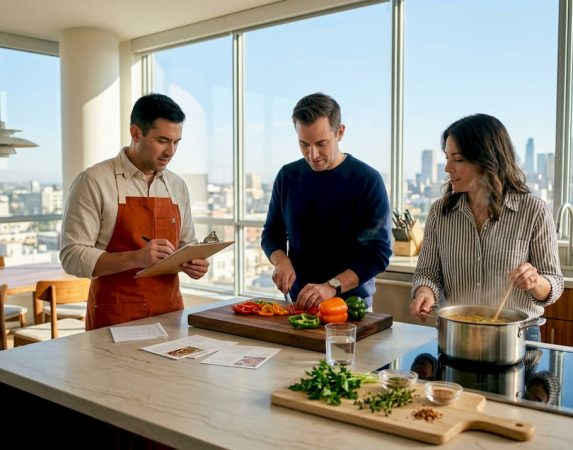
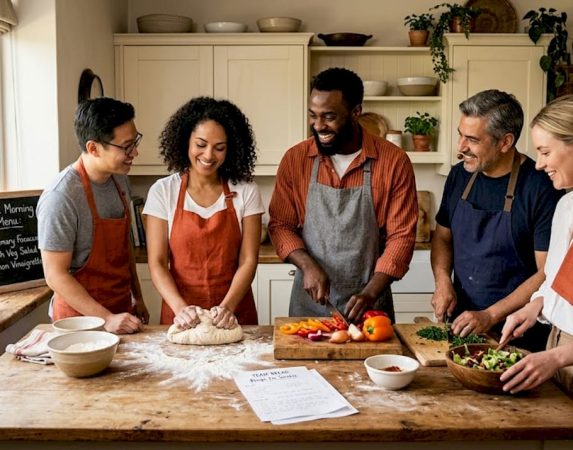
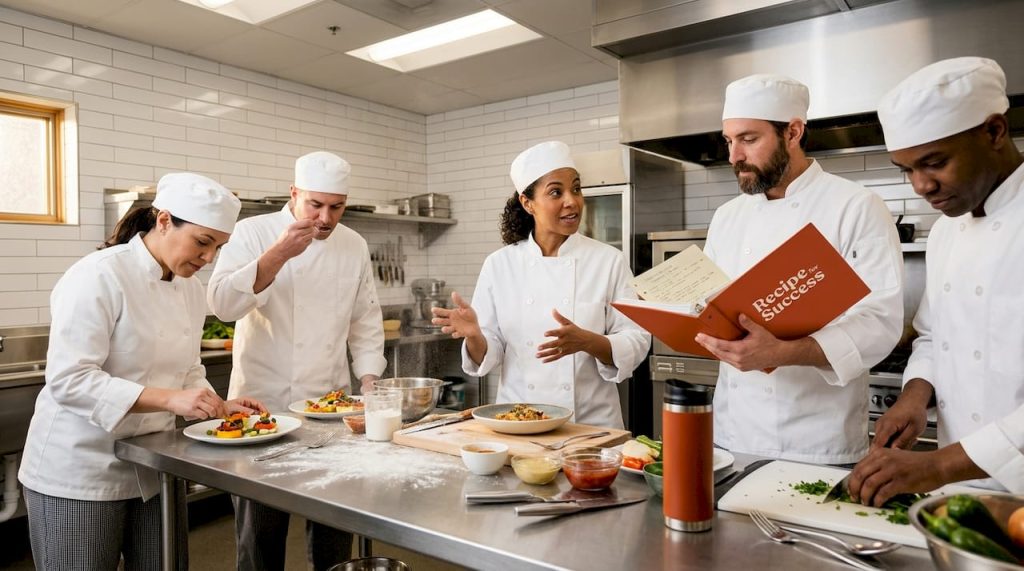
Culinary leadership training is a structured, experiential learning program that uses the kitchen as a classroom. Instead of sitting through lectures about communication or delegation, your team rolls up their sleeves, ties on an apron, and works together to plan, prepare, and serve a meal under real pressure. The kitchen becomes a live business simulation, where deadlines are real, roles matter, and collaboration is non-negotiable.
This is very different from a standard corporate leadership workshop. Traditional programs often rely on theory and hope participants connect the dots on their own. Culinary leadership training closes that gap by making the learning tangible. You don’t just hear about the importance of clear communication. You experience what happens when it breaks down — and your soufflé falls flat because of it.
The kitchen setting creates natural moments for growth:
One of the strongest advantages of culinary leadership training is how naturally inclusive it can be. Culinary challenge team building programs work because they can be designed around your team’s specific makeup. Providers can balance skill levels, accommodate dietary needs and allergies, and include non-cooking roles for full inclusivity, and virtual or hybrid formats make it accessible for remote teams too.
“The kitchen is one of the most honest environments you can put a team in. There’s no hiding behind titles. Everyone has a job to do, and the dish either works or it doesn’t.”
That kind of clarity is rare in corporate settings. It’s exactly what makes culinary leadership training so powerful.
Now that you understand what culinary leadership training involves, let’s look at the specific skills your team walks away with. These aren’t soft, hard-to-measure outcomes. They’re concrete behaviors that show up Monday morning back at the office.
| Leadership skill | How the kitchen develops it | Real-world application |
|---|---|---|
| Communication | Calling out orders and status updates | Clearer meetings and project updates |
| Delegation | Assigning stations and trusting teammates | Effective task distribution at work |
| Adaptability | Handling substitutions and timing issues | Navigating shifting priorities |
| Empathy | Supporting teammates who struggle | More inclusive and supportive culture |
| Trust | Relying on others to execute their role | Stronger cross-functional collaboration |
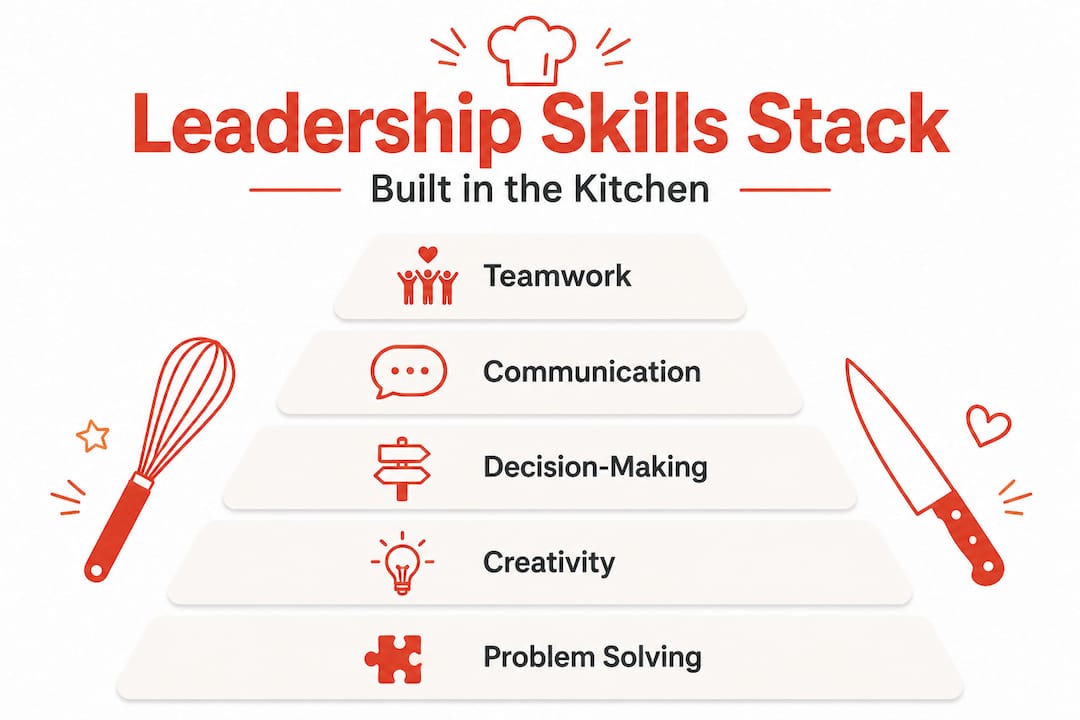
The kitchen mirrors business challenges in ways few other environments can. Think about a high-stakes product launch. You have a deadline, multiple moving parts, people with different strengths, and no room for ego. A culinary training session recreates that pressure in a fun and memorable format. When your team nails the dish, the shared victory feels real. When something goes sideways, the debrief conversation is rich with lessons.
Here’s a numbered breakdown of how the skills build on each other during a typical session:
One area many HR leaders overlook is the importance of connecting departments through food. When marketing works alongside finance to plate a dish, those invisible silos start to crumble. That cross-pollination is often the most important aspect of team building — not just the activities themselves, but the relationships formed across functions.
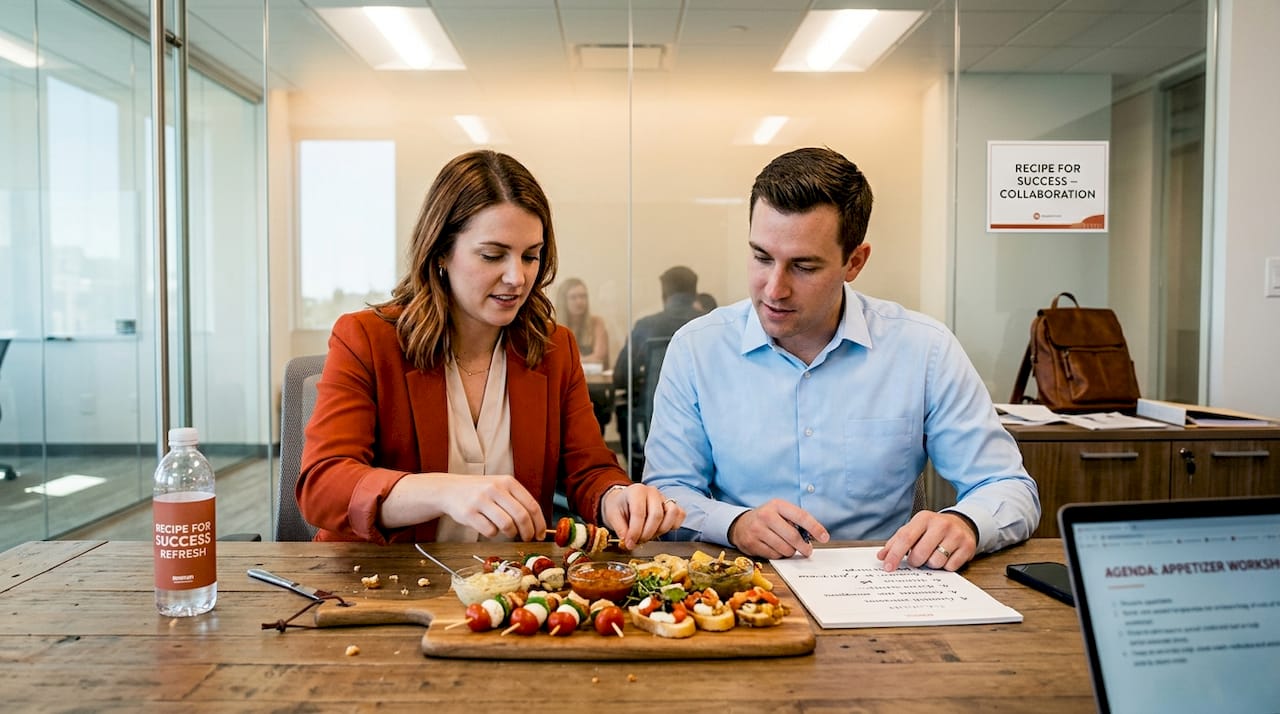
Pro Tip: Rotate roles throughout the session. Have your natural leaders take a supporting position and quieter team members step into the lead role. You’ll learn more about your team’s dynamics in two hours than you would from months of performance reviews.
And remember, inclusivity isn’t optional. Programs can accommodate dietary needs and allergies and assign non-cooking roles such as timekeeping, plating coordination, and team narration for those who prefer not to cook. No one gets left at the table.
With a clear picture of the skills involved, let’s explore the formats your organization can actually choose from. Not every team is the same, and the best culinary leadership programs reflect that.
| Format | Best for | Key feature |
|---|---|---|
| In-person workshop | Co-located teams wanting full immersion | Hands-on kitchen access with a live chef |
| Virtual session | Remote or distributed teams | Ingredient kits shipped to participants |
| Hybrid experience | Mixed in-office and remote teams | Split facilitation across physical and digital spaces |
| Competitive challenge | High-energy teams who love friendly competition | Iron Chef style judging and structured rounds |
| Global cuisine theme | Diverse teams celebrating cultural inclusion | Dishes tied to team members’ backgrounds |
Each format has its own energy and outcome. An in-person Iron Chef style challenge is electrifying. Teams compete in timed rounds, present their dishes to a panel, and debate creative decisions on the fly. It’s fast, fun, and authentically mirrors the pressure of a product sprint or client pitch. A fresh take on culinary team building, like a sushi and sake night, adds a cultural dimension that sparks conversation well beyond the kitchen.
Popular program themes include:
That last one is worth noting. You can actually include your customers in team building activities, creating shared experiences that deepen client relationships while also developing your team’s hospitality and communication skills. It’s a rare two-for-one that most training formats simply can’t offer.
Virtual and hybrid options have become increasingly robust. Providers now ship ingredient kits directly to remote participants, guided by a live chef facilitator on screen. These sessions maintain much of the energy and interactivity of in-person formats while keeping geographically distributed teams fully engaged.
Pro Tip: When selecting a program, look for options that deliberately build in non-cooking roles. Not everyone is comfortable at a stovetop, and the best programs make sure every team member has a meaningful, valued contribution regardless of culinary confidence.
You’re ready to take action. Here’s exactly how to plan and launch a program that fits your team and delivers measurable results.
Define your objectives. What does success look like? Better cross-department communication? Stronger trust among managers? Improved morale after a difficult quarter? Write it down. Clear goals shape every decision that follows.
Assess your team’s makeup. Before selecting a format, consider team size, remote versus in-person split, dietary restrictions, and range of cooking comfort. Gather this information via a short pre-program survey. The best programs are designed around your people, not the other way around.
Select a qualified culinary facilitator. Not all cooking experiences are true leadership training. Look for providers who combine culinary expertise with facilitation skills. The chef should know how to draw out leadership moments, not just teach knife technique. A facilitator who understands business goals will tie the kitchen experience directly to workplace behaviors.
Design the experience together. Work with your provider to choose a format, theme, and difficulty level that matches your team. Confirm that the program accommodates dietary needs and includes non-cooking roles so every participant feels genuinely included.
Communicate clearly with participants. Share what to expect in advance. Let people know the session is about connection and learning, not culinary perfection. This reduces anxiety and increases engagement, especially for team members who feel nervous about cooking in front of colleagues.
Run the session with intention. On the day, encourage your facilitator to call out leadership moments in real time. When someone takes initiative, communicates clearly, or lifts a struggling teammate, those behaviors deserve recognition. The debrief at the end is often where the deepest learning happens.
Measure outcomes and collect feedback. Send a follow-up survey within 48 hours. Ask specific questions about trust, communication, and energy. Compare responses to your pre-program baseline. Building an effective team isn’t a one-time event, so use this data to inform your next initiative.
Keep the momentum going. Share photos from the session, celebrate standout moments in team meetings, and reference the kitchen experience when leadership behaviors show up back at work. The session becomes a shared language for your team.
Pro Tip: Partner with experienced culinary facilitators who understand business goals, not just culinary technique. The right facilitator turns every chopped onion and missed cue into a meaningful leadership lesson your team will actually remember.
We’ve seen a lot of leadership programs. Personality assessments, ropes courses, trust falls, half-day seminars with catered sandwiches. And while some of those have genuine value, most of them share a common problem: they ask teams to learn in a context that doesn’t feel real.
Culinary leadership training works for a different reason. The stakes feel genuine because the outcome is tangible. You either make a good meal or you don’t. That clarity cuts through the usual corporate fog. People stop performing and start doing. That shift is where real learning lives.
We’ve also seen that the joy factor matters more than most training designers admit. When people are laughing, competing, tasting, and creating together, their guards come down. Conversations happen at the prep table that would never happen in a conference room. An executive and a junior team member discover they share the same instinct about plating. A quiet analyst turns out to be the calmest decision-maker under pressure. The team building chef perspective reveals what we’ve consistently found: kitchens are honest spaces that reveal who people really are at work.
Most programs miss the importance of shared creative challenge. When a team solves a problem together and sees a beautiful, edible result on the plate, something happens at the group level. It’s not metaphorical. It’s chemical, emotional, and deeply social. That’s the ingredient most corporate training programs forget to add.
Cooking up a stronger team is easier than you think. At Recipe for Success, we design chef-led culinary experiences that go far beyond just making a meal — we help your team build real skills, real connections, and real results.
Whether you’re exploring team building ideas for your next offsite or ready to book a full culinary challenge program, we have formats that fit your team’s size, structure, and goals. From in-person Iron Chef competitions to virtual cooking sessions with shipped ingredient kits, every experience is designed with your business outcomes in mind. Visit Recipe for Success to explore our full menu of culinary team building events and connect with our team to start planning your next unforgettable experience.
Yes, many providers offer virtual and hybrid culinary leadership programs, often with ingredient kits shipped to participants, making it easy to engage remote teams just as effectively as in-person groups.
These programs are designed with full participation in mind, and most include non-cooking roles such as timekeeping, plating coordination, and team narrating so every participant contributes meaningfully regardless of cooking skill.
HR leaders consistently report improved communication, stronger cross-departmental collaboration, higher morale, and more inclusive team cultures following culinary leadership experiences.
Popular themes include global cuisine explorations, competitive Iron Chef style challenges, farm-to-table sustainability workshops, and sessions focused on specific skills like time management, creative problem-solving, and adaptive leadership under pressure.