You’ve invested real time, budget, and energy into a culinary team-building event. The kitchen smells great, people are laughing, and everyone seems to be having fun. But when your leadership team asks whether it actually worked, you’re left guessing. You’re not alone. Many organizations run culinary team-building events and walk away without a clear picture of what changed. This guide gives you a concrete framework to measure engagement before, during, and after your next cooking event so you can prove impact and keep improving.
| Point | Details |
|---|---|
| Define engagement clearly | Identify specific, observable actions and emotions that signal engagement in culinary team-building events. |
| Use multiple measurement tools | Combine surveys, observations, and participation logs for a comprehensive engagement picture. |
| Measure before, during, and after | Gather engagement data at every phase to evaluate impact and spot trends. |
| Interpret results holistically | Review both numbers and team dynamics to guide future event improvements. |
| Avoid common pitfalls | Watch for measurement biases and include all team voices for reliable engagement insights. |
Before you can measure, you need to know what engagement looks like in this unique setting.
Engagement in a cooking environment is richer and more layered than a simple show-of-hands poll. It plays out through behavioral, emotional, and cognitive participation. That means you’re watching how people act, how they feel, and how actively they’re thinking alongside their teammates.
Here’s what genuine engagement looks like in a culinary team-building context. Look for these observable signals:
These signals matter because culinary experiences for team bonding create a hands-on environment that naturally surfaces team dynamics. You’ll spot leadership styles, communication gaps, and trust levels all in a single afternoon.
Compared to office-based activities, cooking events produce more visible, real-time engagement cues. You can see and hear engagement happening in front of you, which makes observation a genuinely powerful measurement tool.
“Culinary events foster collaboration, communication, and creative problem-solving,” making them a uniquely effective environment for observing authentic team behavior beyond what’s possible in a traditional office setting.
Once you know what to look for, gather the right tools to consistently evaluate engagement.
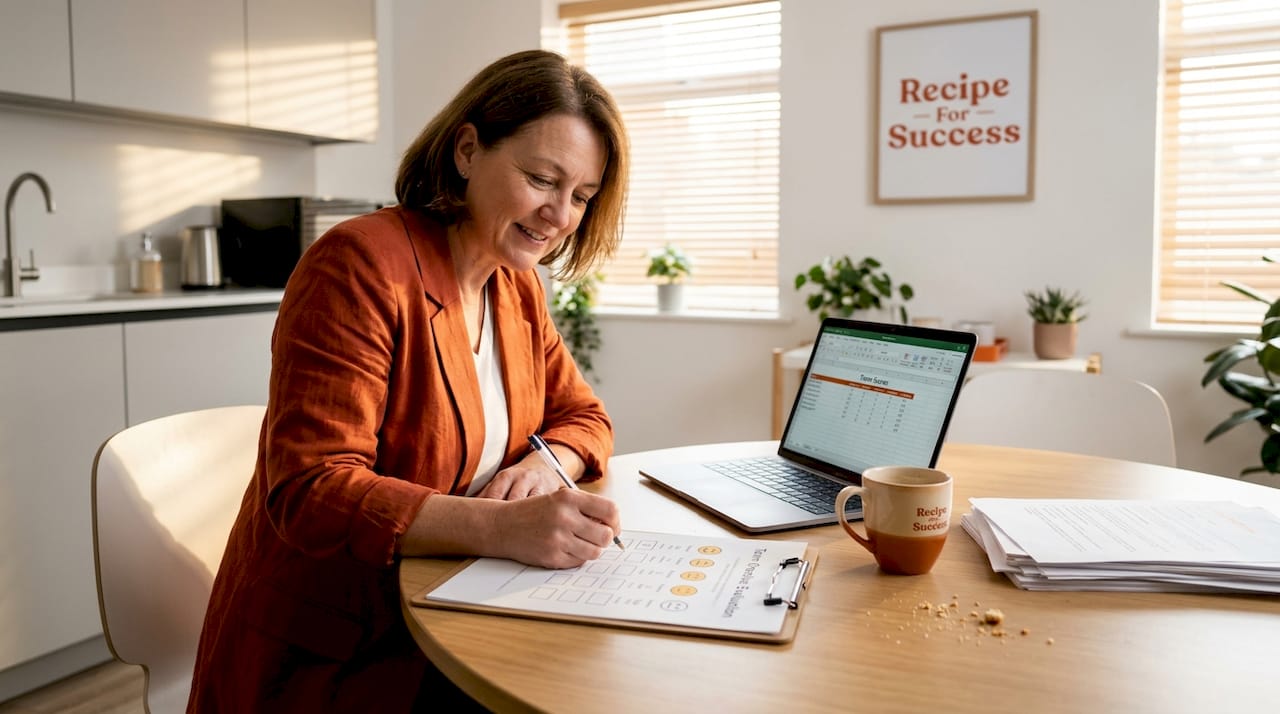
The good news is you don’t need sophisticated software or expensive consultants to measure engagement well. Culinary leadership training tools show that observation, surveys, and participation logs provide structured ways to measure engagement with real accuracy. The key is having your tools ready before the event begins.
Here’s a practical toolkit overview:
| Tool | When to use it | What insights it yields |
|---|---|---|
| Observation form | During the event | Real-time behavioral and emotional cues |
| Participation log | During the event | Who contributed, how often, and in what ways |
| Facilitator notes | During and immediately after | Group energy shifts, turning points, notable moments |
| Post-event digital survey | Within 24 hours after | Participant sentiment, perceived collaboration quality |
| Pre-event baseline poll | 1 to 3 days before | Starting point for team sentiment and mood |
Each tool captures a different layer of engagement data. An observation form catches what you see in the room. A digital survey catches how participants felt about the experience. Facilitator notes capture the story behind the numbers.
It helps to design your observation form around specific indicators, not vague categories. Instead of rating “enthusiasm,” track concrete behaviors like “team member contributed an idea” or “participant supported a struggling colleague.” Concrete tracking produces cleaner, more useful data.
Pro Tip: Assign a neutral observer, someone who isn’t facilitating or participating, to take notes during the event. Facilitators are often too focused on running the session to catch every engagement moment. A dedicated observer gives you a much more objective and complete picture of what actually happened in the kitchen.
Now that you have measurement tools, here’s how to put them into action for real-time and post-event assessment.
A successful measurement approach covers three distinct phases. Skipping even one phase leaves gaps in your understanding. For a complete picture, engagement metrics should be gathered before, during, and after the event.
Phase 1: Pre-event preparation
Phase 2: During the event
Phase 3: Post-event follow-up
Pro Tip: Look for changes in group energy and willingness to collaborate as early signals of engagement. A team that shifts from cautious and quiet to vocal and collaborative within the first 30 minutes is showing strong engagement. That trajectory matters just as much as the final score. You can find more practical strategies in these corporate cooking event tips and explore how culinary challenge measurement strategies can sharpen your approach.
With measurements in hand, you’ll need to decode the story they tell about your team’s dynamics and event effectiveness.
Raw data only becomes useful when you interpret it thoughtfully. Reviewing engagement data helps identify not only successes but also areas for future improvement in team-building strategy. That means looking for both strengths to celebrate and patterns that suggest where the next event should focus its energy.
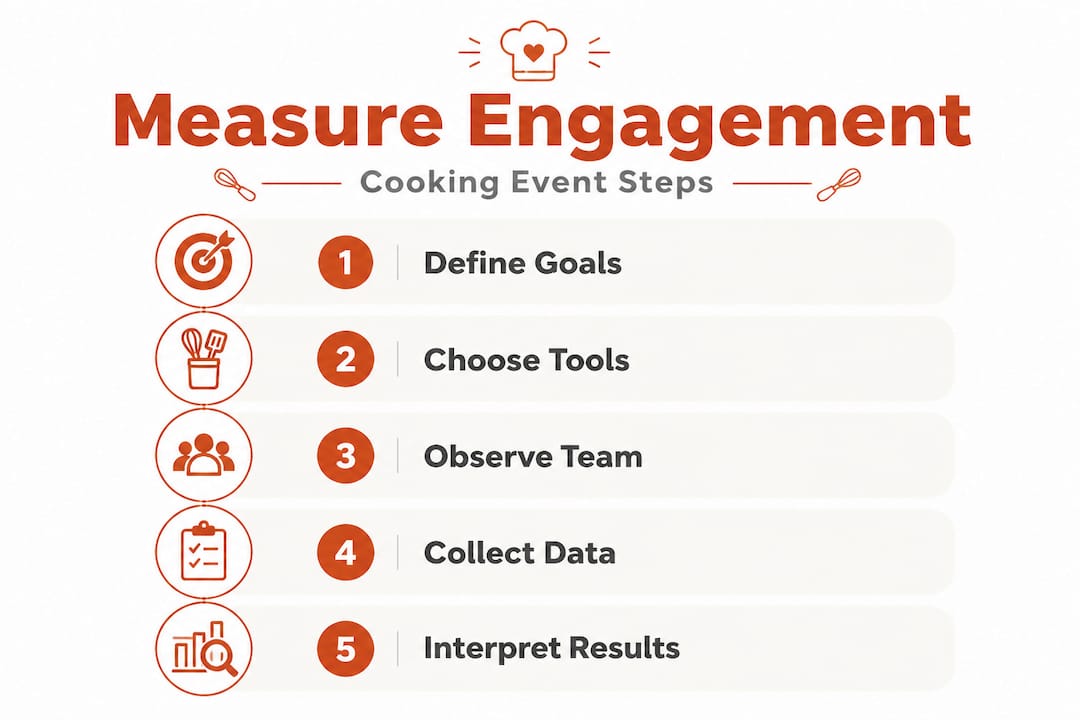
Here’s a comparison to help you contrast high and low engagement outcomes:
| Metric | High engagement signals | Low engagement signals | Team impact |
|---|---|---|---|
| Participation rate | Most team members contributed actively | Several members stayed on the sidelines | Indicates inclusion or communication gaps |
| Idea generation | Multiple creative suggestions offered | Few or no unprompted contributions | Reflects psychological safety levels |
| Peer support | Teammates helped each other spontaneously | Individuals worked in isolation | Signals trust and team cohesion levels |
| Group energy | Lively, upbeat atmosphere throughout | Quiet, disconnected energy | Shows overall motivation and morale |
| Post-event survey scores | High marks for collaboration and fun | Low scores or mixed responses | Points to structural or facilitation issues |
Once you’ve reviewed your data through this lens, here are practical next steps to take:
The goal of effective team-building analysis isn’t to grade your team. It’s to understand where the connections are forming and where they still need nurturing.
Understanding what not to do can improve your chances of meaningful, actionable measurement and avoid wasted effort.
Even well-organized HR leaders fall into predictable traps when assessing engagement at cooking events. Here are the most common pitfalls and how to sidestep them:
The most effective team-building assessments are holistic and multi-layered. Combining behavioral observation, participant self-reporting, and facilitator insight produces findings that are both accurate and genuinely actionable.
When you catch and correct these mistakes early, your measurement practice becomes a genuine strategic asset rather than a box-checking exercise.
Checklists and data tables are useful. But here’s something that often gets overlooked: the most important things that happen in a culinary team-building event can’t always be captured by a metric.
There’s a moment that happens in nearly every cooking session. Someone burns the onions, the timeline falls apart, and the group has to pivot together. Nobody planned for it. The facilitator didn’t script it. But the team laughs, problem-solves, and keeps moving. That moment of shared vulnerability and recovery is often worth more than any polished team retreat presentation.
We’ve seen it again and again. Teams that seem disconnected in meeting rooms come alive when they’re side by side at a prep station. Something about the tactile, time-pressured nature of cooking strips away hierarchy and role-based behavior. People just… work. They communicate directly, support each other instinctively, and take pride in what they create together.
The risk of focusing too narrowly on engagement scores is that you start optimizing for the metric rather than the experience. You might design an event that produces great survey numbers but misses the messier, more meaningful interactions that actually build trust over time.
When building team bonds with cooking, the real ROI often shows up weeks later: a colleague who now asks for help more readily, a cross-department pair who finally communicate without friction, a manager who sees a quiet team member in a completely new light. These outcomes are harder to measure but easier to feel.
Our recommendation is to use your data as a compass, not a scorecard. Let engagement metrics guide your decisions, but keep your eyes open to the qualitative shifts that numbers can’t fully capture. Those are often the signs that something genuinely meaningful happened in that kitchen.
Ready to put what you’ve learned into practice and inspire your team?
At Recipe for Success, we don’t just design great cooking experiences. We build them around your team’s specific goals, with expert facilitation that makes engagement visible and meaningful from the very first chop. Every session is structured to surface the behaviors you care about most: real collaboration, open communication, and genuine creative investment.
Whether you’re looking to try our signature culinary team challenges, browse our full menu of cooking team-building programs, or simply want guidance on how to build stronger team bonds through the power of food, we’re here to help you cook up something extraordinary. Your team deserves an experience that goes beyond fun and actually moves the needle. Let’s make that happen together.
Participation rate, frequency of collaboration, and quality of group discussions are among the most insightful metrics for engagement in cooking events. Collaboration and communication are core engagement drivers in culinary team-building events and should anchor your measurement framework.
Assign mixed roles and encourage pair work to ensure everyone has opportunities to contribute comfortably. Engagement measurement should consider both vocal and quieter participation styles so no contribution goes unnoticed.
Yes, short digital surveys can provide timely feedback but are more reliable when combined with live observations. Observation, surveys, and participation logs used together give a far more complete and trustworthy picture than any single tool alone.
Analyze engagement data within a week while details and impressions are still fresh. Reviewing engagement data promptly helps you identify not only successes but also specific areas to improve in your next team-building strategy.