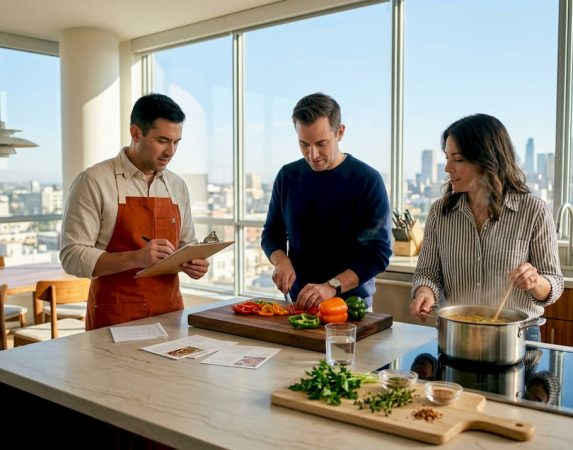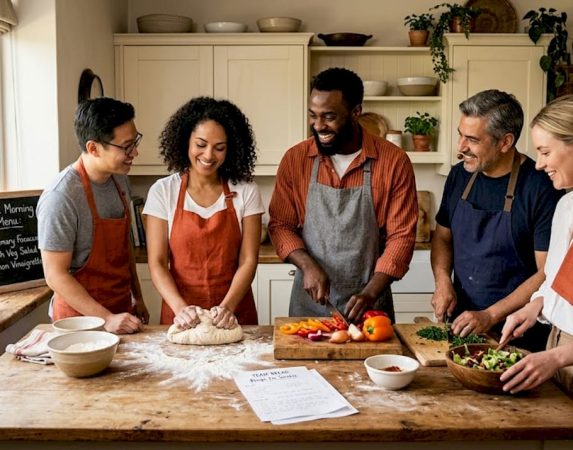
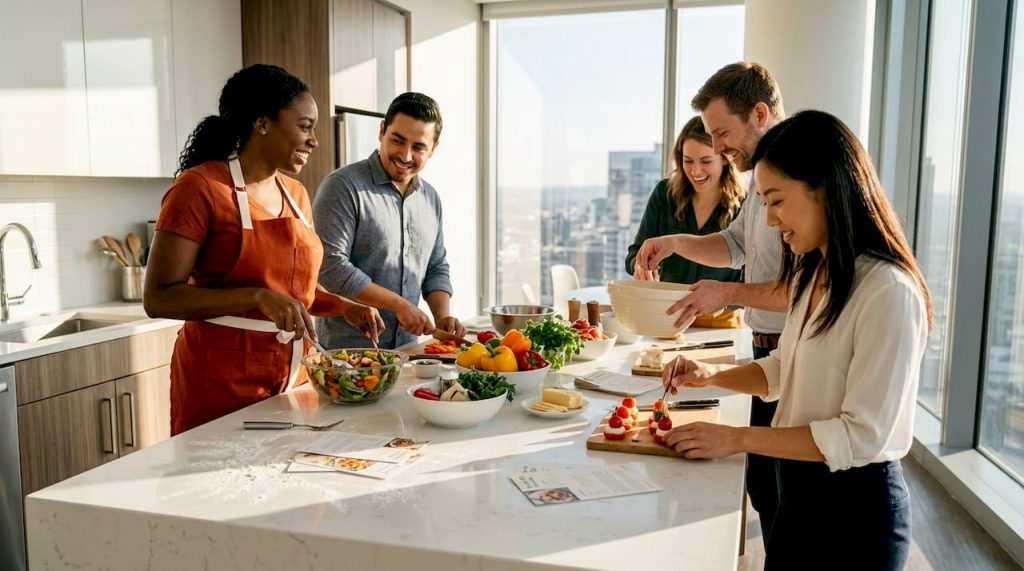
Getting a room full of colleagues to genuinely connect is harder than it looks. Small talk fades fast, and most team-building exercises feel forced. That’s exactly where culinary icebreaker activities change the equation. Food is universal. It’s sensory, collaborative, and disarming in a way that a trust fall or trivia quiz simply isn’t. When people cook, taste, and laugh together, real conversations start. This guide gives you a curated list of the best cooking icebreakers for corporate events, plus a framework for choosing what works for your team.
| Point | Details |
|---|---|
| Food builds trust fast | Shared meals enhance cooperation and communication, making culinary activities uniquely effective for team bonding. |
| Inclusivity is non-negotiable | Gather dietary restrictions and allergy information before any food-based activity to keep everyone safe and comfortable. |
| Match activity to context | Team size, event length, and format (in-person or virtual) should drive which culinary icebreaker you choose. |
| Structure drives success | Activities with clear time limits and defined roles keep energy high and prevent the event from drifting. |
| Professional facilitation amplifies results | Chef-led experiences remove logistics stress and let teams focus purely on connection. |
Not every cooking icebreaker fits every event. Before you land on a specific activity, run it through these five filters.
Engagement and inclusivity. The best culinary icebreaker activities pull in everyone, not just the confident cooks. Look for formats where participation doesn’t require culinary skill. Taste tests, ingredient guessing games, and build-your-own snack bars all work well because no one needs to know how to julienne a carrot.
Time and complexity. A 15-minute icebreaker at the top of a half-day event has different requirements than a 90-minute standalone activity. Match the complexity to your window. Relay races and “Chopped”-style challenges need more runway. Trivia games and taste tests can wrap up quickly.
Dietary restrictions and allergy safety. This is the filter most planners underestimate. Proactive allergy management means collecting dietary information before the event, not at the door. Avoid any ingredient where you are uncertain about cross-contamination.
Space, materials, and budget. Some activities need full kitchen setups. Others work on a conference table with store-bought ingredients. Know what you have before you plan what you want.
Communication and collaboration. Ask yourself: does this activity require people to talk, negotiate, and make decisions together? The best cooking icebreakers put mild pressure on teams to communicate in real time, which is where the bonding actually happens.
Pro Tip: Send a short pre-event form asking about dietary needs, allergies, and even favorite cuisines. You get better safety data and a natural conversation starter built right into the experience.
Here are nine standout activities, each designed with corporate teams in mind. Use these descriptions to match activities to your event format, group size, and goals.
Inspired by the television competition, this activity gives small teams a basket of surprise ingredients and a time limit to create a dish. Basket ingredients work best when any reasonable cook can conceptualize a use for them within seconds, so keep the mystery items fun but not bizarre. The recommended format runs about 60 minutes total: ten minutes for introductions, 30 to 35 minutes of cooking, and 15 to 20 minutes of tasting and judging.
This format works because it creates mild pressure that forces communication. Teams have to delegate tasks, make quick decisions, and trust each other. That’s exactly the dynamic you want to build in a workplace.
Food trivia rounds are low-barrier, high-energy, and work across dietary needs because no one has to eat anything. Divide the team into groups of four to six and run three to five rounds of food-focused questions. Categories can include global cuisines, cooking techniques, ingredient origins, and food history.
Pro Tip: Weave in your company’s city, culture, or recent team trip as one of the trivia categories. It personalizes the game and gives people a reason to laugh about shared experiences.
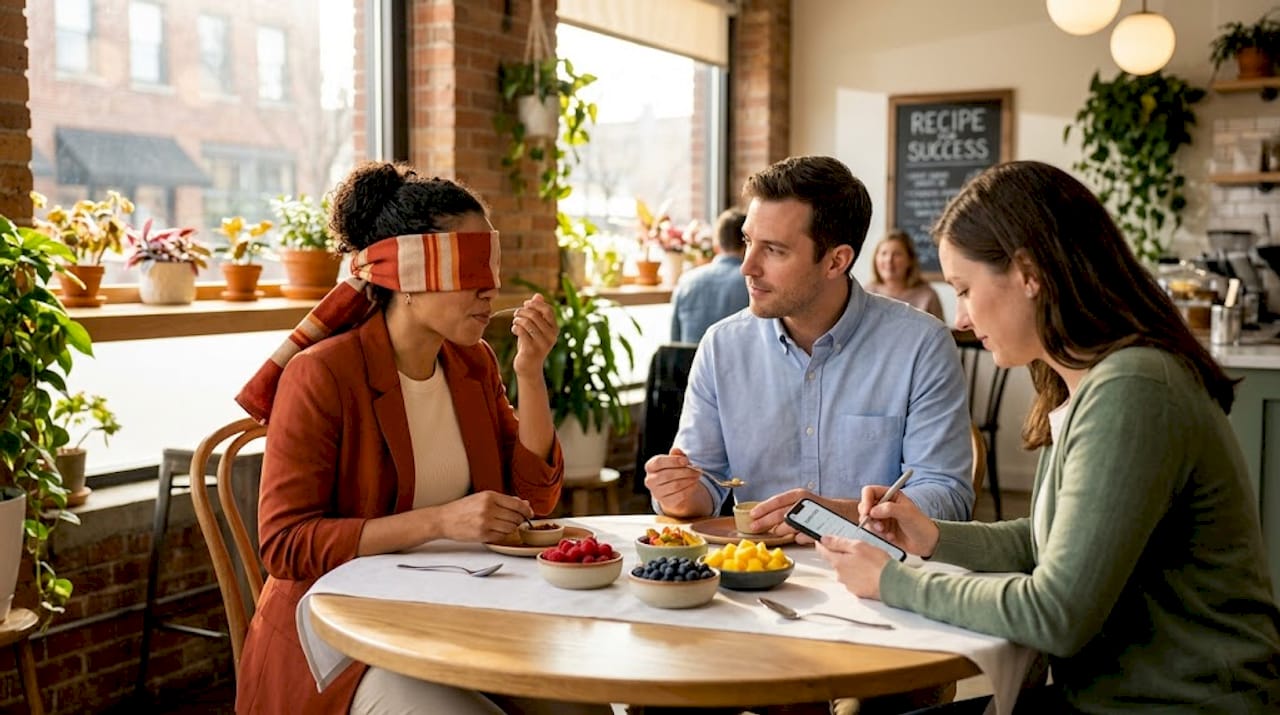
Teams sample unlabeled foods and guess what they are. You can theme this around global snacks, artisan cheeses, hot sauces, or non-alcoholic beverages. The sensory engagement gets people talking immediately, and the guessing creates natural team dynamics.
This activity shines in its simplicity. You don’t need a kitchen. You need a table, some small cups, and a good selection of items.
Teams pass a dish from one person to the next, with each person completing one step before handing off. Think of it like an assembly line where every link matters. One person chops, the next seasons, the next cooks, and the last plates and presents.
The relay format mirrors real workplace dynamics around handoffs and accountability. It’s one of the most effective cooking team building games for groups where cross-functional collaboration is a real goal.
Participants smell, touch, or taste mystery ingredients (without seeing them) and write down their guesses. You can go exotic with truffles and miso, or keep it accessible with common pantry staples. The reveal moment always generates conversation.
This works particularly well as a standalone warmup before a longer cooking session or workshop.
Set up stations with a variety of toppings, sauces, and bases (think taco bars, bruschetta, or grain bowls) and let participants create their own combinations. There’s no pressure, no competition, and no wrong answer.
The beauty of this format is that it naturally creates conversation. People compare creations, ask each other for recommendations, and bond over shared preferences.
Ask team members to bring a dish (or a recipe, for a virtual format) from their cultural background and share the story behind it. This works especially well in diverse teams and generates genuine curiosity and respect.
Shared meals weekly are linked to measurably better wellbeing scores. This activity builds that same effect into a single afternoon.
Groups compete or collaborate to create a signature non-alcoholic (or alcoholic, if appropriate) drink using a provided ingredient list. They pitch the drink’s name, flavor profile, and story to a panel of judges.
This format borrows from the pitch culture many corporate teams already know. It adds a fun twist by making the product something you can actually taste.
Teams research and recreate a street food dish from an assigned country using a kit of ingredients. They present their dish with context about its origin and cultural significance.
This is one of the most memorable options on any interactive culinary activities list because it combines creativity, research, and hands-on cooking in one format.
| Activity | Group size | Time | Complexity | Dietary safety | Best for |
|---|---|---|---|---|---|
| “Chopped”-style challenge | 3–4 per team | 60 min | High | Moderate | In-person with kitchen |
| Food trivia | Any | 20–30 min | Low | High (no food consumed) | Virtual or in-person warmup |
| Blind taste test | 6–30 | 20–40 min | Low | High with advance planning | Conference breaks |
| Cooking relay race | 4–6 per team | 45–60 min | Medium | Moderate | Cross-functional teams |
| Ingredient guessing game | Any | 15–25 min | Low | High | Short warmups |
| Build-your-own snack bar | Any | 30–45 min | Low | High | Large mixed groups |
| Cultural cuisine sharing | 8–30 | 60–90 min | Low–Medium | Variable | DEI or onboarding events |
| Team mixology | 3–5 per team | 45–60 min | Medium | High (non-alcoholic option) | Creative teams |
| Global street food challenge | 4–6 per team | 75–90 min | High | Moderate | Leadership retreats |
The comparison table tells you what each activity requires. This section tells you how to match that to your actual situation.
For small teams (under 15 people), the “Chopped”-style challenge or cultural cuisine sharing creates the most personal connection. You have enough intimacy that stories and conversations carry real weight.
For large groups (30 or more), build-your-own snack bars and food trivia scale best. Both can run across multiple stations or breakout rooms without losing energy.
For virtual or hybrid events, food trivia, ingredient guessing kits (mailed in advance), and recipe sharing sessions translate well online. The key is sending materials to participants before the event so everyone has something tangible in hand.
For tight budgets, snack bars and trivia rounds require minimal investment. Cultural cuisine sharing can be entirely potluck-style, which costs almost nothing to facilitate.
For premium or high-stakes events, the global street food challenge and team mixology sessions create the kind of memorable experience that people reference for months. This is where professional facilitation from a group like Recipeforsuccess pays real dividends.
Managing dietary needs across any format requires one non-negotiable step: written allergen protocols with individually labeled meals. Verbal assurances at the event are not enough. Labels should include the participant’s name, the dish, and which allergens were excluded.
Pro Tip: For teams with significant dietary diversity, run a “safe zone” station at every culinary event. This is a dedicated table with clearly labeled allergen-free options that anyone can access without asking.
I’ve facilitated a lot of team events. Enough to know that most traditional icebreakers produce performance, not connection. People answer “two truths and a lie” and move on. Nobody is actually changed by it.
Culinary icebreakers work at a different level. When food is involved, something shifts. There’s science behind it. Sharing food triggers oxytocin release, the same neurochemical that creates trust and social bonding. That’s not a metaphor. It’s what’s actually happening in the room when a team tastes each other’s cooking and laughs about it.
What I’ve also seen is this: teams that eat together build psychological safety faster than teams that only work together. Psychological safety is foundational for the kind of honest, creative collaboration companies say they want but rarely achieve.
The events that stick are the ones that feel real. A relay race where someone burned the onions. A taste test where the CEO couldn’t identify a kumquat. These moments create shared stories, and shared stories create team identity. No slide deck does that.
My advice: don’t wait for a big annual event. Find a culinary icebreaker that fits your next team meeting and try it. You can build team bonds through culinary experiences at almost any scale, and the return on a single well-run food-based activity will surprise you.
— David
Reading about culinary icebreaker activities is one thing. Running one that actually lands, especially for a large or diverse team, is another challenge entirely.
Recipeforsuccess specializes in chef-led culinary team building programs built specifically for corporate groups. Every experience is designed to handle the logistics that trip up most planners: dietary restrictions, kitchen setup, facilitation flow, and keeping energy high from start to finish. Whether you want a “Chopped”-style competition for 20 people or a cultural cuisine showcase for 100, the team builds a program around your goals. Explore the full range of culinary team building ideas and find the right fit for your next event. Start cooking!
Culinary icebreaker activities are food-based experiences designed to help team members connect and communicate in a relaxed, hands-on setting. They range from cooking challenges and taste tests to food trivia and cultural cuisine sharing.
Shared meals enhance cooperation and communication, and sharing food triggers oxytocin release that builds trust. These biological and social effects make culinary activities uniquely powerful for breaking down barriers between colleagues.
Collect dietary and allergy information before the event, and use written allergen protocols with individually labeled meals. Never rely on verbal communication alone during the event itself.
Food trivia and pre-mailed ingredient kits for blind taste tests work well virtually. The key is giving remote participants a physical food element in advance so the experience feels shared and not one-sided.
Most effective culinary icebreakers run between 20 and 60 minutes. Short warmup activities like trivia or taste tests work well in 20 to 30 minutes, while challenge-based formats like “Chopped”-style competitions need a full 60-minute window.