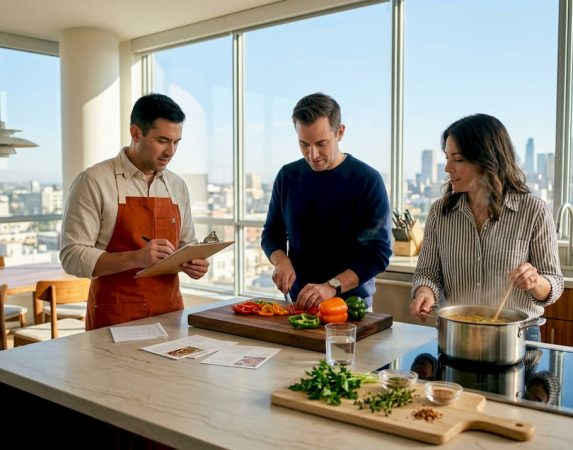
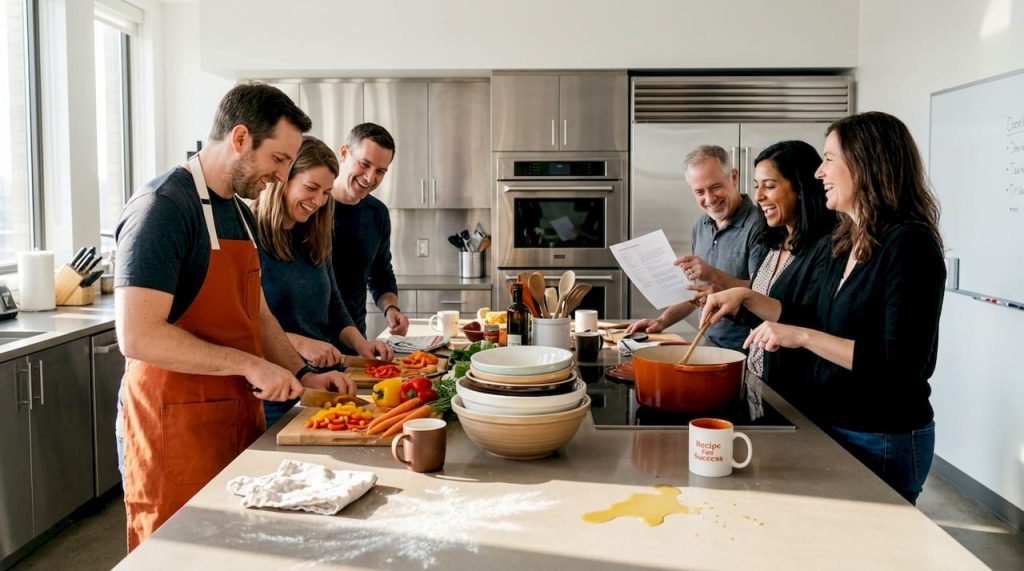
Most team leaders assume that gathering people around an activity is enough to spark real connection. It rarely is. Many traditional team-building events feel forced, forgettable, and disconnected from actual work life. Cooking events are different. When designed thoughtfully, they blend hands-on challenge, shared laughter, and genuine learning into an experience your team will still be talking about months later. Collaborative cooking events last 2-3 hours and typically include a structured debrief to tie the kitchen lessons back to the workplace. This guide breaks down exactly what separates a great culinary team-building event from one that simply fills an afternoon.
| Point | Details |
|---|---|
| Clear objectives matter | Define what you want to achieve to design a cooking event that delivers real value. |
| Choose the right format | Match collaborative or competitive event styles with your team’s unique goals. |
| Facilitation drives results | Engaged, experienced leaders create memorable, impactful experiences for everyone. |
| Debrief for continued impact | A structured wrap-up links takeaways from the kitchen back to daily work effectiveness. |
Success in a cooking event is not just about delicious food at the end. It is about engagement, meaningful learning, and a real sense of team connection that participants carry back to their desks. A culinary event, in the context of team building, is a structured group activity where colleagues collaborate or compete through cooking tasks facilitated by an experienced chef or host.
Understanding cooking as team building means recognizing what makes the kitchen such a powerful classroom. Everyone has a role. Everyone contributes. There is immediate, tangible feedback when something works and when it does not. That mirrors the dynamics of any high-performing workplace team.
The format matters enormously. Selecting event themes that resonate with your group, whether that is a global cuisine night, a seasonal menu challenge, or a bake-off, sets the emotional tone for the entire experience. A well-chosen theme gives people something to rally around before they even pick up a spatula.
Here is a clear breakdown of what separates successful cooking events from unsuccessful ones:
| Element | Successful event | Unsuccessful event |
|---|---|---|
| Facilitation | Skilled chef or host leading the session | No clear leader or direction |
| Participation | Every team member has an active role | A few people dominate; others watch |
| Structure | Defined format with timed segments | Unplanned, loose agenda |
| Debrief | Facilitated discussion linking kitchen to work | Event ends without reflection |
| Goal alignment | Event tied to specific team goals | Activity chosen for fun alone |
| Inclusivity | Dietary needs and skill levels accommodated | One-size-fits-all approach |
A few elements that consistently show up in the best culinary events include:
“The kitchen is a mirror for the workplace. How a team handles the heat, the pressure, and the unexpected says everything about how they operate every day.”
This kind of structured experience is what transforms a fun afternoon into a real team-building investment.
Once you know what success means, the next step is choosing the perfect format for your team’s unique needs. There are three core formats to consider: collaborative cooking, competitive challenges, and instructional classes. Each one serves a different purpose, and the right choice depends on where your team is right now.
Event formats typically run 2-3 hours with a debrief built into the schedule. That time constraint is actually a feature, not a limitation. It creates focus and keeps energy high throughout.
Here is how the three formats compare:
| Format | Best for | Key benefit | Potential drawback |
|---|---|---|---|
| Collaborative | Trust-building, new teams | Everyone works toward a shared goal | Less individual spotlight |
| Competitive | Energizing established teams | High energy, fun rivalry | Can feel stressful for some |
| Instructional | Skill-sharing, mixed experience levels | Accessible, educational | Lower competitive energy |
Collaborative cooking works beautifully for teams that need to build trust or improve communication. Everyone is working toward the same dish, which naturally encourages listening, delegating, and supporting each other. If your team has recently expanded, gone remote, or is navigating a period of change, collaborative formats create a safe space to reconnect.
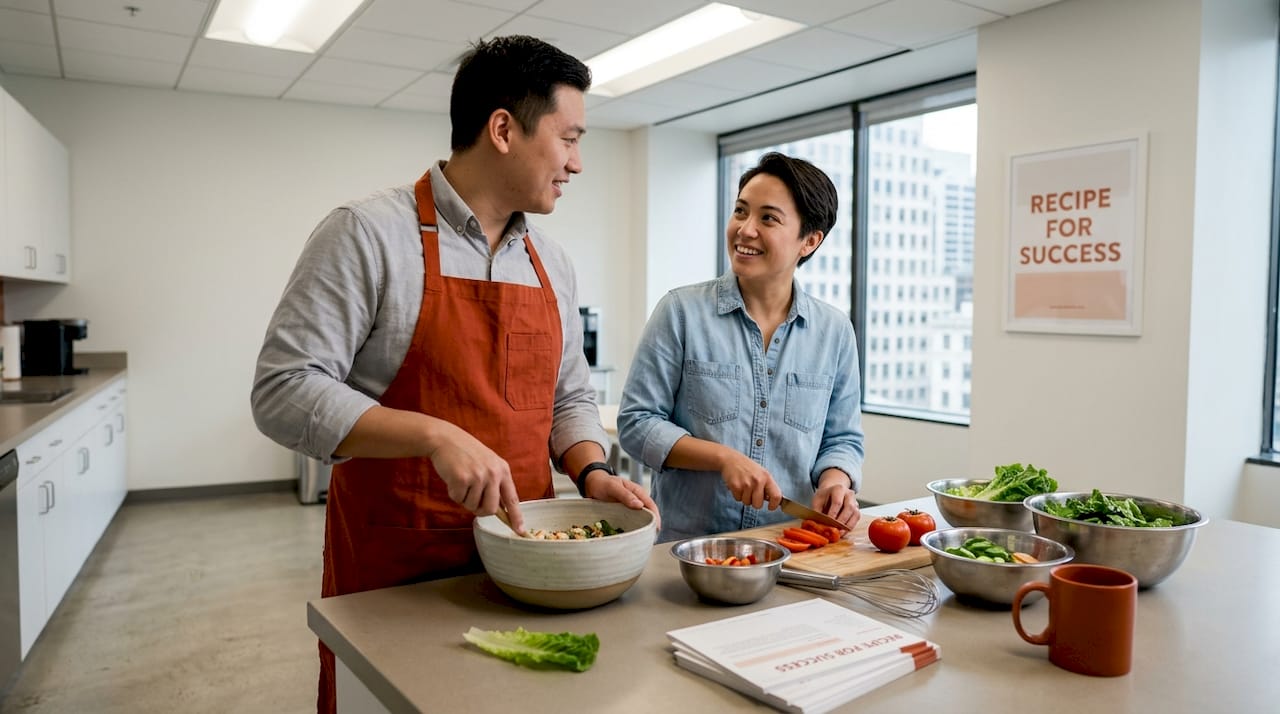
Competitive culinary challenges are a fantastic option for teams that already have a solid foundation and want to inject some high-energy fun. Think of it as a friendly cooking competition where groups race to complete dishes under time pressure. You can explore competitive culinary challenges to see just how much energy and laughter this format generates.
Instructional classes are ideal when your team includes a wide range of cooking experience or when you want the event to feel more like a guided learning experience. Pairing this format with a complementary experience, such as wine tasting pairings, can elevate the occasion and create memorable touchpoints beyond the cooking itself.
Follow these steps to decide which format fits your team best:
Pro Tip: You do not have to choose just one format. Blending a short instructional segment with a collaborative cook-off at the end gives teams the best of both worlds and keeps energy levels high from start to finish. Explore a range of corporate cooking event ideas to find the right combination for your group.
Selecting the format is only half the story. Now let’s uncover what really drives team engagement and lasting results during the event itself.
The single biggest driver of engagement is experienced facilitation. A skilled chef or host does far more than demonstrate knife skills. They read the room, encourage quieter participants, manage time, and keep the energy moving. Without strong facilitation, even the best format can fall flat. Look for facilitators who have specific experience with corporate groups, not just culinary instruction.
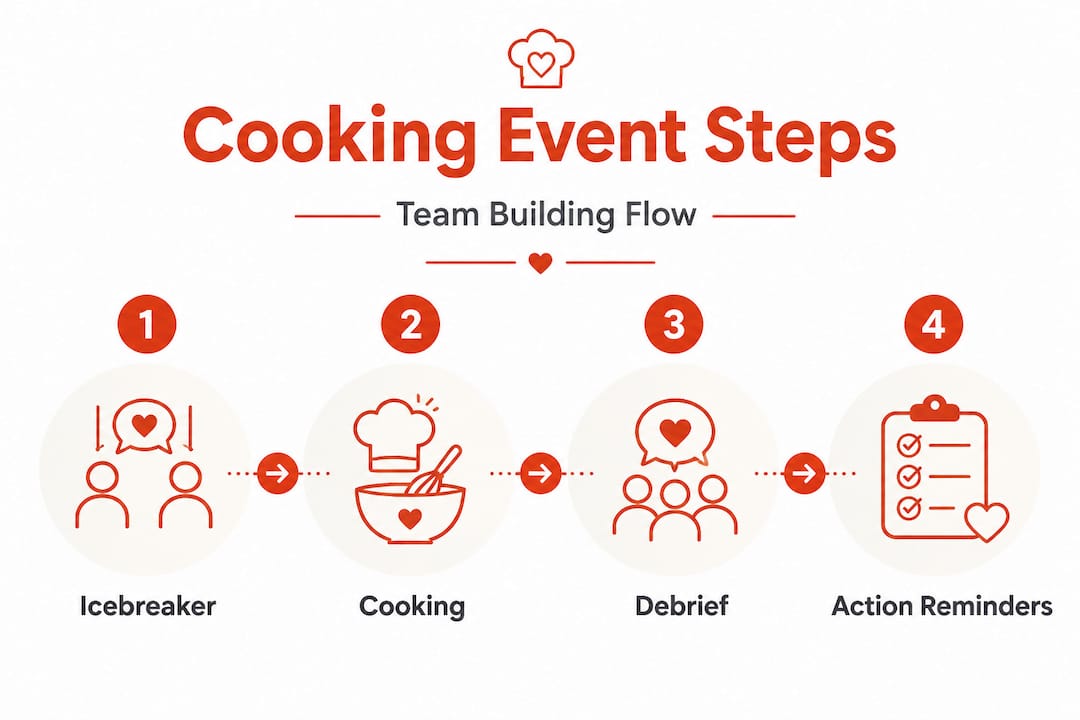
Structured icebreakers at the start are often underestimated. Before anyone touches a cutting board, a brief activity that gets people laughing and talking removes the awkwardness and signals that this is a safe, participatory space. Something as simple as a “mystery ingredient” guessing game or a quick round of culinary trivia sets the right tone.
Creating shared goals is what separates a cooking class from a team-building event. Every individual contributes to a collective outcome, and that outcome is visible, delicious, and immediate. When someone in the group steps up to plate the final dish, the whole team feels a shared sense of pride. That feeling is exactly what you want to recreate back at work.
Here are the key ingredients for a truly engaging event:
Stat: Standard culinary team events run 2-3 hours with a debrief session built in for maximum workplace impact.
That debrief is not optional. It is the ingredient that ties everything together. Without it, the event stays in the kitchen. With it, the lessons travel back to the office.
You can find more inspiration for building events that truly resonate through these creative team building ideas that go beyond the ordinary.
Pro Tip: Personalize the culinary theme to reflect your team’s makeup. A globally distributed team might love an international street food challenge. A team celebrating a milestone might enjoy a fine-dining plating session. Dietary preferences and cultural backgrounds are assets, not obstacles, when you design the menu thoughtfully.
To ensure the event delivers more than just a fun afternoon, it is essential to focus on this often-overlooked step: the debrief.
A debrief is a structured group conversation, usually 20 to 30 minutes, held immediately after the cooking activity. Its purpose is to help participants recognize the behaviors, skills, and lessons that emerged in the kitchen and connect them deliberately to their everyday working environment. Without this step, even the most beautifully designed event risks being remembered only as “that time we made pasta.”
“The event’s true value is realized when teams connect kitchen lessons to daily work.”
Here is how to structure an impactful debrief:
Best practices for running a debrief that actually works include keeping the facilitator neutral and curious rather than directive. The goal is to draw out insights from the participants, not to lecture them. Encourage honest reflection by normalizing imperfection. If something went wrong in the kitchen, that is often where the richest learning lives.
Real-world examples from teams who have gone through culinary events show consistent patterns. Teams report improved willingness to speak up during meetings, greater empathy for colleagues in high-pressure moments, and a stronger sense of shared identity. One sales team noted that the way they navigated conflicting cooking opinions helped them realize they had the same dynamic in client strategy meetings. That kind of awareness is priceless and it came from a cooking event.
Strategies from skilled chef facilitation approaches show that the best facilitators treat the debrief as the headline act, not the afterthought. The cooking is the warm-up. The debrief is where the real team-building happens.
Explore more strategies for building effective teams that extend far beyond the event itself.
Here is the uncomfortable truth that we have observed across dozens of corporate culinary events: most leaders assume that fun equals value. It does not.
A team that has a fantastic time cooking together, laughs loudly, and then returns to work unchanged has not experienced team building. They have experienced a party. There is nothing wrong with a party. But you should not measure it against workplace impact.
The teams that see real, lasting change from culinary events share one thing in common. They worked with skilled facilitators who treated the debrief as essential, not optional. They showed up with a clear intention. They did not just book an experience and hope for the best.
We have seen well-intentioned leaders invest significantly in a beautifully catered culinary event, only to skip the debrief because they ran out of time. That single decision cuts the return on investment in half. The kitchen experience without the reflection is like cooking a great meal and skipping dinner. All that prep and effort, and nobody gets to enjoy the result.
The key to team building is intentional design, and that includes what happens after the aprons come off. The best events are not accidental. Every element, from the theme to the format to the closing question in the debrief, is chosen with purpose.
There is also a follow-through problem. Teams leave energized, and then the energy dissolves within a week. The fix is simple but rarely implemented.
Pro Tip: Build in post-event “action reminders.” Send a brief recap email two days after the event that names the commitments each person made during the debrief. Schedule a five-minute check-in at the next team meeting to revisit those commitments. That small habit keeps the momentum alive long after the last dish has been cleared.
True transformation comes from intention. When you design your next cooking event with engagement, learning, and structured reflection baked in from the start, you are not just planning an activity. You are investing in your team’s future.
If today’s guide has sparked some ideas and you are ready to move from planning to action, we would love to help you design something truly special for your team.
At Recipe for Success, we specialize in chef-led culinary experiences built specifically for corporate teams. Whether you are looking for a high-energy Culinary Challenge team event or a more relaxed collaborative cook, every experience is tailored to your team’s goals, size, and culture. Our facilitators do not just teach cooking. They create the conditions for real connection, meaningful conversations, and lasting teamwork. Browse our full range of Culinary Team Building Events and find the perfect recipe for your team’s next success. Let’s start cooking!
Optimal cooking events run 2-3 hours to allow full engagement in the cooking activity plus a meaningful debrief that connects the experience to workplace behavior.
Both formats drive strong engagement, but collaborative events build trust and open communication while competitive formats energize teams that thrive on friendly rivalry and high-pressure fun.
Yes, an experienced chef facilitator ensures the event flows smoothly, keeps everyone involved, and is essential for guiding the debrief that links kitchen lessons to real workplace improvements.
Choose menus and tasks that accommodate a range of dietary needs and cooking skill levels, and ensure every participant has a clearly defined, active role throughout the event so no one is left on the sidelines.