Choosing the wrong chef-led experience for your corporate team is like adding salt when the recipe calls for sugar. The event happens, people eat, and everyone goes home. But nothing really changes. With so many formats available, from competitive cook-offs to intimate chef’s table dinners, the pressure to pick the right one can leave even the most experienced event planner second-guessing themselves. This guide breaks down the most impactful chef-led experience types, explains exactly what each one delivers, and helps you match the right format to your team’s goals so every event leaves a lasting impression.
| Point | Details |
|---|---|
| Collaboration matters | Choose experience formats that promote teamwork, not just entertainment. |
| Format fit drives success | Match the chef-led experience type to your group’s unique objectives and group size. |
| Facilitation is key | Expert facilitation and role clarity make a bigger impact than just cooking skills or menu selection. |
| Executive formats exist | Chef’s table or tasting menus are ideal for senior teams and intimate networking. |
Having set the stage, we can now identify what truly makes a chef-led team experience successful. Not all chef-led events are created equal, and the format you choose should align closely with your team’s size, skill level, and specific objectives. Before booking anything, run your options through these key criteria.
What to evaluate before choosing a format:
Strong providers structure roles, pacing, and constraints carefully, especially when group skill levels vary or when inclusion and low pressure are priorities. This structural intentionality is what separates a memorable event from a forgettable one.
Pro Tip: Ask any provider how they handle participants with zero cooking experience. The answer tells you everything about how well-designed their facilitation really is.
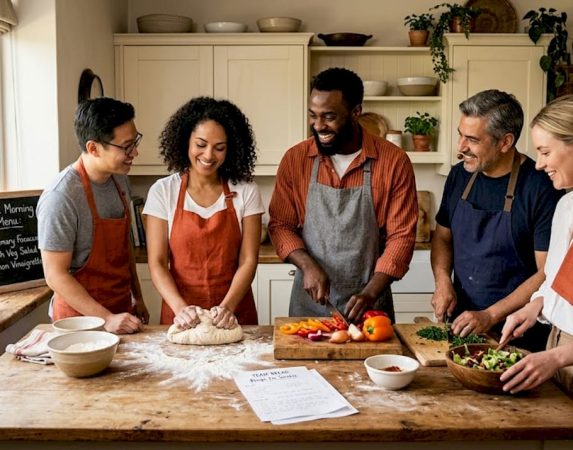
Understanding what to look for leads us directly to the most popular chef-led experience for companies seeking high engagement. Collaborative meal creation is exactly what it sounds like: your team works together to produce an entire meal, with each group responsible for a different course or dish. The magic is in the coordination.
Here’s how a typical collaborative meal experience unfolds:
Chef-led culinary events using a collaborative shared meal format are specifically designed so teams coordinate to create a multi-course meal, with each team responsible for one course and family-style dining at the end. This format is exceptionally strong for cross-departmental teams or groups going through organizational change.
“The kitchen is the great equalizer. When a VP is chopping onions next to a new hire, something shifts. Titles disappear. Real teamwork begins.” — Recipe for Success Chef Facilitator
For leaders looking at building team bonds after a merger or restructure, collaborative meal creation is often the highest-impact choice. It creates genuine interdependence, which is the exact condition that builds trust faster than almost any other team-building activity.
Pro Tip: For groups larger than 40, divide into tables of 6 to 8 and assign each table a course. Then bring everyone together for the family-style meal. This keeps intimacy at every station while scaling the experience effectively.
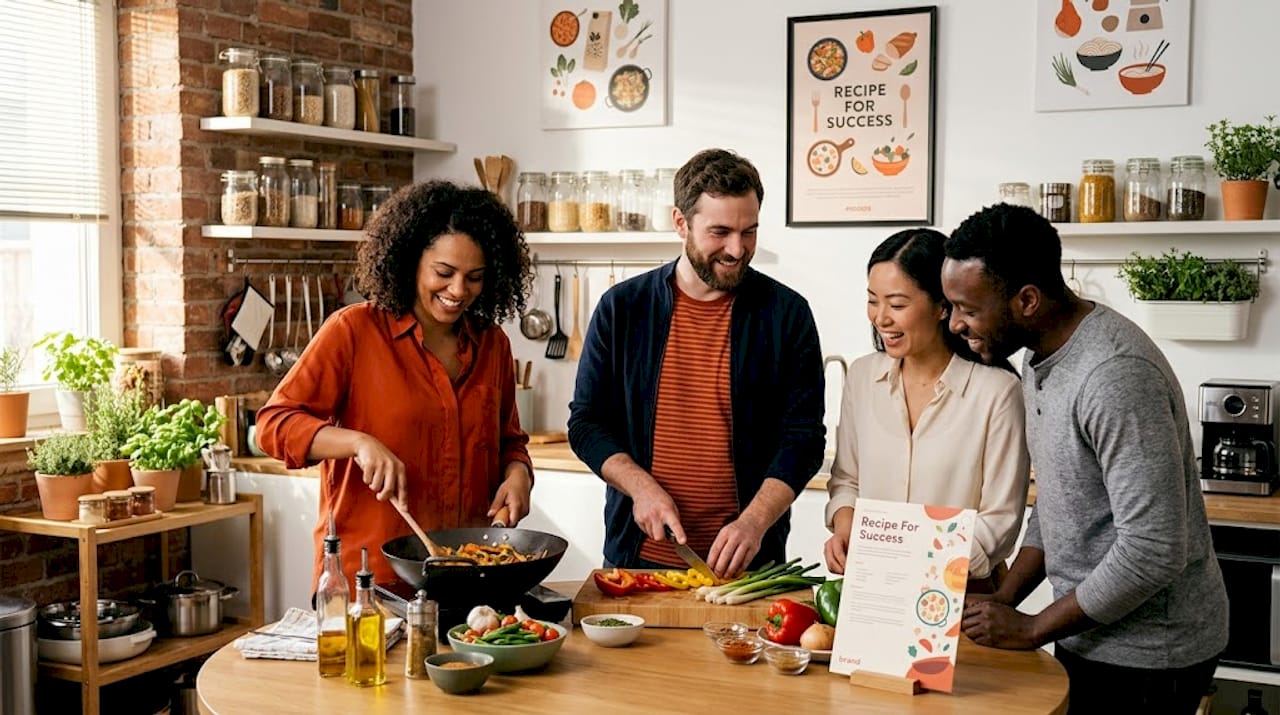
Supporting food-based team collaboration through this format also naturally encourages communication across departments that rarely interact, making it a favorite for annual company retreats and leadership summits.
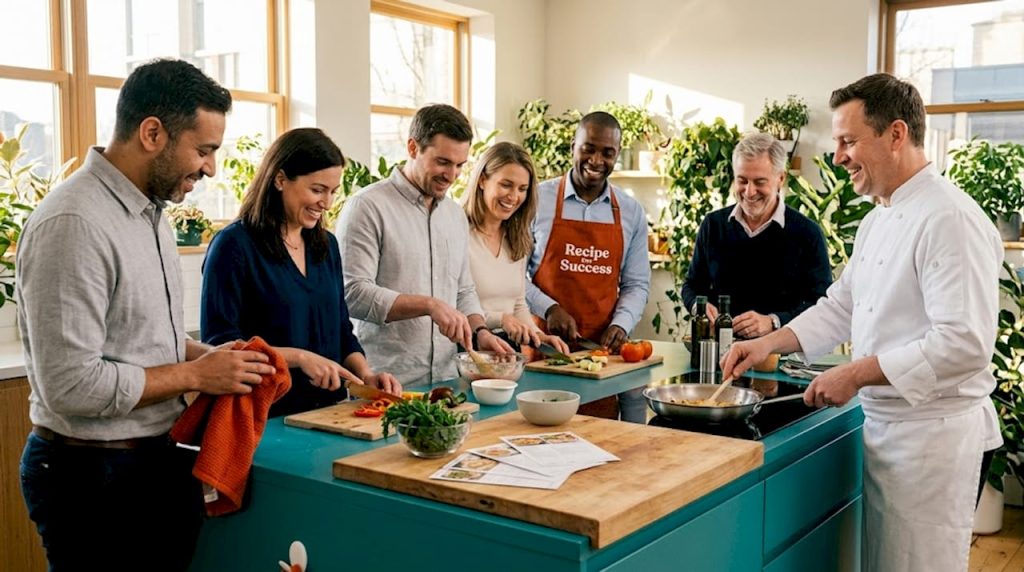
For teams prioritizing professional development and skill-building, the instructional workshop is a powerful approach. In this format, a professional chef leads all participants through a structured cooking lesson, teaching specific techniques like knife skills, sauce building, or pasta making from scratch.
What makes guided workshops stand out:
Guided chef-led cooking classes are recognized as a distinct and highly effective format for corporate events, separate from competitive experiences, precisely because they center learning and inclusion over performance pressure.
This format pairs exceptionally well with organizations investing in workplace cooking classes as part of broader employee wellness or engagement programs. When you tell your team they’re spending an afternoon learning to make fresh gnocchi from a professional chef, you get a very different response than when you announce another afternoon workshop.
Pro Tip: Request a specific skill theme that ties to your company values. A team focused on innovation might explore fusion cooking. A team working on precision and quality could tackle classical French knife techniques. The thematic connection makes the experience feel intentional rather than generic.
Some teams thrive under challenge and clear objectives, making role-based and competitive formats a valuable consideration. These events assign each participant a specific kitchen role, such as head chef, sous chef (the chef’s direct assistant), expediter (the person managing timing and communication), or prep cook, and then set the group loose on a challenge with real constraints.
| Feature | Collaborative meal | Competitive challenge |
|---|---|---|
| Primary goal | Shared creation | Performance under pressure |
| Energy level | Moderate, warm | High, dynamic |
| Best group size | 20 to 80+ | 15 to 60 |
| Ideal for | Cross-team bonding | Leadership development |
| Facilitation style | Coaching and guiding | Judging and facilitating |
| Competitive element | Low | High |
Competitive formats work particularly well when a team includes natural leaders who need a structured challenge to bring out their best. Role assignments prevent the usual dynamic where one or two people take over while others step back. Professionally facilitated culinary events are structured specifically so chefs facilitate rather than simply instruct, with defined objectives and judging criteria that keep the experience inclusive even when stakes feel high.
The judging element, when done well, is never about humiliating anyone. It’s about giving each team constructive, specific feedback that mirrors how high-performing workplace teams operate: clear goals, visible metrics, and honest evaluation.
Explore culinary challenge event formats if your team thrives on energy and your event outcome is leadership development or inter-departmental competition done in the spirit of fun.
Where hands-on activity may not be practical, hosted chef’s table formats provide an engaging alternative. The chef’s table experience places a small group around an intimate setting where a professional chef prepares and presents a multi-course meal, guiding guests through each dish with commentary on ingredients, technique, and culinary story.
| Format detail | Typical chef’s table setup |
|---|---|
| Ideal group size | 8 to 16 participants |
| Primary activity | Observation, tasting, conversation |
| Chef role | Host, educator, storyteller |
| Event duration | 2 to 4 hours |
| Best suited for | Executive teams, client dinners, senior leadership |
| Atmosphere | Intimate, premium, conversation-driven |
This format is excellent for executive networking events or senior leadership off-sites where deep conversation matters more than physical activity. The structure naturally encourages discussion because there’s no task to focus on except enjoying the food and engaging with the people around you.
“A beautifully plated dish creates a moment of shared appreciation. That shared appreciation opens doors to conversations that a conference room never could.” — Recipe for Success
Exclusive chef-led tasting events are often reserved for just 12 guests, which underscores how the intimacy of the format is a feature, not a limitation. For clients and senior leaders who’ve attended countless corporate dinners, a chef’s table experience feels genuinely different and memorable.
If you’re planning a client entertainment evening or a retreat for your C-suite, the top corporate culinary events guide walks through what premium hospitality looks like in a chef-led format.
With all options on the table, here’s how to identify the best fit for your specific objectives.
Match your goal to your format:
Some chef-led corporate event formats are explicitly designed to connect food-based teamwork with employee well-being and workplace connection, not just entertainment. This distinction matters when you’re justifying budget to stakeholders. A well-designed chef-led event is a wellness investment, a team development tool, and an engagement driver rolled into one.
For teams where leadership is a core focus, culinary leadership training programs layer kitchen dynamics directly onto workplace leadership frameworks, creating a genuinely transferable experience.
Pro Tip: Survey your team briefly before the event. Ask about dietary restrictions and comfort with cooking. Even a five-question form helps your provider customize the experience and shows your team that their comfort matters.
Here’s the honest truth we’ve learned from running chef-led events across all kinds of corporate teams: the food is almost never the reason an event succeeds or fails. The design is.
We’ve seen gorgeous menus fall flat because the format didn’t match the group. We’ve also seen simple pasta-making sessions become the most-talked-about company event of the year, because the facilitation was intentional and the energy was right. The chef’s reputation and the quality of the ingredients matter far less than most leaders assume when they start planning.
The real differentiator is whether the event is designed around your team’s specific dynamics and not just around what’s convenient for the provider. A competitive cook-off is a great idea for a sales team that feeds on energy and scoreboards. It can be alienating and stressful for a team of introverts who are already feeling burned out. One size absolutely does not fit all in this space.
Psychological safety (the sense that participants can try, fail, and engage without judgment) is also deeply underrated in chef-led events. The best chef facilitators build it into the structure from the very first minute. They normalize mistakes, celebrate effort, and make sure no one is ever singled out for struggling. That safety is what transforms a cooking activity into a genuine team-building experience.
Read more from team-building chef insights about what happens behind the scenes when facilitation is done right. It changes how you’ll evaluate every future event.
If you’re ready to experience the difference a thoughtfully designed chef-led format makes, here’s where to start planning.
At Recipe for Success, we design every experience around your team’s specific goals, size, and energy. We don’t believe in off-the-shelf programs that ignore the people in the room.
Whether you’re exploring food-based team building options for a large annual event, searching for the perfect culinary challenge events to energize a high-performing sales team, or simply want to browse everything we offer, we’re here to help you cook up something truly memorable. Visit Recipe for Success to explore the full range of chef-led experiences and connect with our team to start customizing your event today. Let’s make your next gathering one your team will be talking about long after the dishes are cleared.
Chef-led events are purposefully designed with facilitation, group roles, and collaboration objectives to build real team skills beyond just cooking. Professionally facilitated culinary events use structured, role-based sessions with explicit objectives where chefs facilitate rather than simply instruct.
Base your choice on your team’s objectives, group dynamic, and desired outcome: collaborative formats for connection and trust, competitive formats for high energy and leadership development, and tasting menus for executive networking. The collaborative shared meal format and competitive designs serve fundamentally different collaboration architectures.
Many providers now offer virtual chef-led sessions focused on shared experiences and skill-building through live streaming, though formats like collaborative meal creation and chef’s table events are naturally best experienced in person.
Chef’s table and tasting formats work best for small groups, typically between 8 and 16 participants, enabling richer conversation and deeper connection. Some exclusive chef’s dinner events are intentionally capped at just 12 guests to preserve that intimacy.
Yes, most chef-led programs are highly customizable and can accommodate a wide range of dietary needs, including vegetarian, vegan, gluten-free, and allergen-specific requirements, when requested in advance during the planning process.