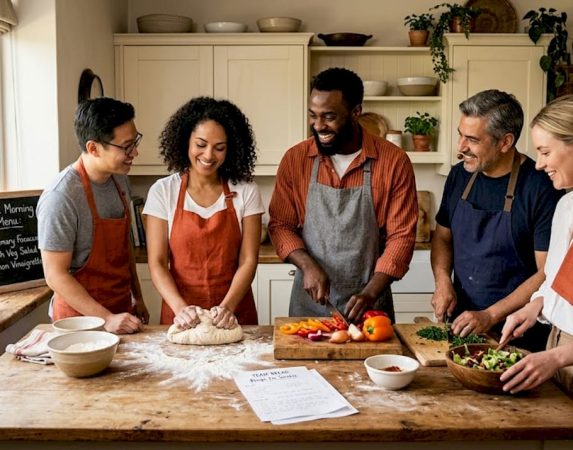

Finding a team building activity that actually works is harder than it looks. Most options feel forced, forgotten by Monday morning, and disconnected from the real dynamics that make or break a team. Culinary team building is different. When people cook together, something genuine happens. They communicate under pressure, share wins, and laugh over mistakes. Cooking activities can boost productivity by up to 25%, while shared meals are linked to lower stress and higher wellbeing across teams. This guide walks you through the best culinary team building ideas, how to compare them, and how to choose the right fit for your people.
| Point | Details |
|---|---|
| Plan ahead | Successful culinary team building requires early planning, including logistics and dietary restrictions. |
| Choose the right format | Select an activity type that matches your team’s size, culture, and desired outcomes. |
| Rotate roles | Engagement and learning increase when team members experience different responsibilities. |
| Prioritize inclusion | Accommodate all dietary needs and skill levels to foster true collaboration. |
| Celebrate shared wins | Debrief and highlight accomplishments to maximize the impact of your event. |
Now that we’ve set the stage for why culinary team building delivers results, let’s look at what to consider when selecting the best event for your team.
The most common mistake HR professionals make is jumping straight to booking before doing the groundwork. The right culinary event for a 15-person startup feels very different from the right one for a 150-person enterprise department. Starting with a few key questions saves time, budget, and a lot of awkward moments in the kitchen.
Here are the core factors to evaluate before you commit:
Thoughtful planning culinary events from the start means fewer surprises on the day, better participation, and a much more satisfying outcome for everyone involved.
Pro Tip: Send a short pre-event survey two to three weeks before the event. Ask about dietary restrictions, physical limitations, cooking experience, and any personal goals for the day. This data helps facilitators design a more personalized experience and shows your team that their comfort matters.
One often-overlooked risk area is kitchen safety. Establish clear role assignments before cooking begins. Designate who handles knives, who manages stovetop tasks, and who coordinates plating. Role clarity reduces accidents and also mirrors healthy workplace dynamics around accountability. The same way a well-run kitchen relies on each person knowing their station, a well-run team depends on clear ownership. Strong building team bonds comes from designing these moments intentionally, not leaving them to chance.
With your evaluation criteria in mind, here are the standout culinary team building ideas you can implement this year.
The options available today are more creative and accessible than ever. Whether your team is in the same building or spread across four time zones, there is a format that fits. Here are five proven approaches, each with its own character and benefits.
Mystery basket challenges (Chopped-style). Teams receive a basket of surprise ingredients and must create a dish within a set time. Mystery basket challenges run in rounds covering appetizer, entree, and dessert. This format sparks creativity, tests communication under pressure, and generates a lot of laughter. It works especially well for competitive teams who thrive with a clear goal and a ticking clock.
Progressive dinners. Different teams each take responsibility for one course of a full meal. One group handles the appetizers, another the main, another the dessert. Teams then come together to share the complete meal. This format encourages ownership and pride in contribution. It also mirrors how cross-functional teams work in real business settings, each department handling its piece before the whole comes together.
Farm-to-table workshops. Teams visit a local farm or market to source ingredients before cooking them together. This format adds a rich sensory experience to the teamwork. It also sparks meaningful conversation about sustainability, food origins, and shared values. It tends to be one of the most memorable formats, especially for teams looking to connect on a deeper level beyond the office setting.
Virtual cooking kits for remote teams. Pre-portioned ingredient kits are shipped to each participant’s home. A live chef guides the entire group through the cooking process via video call. This is one of the strongest options for distributed teams. It levels the playing field so that remote employees feel just as included as those in headquarters. These events work best when paired with a structured group debrief at the end.
Cooking for a cause. Teams prepare meals for a local shelter, food bank, or community organization. This format adds a layer of purpose and meaning that few other team building activities can match. Teams report higher emotional engagement and a stronger sense of shared identity after charity cook events. It’s a powerful choice when your company is navigating change or wants to reinforce its values.
“The best culinary team building events are the ones where people forget they’re doing team building. They’re just cooking, laughing, and solving problems together. That’s when the real connection happens.”
Pro Tip: Assign rotating roles throughout the event. Let the quieter team members take a turn as the team lead for one round, and let senior leaders take on support roles. This kind of culinary challenge event structure builds empathy, disrupts hierarchy, and creates conversations that simply don’t happen in a conference room. Explore more ideas in our guide to top corporate cooking events.
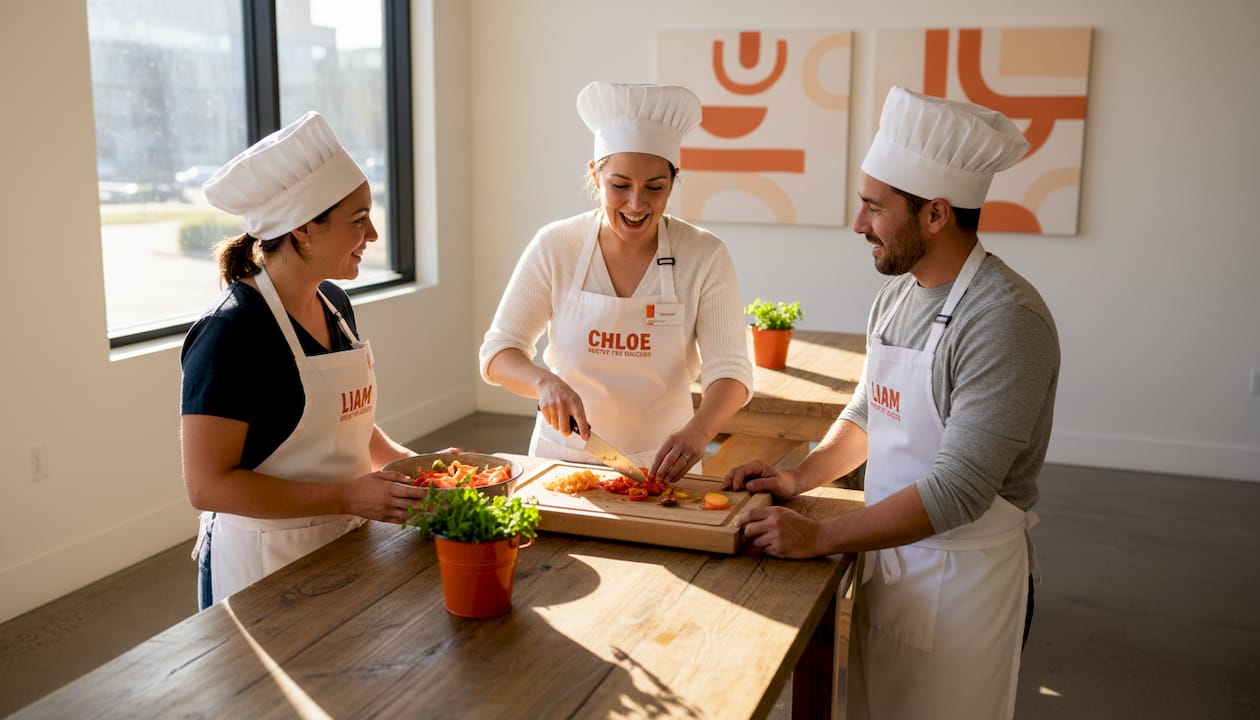
As you review the possible experiences, it helps to see how they stack up directly against one another.
Each format serves a different purpose. This comparison gives you a quick reference to match the event type to your team’s goals, size, and logistics.
| Format | Planning effort | Skill level needed | Best group size | Primary outcome |
|---|---|---|---|---|
| Mystery basket challenge | Medium | Any | 10 to 40 | Creativity and communication |
| Progressive dinner | Medium | Any | 20 to 60 | Collaboration and pride |
| Farm-to-table workshop | High | Any | 10 to 30 | Values and connection |
| Virtual cooking kit | Low | Any | 5 to 100+ | Inclusion and morale |
| Charity cook-off | High | Any | 20 to 80 | Purpose and team identity |
Notice that no format requires culinary skill. Dietary restrictions and allergies should always be accommodated through pre-event surveys regardless of which format you choose. Role rotation applies across all formats and consistently improves empathy and engagement.
Here’s what makes each format succeed or stumble:
Matching format to corporate culture matters. A results-focused sales team will often gravitate toward the competitive energy of a mystery basket. A values-driven nonprofit team might find a charity cook-off more resonant. Knowing your team’s personality is as important as knowing their dietary restrictions. The goal is to boost collaboration through cooking in a way that feels natural, not forced.
No matter which option you choose, thoughtful details will elevate the event and ensure every participant feels valued.
Inclusion is not an afterthought. It is the foundation of a successful culinary team building event. When even one team member feels overlooked or unable to participate fully, the entire group dynamic suffers. The good news is that with a little planning, culinary events are one of the most naturally inclusive formats available.
Here’s how to make sure everyone is part of the experience:
The numbers tell a clear story. Teams that engage in shared cooking activities report measurable improvements in wellbeing and workplace communication. The productivity and stress-reduction benefits observed across culinary team building programs make it one of the most cost-effective investments HR professionals can make in their teams.
Here is the thing most articles about culinary team building won’t tell you. The cooking is almost beside the point.
We have seen teams produce absolutely terrible food and walk away feeling more connected than they have in years. We have also seen technically impressive meals produced by teams who barely spoke to each other the whole time. The dish on the plate is not the measure of success. The conversations happening around the prep station are.
What actually makes culinary team building transformative is a combination of three things: shared vulnerability, cross-level communication, and celebrated wins. When a senior director doesn’t know how to julienne a carrot and has to ask a junior analyst for help, something shifts. Hierarchy softens. People see each other differently. That moment is worth more than any ropes course or personality assessment.
The debrief is where most facilitators leave money on the table. Teams will laugh, eat, and congratulate each other, but without guided reflection, the insights evaporate by Tuesday. The questions you ask at the end of the event determine how much lasting value it creates. Good facilitators connect what happened in the kitchen directly to what happens in the office. “You noticed that communication broke down when everyone tried to lead at once. Where do you see that happening in your real projects?”
We also want to gently push back on the idea that a quick, inexpensive team building activity delivers real results. A one-hour trivia game or a catered lunch is better than nothing, but it rarely moves the needle on team trust or communication. Immersive culinary experiences, especially those that run two hours or more and include a structured debrief, consistently outperform surface-level alternatives. The investment is higher, but so is the return. If you want to build gourmet team engagement that lasts beyond the event itself, depth matters more than novelty.
If you’re inspired to bring these ideas to your company, here’s how you can get started with expert support.
At Recipe for Success, we specialize in chef-led culinary experiences designed specifically for corporate teams. Whether you’re looking for the high-energy competition of a culinary challenge team building event or a more reflective experience built around collaboration through cooking, we have programs that fit your team’s size, goals, and culture.
Every event we run is designed around connection first. Our chefs and facilitators handle the logistics, the safety briefings, the dietary accommodations, and the debrief so your team can focus on what matters: showing up, cooking together, and walking away stronger. Ready to see what’s on the menu? Explore all culinary programs and let’s start cooking up something great for your team.
Conduct a pre-event survey to collect all dietary restrictions and allergies, then work with your facilitator to select safe recipes and substitute ingredients that work for everyone. Pre-surveys for allergies are considered a best practice in professional culinary team building events.
That’s actually the point. Culinary challenges suit all skill levels because the focus is entirely on teamwork, communication, and shared problem-solving, not culinary technique. First-time cooks often make the best participants because they are more open to asking for help.
Plan at least 8 weeks ahead to secure the right venue, confirm chef availability, and collect all dietary needs from participants well before the event date.
Absolutely. Virtual cooking kits shipped directly to participants’ homes, combined with live online facilitation, allow remote teams to participate fully and feel just as included as those joining in person.