Most corporate leaders book a cooking class expecting their team to have fun, eat well, and maybe share a few laughs. That’s a good start, but it barely scratches the surface of what a well-designed culinary workshop can deliver. Structured debrief sessions post-activity connect kitchen experiences to workplace skills like delegation, timing, and adaptability, turning a single afternoon into months of measurable behavioral change. This guide breaks down exactly what makes a culinary workshop genuinely effective for corporate groups, from the opening icebreaker all the way to the follow-up check-in back at the office.
| Point | Details |
|---|---|
| Workshops build real skills | Effective culinary workshops improve communication, leadership, and adaptability for teams. |
| Structure is crucial | A well-planned process, including roles and debriefs, transforms a fun event into lasting development. |
| Inclusion ensures results | Proactively address dietary needs and rotate roles so every participant can contribute fully. |
| Debrief drives impact | Link lessons from the kitchen directly to the workplace for maximum ROI. |
With expectations set, let’s explore why culinary settings are so uniquely powerful for workplace teams.
A professional kitchen is one of the few environments where collaboration is not optional. Every dish depends on someone prepping, someone timing, someone plating, and someone communicating. When you put a corporate team in that environment, those same interdependencies show up fast. The stakes feel real, even though nothing catastrophic happens if the sauce breaks. That low-risk, high-emotion context is exactly what makes learning stick.
Here’s what teams consistently walk away with after a well-run culinary session:
The results last beyond the kitchen, too. When you boost collaboration through cooking, you build trust and communication habits that transfer directly into project meetings, cross-functional work, and high-pressure deadlines. Teams that have cooked together tend to read each other better. They’ve already seen how each person behaves when things get hectic.
“The kitchen doesn’t care about your job title. It only cares whether you can work together to get the meal on the table.”
That kind of leveling effect is rare in typical team building formats. When you build team bonds through culinary experiences, you create connection that goes deeper than icebreaker questions or trust falls ever could. People show up differently when they’ve cooked a meal together.
Now that we know why culinary workshops work, it’s time to break down the essential elements that separate ordinary from exceptional.
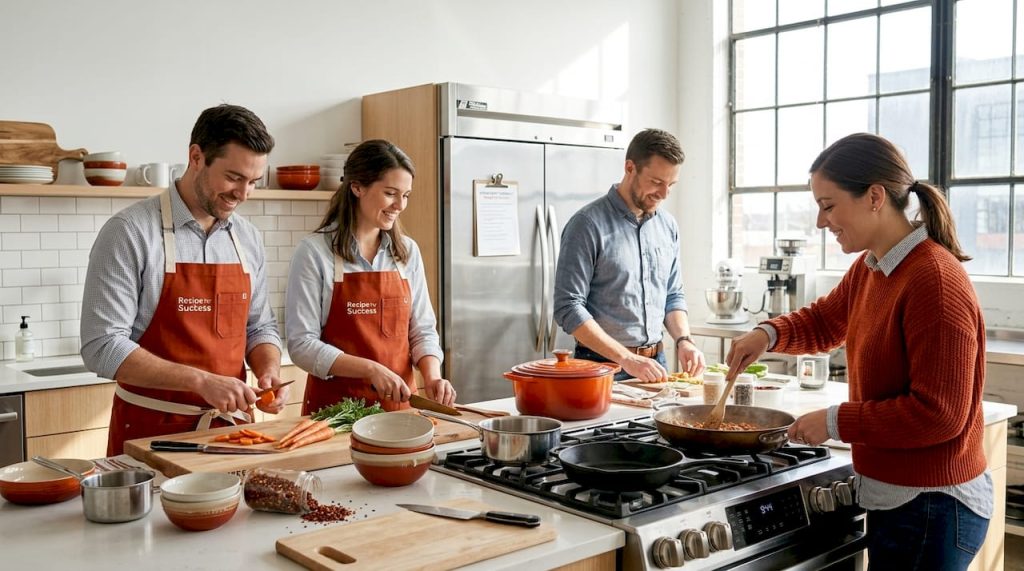
Not every cooking event qualifies as a genuine team building experience. The design matters enormously. Here’s what an effective workshop structure looks like from start to finish:
The comparison below shows the difference between a standard cooking class and a purpose-built team building workshop:
| Feature | Standard cooking class | Team building workshop |
|---|---|---|
| Goal | Learn a recipe | Develop team skills |
| Roles | Individual | Structured and assigned |
| Facilitator focus | Culinary technique | Team dynamics |
| Debrief included | Rarely | Always |
| Outcome measured | Dish quality | Collaboration quality |
| Follow-up plan | None | Check-ins and feedback |
Role assignment deserves extra attention. When someone who rarely leads in the office steps into the head chef role, something shifts. The team building cooking challenges that work best are the ones where roles rotate or stretch participants just beyond their comfort zone. That’s where real growth happens.
Understanding the most important aspect of team building will reinforce why structured design, not just fun activities, drives lasting outcomes.
Pro Tip: Always assign roles before the cooking begins, not during. When people know their responsibility upfront, they show up with intention. Last-minute role assignment creates confusion and can derail the energy you’ve built in the opening kickoff.
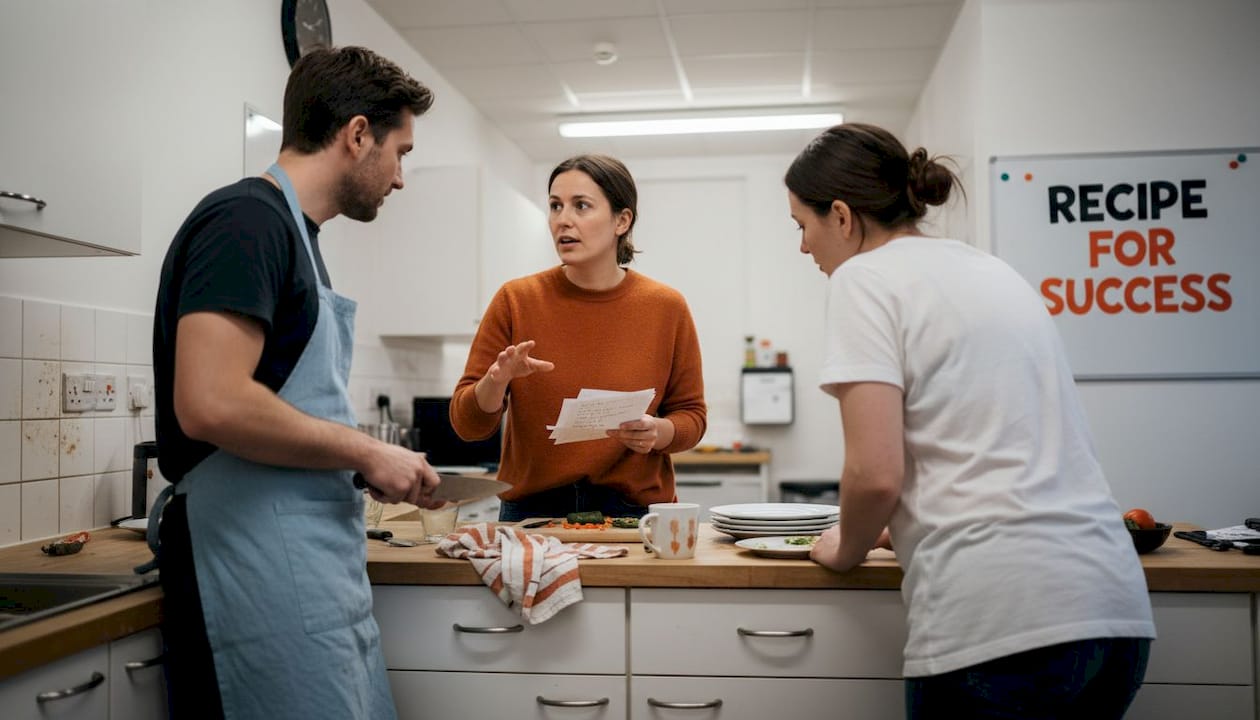
The debrief is where structured reflection transforms a fun afternoon into a genuine learning experience. Without it, teams leave with full stomachs but no framework for applying what they experienced. Give the debrief at least 20 to 30 minutes. Use open questions like “What worked well?” and “Where did communication break down?” and connect every answer back to real workplace situations.
Let’s get practical: here’s how to make sure your culinary workshop is inclusive, engaging, and safe for everyone.
The best-designed workshop falls flat if participants feel excluded, uncomfortable, or physically unsafe. Thoughtful preparation on the front end pays dividends in the room.
Start with an icebreaker. The first five minutes set the energy for everything that follows. A simple activity, like having each person share their favorite comfort food and why, warms the room without pressure. It signals that this is a safe space before anyone picks up a knife.
Gather dietary information early. This is non-negotiable. Send a short pre-event form to every participant asking about allergies, intolerances, and dietary preferences. Then build your menu and your backup plan around that information. Managing time strictly and having backups for equipment or allergies prevents disruptions that derail the entire group’s experience.
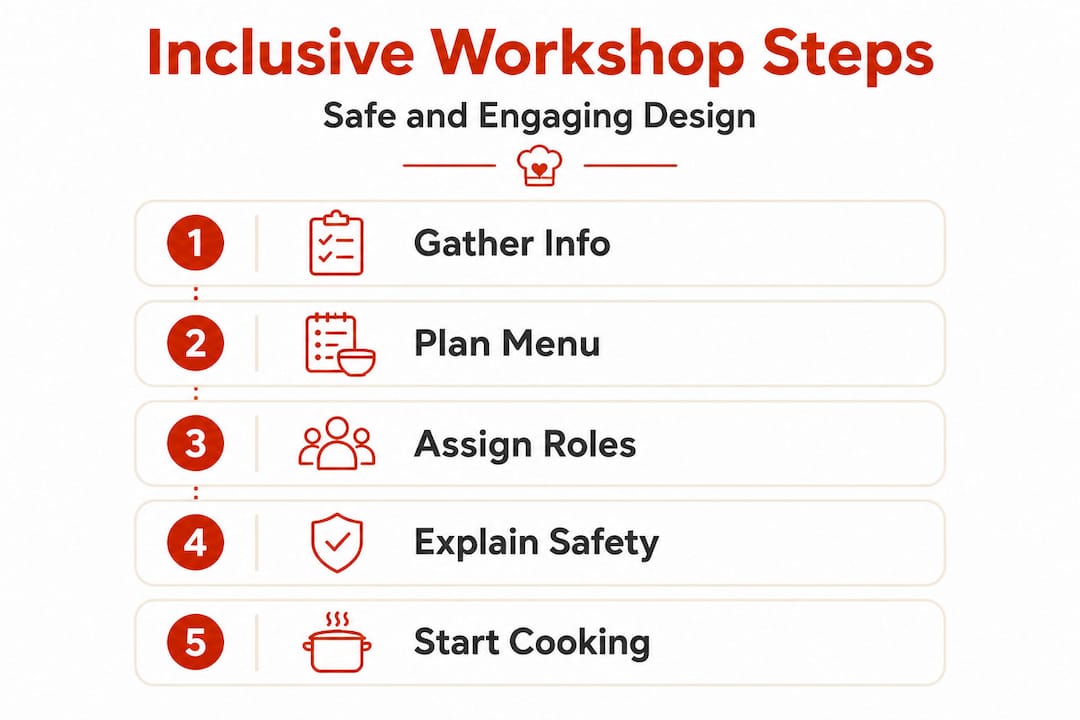
Here’s a practical breakdown of key design factors and why they matter:
| Design factor | Why it matters | How to address it |
|---|---|---|
| Dietary needs | Inclusion and safety | Pre-event survey, alternative dishes |
| Equipment backup | Continuity | Spare tools, tested equipment |
| Time management | Energy and pacing | Clear timekeepers, built-in buffers |
| Role rotation | Equal participation | Assign and rotate deliberately |
| Facilitation quality | Group dynamics | Use an experienced facilitator |
| Physical safety | Liability and trust | Safety briefing before cooking begins |
More considerations for inclusive design:
Pro Tip: Run through the full event sequence with your facilitator at least 48 hours before the event. Identify every point where something could go wrong and have a backup plan ready. A confident facilitator is your best insurance policy against a derailed session.
You’ll find real, hard-won insights on navigating group dynamics from team building chefs who have seen every scenario imaginable. Their experience is worth borrowing.
Once the cooking is done, the most powerful lessons begin. Here’s how to capture and reinforce them back at work.
The kitchen is a fantastic teacher, but only if you give the lessons somewhere to land. That’s the job of the debrief and the follow-up plan. Without those two elements, the impact fades within a week.
Here’s a step-by-step approach to translating culinary experiences into lasting workplace change:
The parallels between kitchen dynamics and culinary leadership training outcomes are not accidental. They’re baked into the design.
“What teams discover in a two-hour cooking session often surfaces patterns they’ve been living with for years. The kitchen just makes those patterns visible.”
Structured debrief sessions are what connect kitchen behavior to workplace skills like delegation, timing, and adaptability. That connection is the business case for culinary team building, and it’s a compelling one.
Teams that cook together also tend to develop stronger rapport when solving culinary issues under time pressure. That same rapport shows up months later during a product launch crunch or a client escalation. Cultural and food-centered workplace events also reinforce a sense of shared identity that sustains team cohesion long after the event itself.
Here’s the honest truth after years of facilitating culinary experiences for corporate teams: most leaders underinvest in the part that matters most.
They spend significant time selecting the venue, choosing the menu, and coordinating logistics. All of that matters. But the debrief? It often gets squeezed into the last ten minutes, rushed through, or cut entirely because the meal took longer than expected. That is exactly where the return on investment gets left on the table.
In our experience, the cooking itself accounts for roughly 20% of the lasting value. The structured reflection and facilitated dialogue afterward account for the other 80%. A beautiful meal that ends without a purposeful conversation is just a nice lunch. But a focused 30-minute debrief after a chaotic cooking challenge can surface insights that teams carry into their work for months.
We’ve also seen the difference that expert facilitation makes compared to having an internal HR team member run the debrief cold. Skilled facilitators know how to hold space when the conversation gets uncomfortable. They know how to redirect without shutting people down. They ask the questions that get to the real dynamics, not just the surface-level observations.
Understanding why teamwork matters at a deeper level will change how you design and debrief these events. It reframes the entire investment from “fun activity” to “strategic development tool.”
The other overlooked factor is continuous improvement. After every workshop, gather feedback from participants and facilitators alike. What landed? What fell flat? Which roles sparked the most growth? That data shapes a better second workshop, and an even better third. Teams that experience culinary workshops regularly develop a shared language around collaboration that becomes part of their culture.
Clearly assigned roles matter more than gourmet recipes. A team that cooks a simple pasta dish with real structure and reflection will walk away with more than a team that makes a five-course meal in chaos. Keep that in mind when you’re planning.
If you’re ready to create real results through engaging, skill-building culinary experiences, here’s how to get started.
The difference between a forgettable cooking event and a transformative team experience comes down to design, facilitation, and follow-through. You don’t have to figure that out alone.
At Recipe for Success, we build chef-led culinary workshops that are purpose-designed for corporate teams. Every session includes structured role assignments, experienced facilitation, and a debrief that connects kitchen lessons to real workplace outcomes. Our culinary leadership training programs are fully customizable to your team’s size, goals, and dietary needs. Whether you’re building trust across a new team or re-energizing a group that’s been together for years, we’ll design an experience that delivers. Let’s start cooking up something great together.
Assign roles such as chef, sous-chef, timekeeper, and safety lead to build teamwork and accountability. These structured roles mirror workplace responsibilities like delegation and leadership, making the experience directly applicable to everyday team dynamics.
Collect participant information before the event and prepare alternative recipes or equipment as backup. Managing allergies proactively prevents disruptions and ensures every team member feels included and safe throughout the workshop.
Effective culinary workshops focus on teamwork, communication, and business skill development, not just food preparation. Unlike a standard class, a purpose-built workshop includes structured roles, group dynamics facilitation, and a debrief that connects the experience to real workplace challenges.
A structured debrief is the element that transforms a fun cooking session into a genuine business development tool. Structured debrief sessions connect kitchen behaviors directly to workplace skills like delegation, timing, and adaptability, and that connection is where lasting change begins.