Most event planners think of chefs as the people behind the scenes, plating dishes and managing kitchen logistics. But that picture misses something big. Chefs play a much broader role in shaping event energy and group interaction, especially when events feature interactive stations with native ingredients. The real question is not just what your chef will cook. It is what your chef will do for your team. This article pulls back the curtain on the full impact professional chefs have on corporate team building, from the moment they step into the room to the lasting connections they help create.
| Point | Details |
|---|---|
| Chefs boost team engagement | Professional chefs foster authentic group interaction and break down workplace barriers during corporate events. |
| Balance is essential | The best chef-led experiences mix education and organic conversation to prevent overwhelming participants. |
| Design matters | Interactive stations with local ingredients and appropriate pacing enhance both engagement and event outcomes. |
| Chef adaptability drives success | Chefs who flexibly read the mood and adjust activities create genuine connection and lasting impact. |
Think about the last corporate event you attended. Was there a moment when the room truly came alive? When people stopped checking their phones and started actually talking to each other? Chances are, something interactive sparked that shift. A skilled chef at the center of that activity is often the reason why.
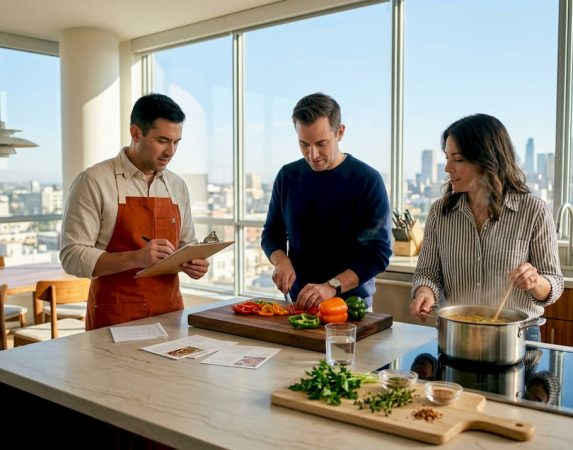
Chefs bring something that a standard catering setup simply cannot replicate: presence, personality, and the ability to pull people in. When a chef steps out from behind the pass and into the room, the dynamic changes immediately. People lean forward. They ask questions. They laugh. That shift is not accidental.
“Interactive chef-led stations with native ingredients significantly shift the energy of an event.”
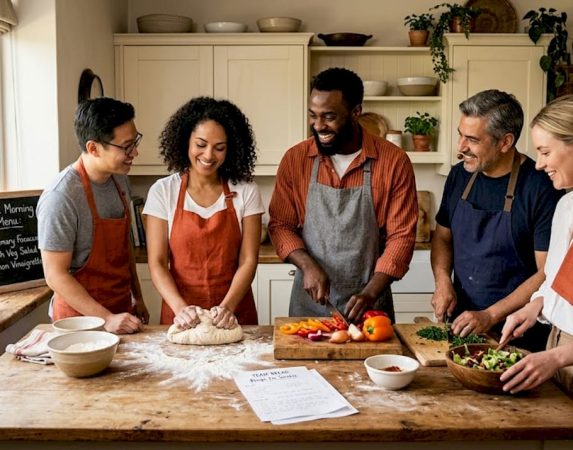
Understanding why cooking builds teams comes down to one simple truth: food is a universal connector. Everyone eats. Everyone has memories tied to meals. When a chef taps into that shared experience, barriers drop fast. The quiet colleague who never speaks up in meetings suddenly has opinions about how much garlic to add. The executive who seems unapproachable is laughing over a failed knife technique.
Here is what chefs bring to the table that most event formats cannot:
The old model of corporate events relied on a “sage on the stage,” a speaker delivering information to a passive audience. Chef-led experiences flip that model entirely. Your team becomes the protagonist. The chef becomes the guide. That shift alone is worth the investment. You can also explore connecting departments through food as a way to bridge silos that traditional team-building formats rarely touch.
Calling a chef just a “cook” at a corporate event is like calling a great coach just a “whistle blower.” The role is so much richer than that. When a professional chef steps into a team-building setting, they wear multiple hats, and each one serves a specific purpose.
Here is a breakdown of the key roles a chef fills during a well-designed culinary event:
This is a world away from standard catering, where food arrives plated and the interaction ends at the buffet line. Here is a quick comparison:
| Feature | Chef-led team building | Standard catering |
|---|---|---|
| Participant engagement | High, hands-on throughout | Low, passive consumption |
| Team interaction | Structured and organic | Minimal |
| Skill development | Yes, culinary and soft skills | None |
| Customization for goals | Flexible, competition or collaboration | Limited |
| Memorable experience | Very high | Moderate |
| Energy shift in the room | Significant | Minimal |
Chefs also adapt their approach based on your event goals. If you want healthy competition, a culinary challenge event format works brilliantly. Teams compete to create the best dish, judged on creativity, flavor, and presentation. If you want pure collaboration, the chef shifts to a cooperative model where everyone works together toward one shared meal.
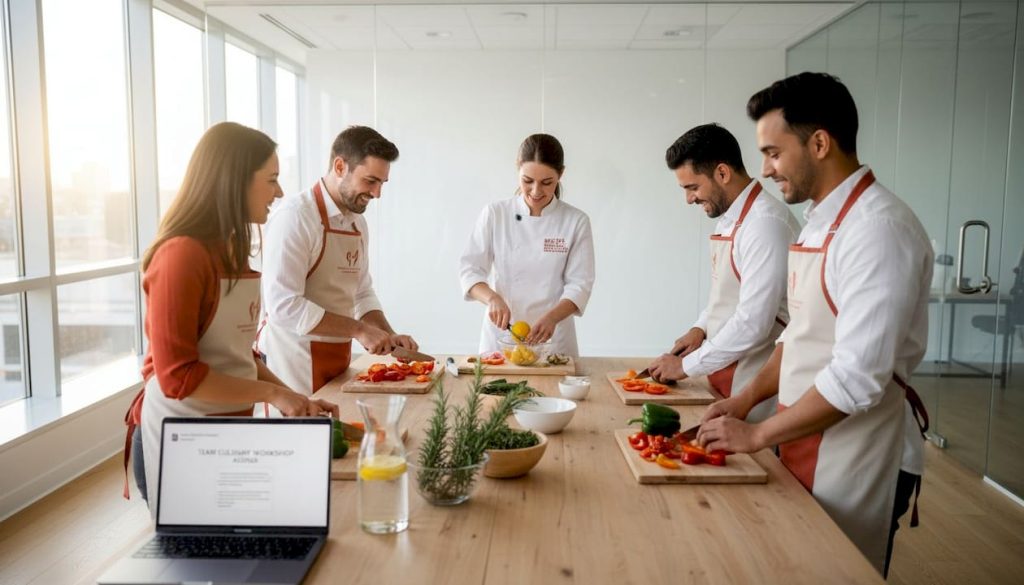
A typical event flow might look like this: the chef opens with a short, engaging introduction that sets the tone and gets people laughing. Then the hands-on activity begins, with the chef circulating, coaching, and encouraging. After cooking, the group gathers to share their creations and reflect on the experience. That final reflection moment is where the real team-building magic often happens.
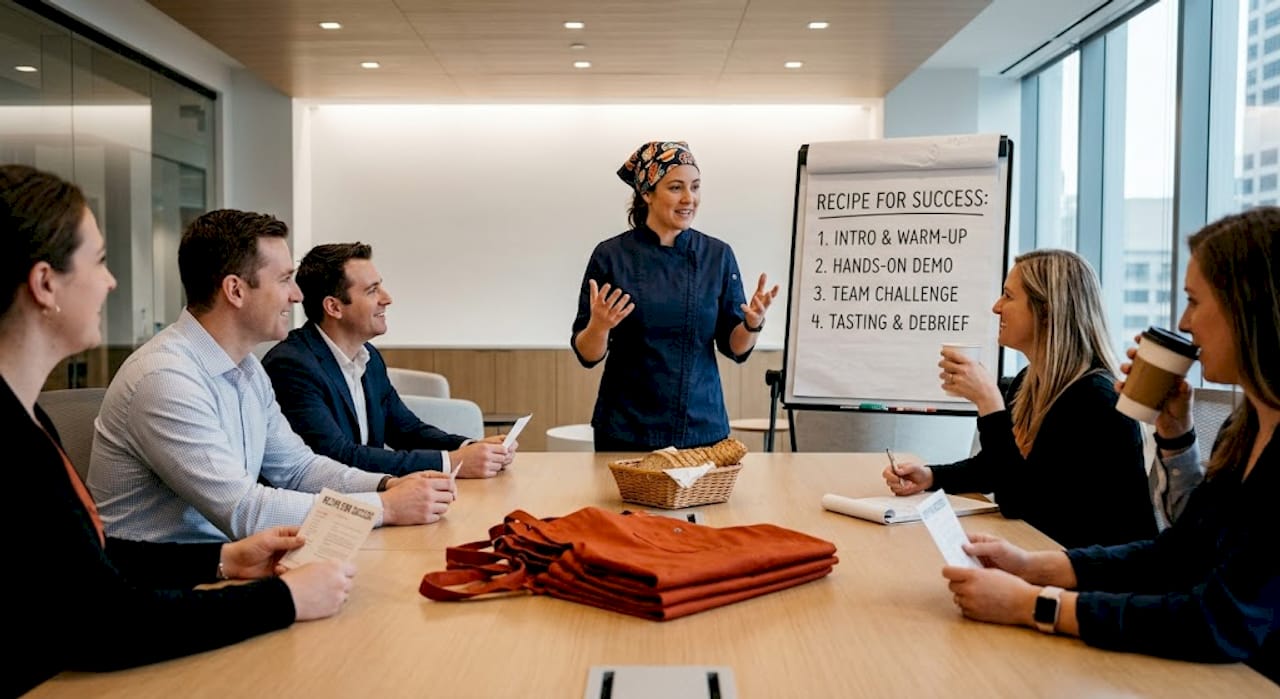
As the research confirms, chefs must balance education with guest engagement, ensuring activities do not overwhelm or stifle organic interaction. The best chefs know exactly when to step in and when to step back.
Getting the design right is where many corporate events either soar or stumble. A well-designed culinary team-building experience feels effortless to participants, but behind the scenes, a thoughtful chef has made dozens of intentional decisions to make it flow that way.
What separates a truly effective culinary team-building activity from a fun but forgettable cooking class? Several key factors come into play.
Ingredient selection matters more than you think. Using local or native ingredients is not just a sustainability choice. It is an energy lever. When participants encounter something unfamiliar, like a regional spice or an heirloom vegetable, curiosity kicks in. Questions get asked. Stories get shared. The chef becomes a guide through a sensory journey, not just a recipe instructor.
The activity structure should mirror real teamwork. The best culinary challenges are designed so that no single person can do everything alone. One person might handle prep, another manages the heat, and another plates the dish. That division of labor mirrors how teams actually function at work, making the experience feel relevant, not just recreational.
Here is a look at how different event formats stack up for specific team goals:
| Event goal | Recommended format | Key chef role | Ideal group size |
|---|---|---|---|
| Breaking down silos | Collaborative cooking | Facilitator | 10 to 30 |
| Boosting morale | Fun culinary challenge | Motivator and entertainer | 15 to 50 |
| Onboarding new hires | Intro cooking class | Instructor and welcomer | 8 to 20 |
| Leadership development | Iron Chef style competition | Coach and judge | 20 to 60 |
| Cross-cultural connection | Global cuisine exploration | Culture bearer and storyteller | 10 to 40 |
Pro Tip: When planning your event, resist the urge to pack in too many activities. Too many activities can be overwhelming; the most successful events prioritize organic conversation and balance. One well-designed cooking challenge with breathing room for natural interaction will always outperform a jam-packed schedule.
Common pitfalls to watch for when designing your culinary event:
You can explore a range of corporate cooking programs designed with these principles built in, or check out available team-building locations to find the right setting for your group.
You have invested in a chef-led culinary experience. Now comes the question every executive eventually asks: what did we actually get out of that? The good news is that the outcomes from well-run culinary team-building events are measurable, and they tend to show up in ways that matter to your organization.
The key metrics worth tracking fall into three categories:
Real-world outcomes from chef-led events often surprise even skeptical executives. Teams that struggled with communication in meetings frequently report feeling more comfortable speaking up after a shared cooking experience. The reason is simple: cooking together creates psychological safety. When you have laughed with someone over a burnt onion, the fear of judgment in a boardroom shrinks considerably.
A practical example: Imagine a tech company with two departments that rarely collaborated, product and sales. After a structured culinary challenge where mixed teams competed to create a three-course meal, post-event surveys showed a 40% increase in cross-department communication comfort. Participants cited the shared experience of problem-solving under time pressure as the key factor.
Pro Tip: Build your feedback collection into the event itself. Have the chef close the session by asking each team to share one word that describes how they felt working together. Capture those responses. They become powerful data points when you are reporting back to leadership on event ROI.
Chefs who balance education and engagement foster an environment where team members connect organically and meaningfully.
The chef’s influence does not end when the aprons come off. The stories from the kitchen follow people back to the office. “Remember when Marcus completely forgot to add salt?” becomes an inside joke that builds rapport for months. Those micro-moments of shared humor and shared challenge are the building blocks of real team cohesion.
For more inspiration, browse team-building culinary challenges or explore a wider collection of team-building ideas to find the right fit for your team’s specific needs and goals.
Here is an honest observation from years of watching chef-led events succeed and fall flat: the recipe is rarely what makes the difference. The chef’s emotional intelligence is.
Most event planners spend significant time choosing the right menu, the right venue, and the right format. Those decisions matter. But the variable that most consistently separates a transformational event from a forgettable one is something far less tangible. It is the chef’s ability to read a room and respond in real time.
A great team-building chef notices when a group is losing energy and injects humor before momentum dies. They spot the participant who is hanging back and find a way to draw them in without putting them on the spot. They sense when a team is genuinely gelling and give them space to run with it rather than interrupting the flow with the next instruction. These are not culinary skills. They are deeply human ones.
Chefs can make the difference between forced participation and authentic connection by reading the room and adjusting activities in real time.
The planners who get the best results are the ones who trust their chef to improvise. They brief the chef thoroughly on the team’s dynamics, any sensitivities, the goals of the event, and then they let the chef cook, literally and figuratively. Rigid itineraries kill spontaneity, and spontaneity is where the magic lives.
We have seen team-building chef insights that reinforce this point again and again: the unplanned moment, the unexpected laugh, the surprise ingredient reveal, these are the moments participants remember six months later. You cannot script them. You can only create the conditions for them to happen and trust a skilled chef to seize them.
The takeaway for event planners is this: when you hire a chef for team building, you are not just hiring someone who can cook. You are hiring a facilitator, a connector, and an experience designer. Give them the freedom to do all three.
Ready to bring this kind of energy to your next event? At Recipe for Success, we specialize in exactly this kind of experience. Every session is designed to turn colleagues into collaborators, one dish at a time.
Whether you are looking for a high-energy Culinary Challenge team building competition or a more relaxed collaborative cooking session, we have a format that fits your team’s goals and your event’s vibe. Our chefs are not just talented in the kitchen. They are skilled facilitators who know how to bring people together. Explore our full range of cooking team building programs and find the experience that is right for your group. Visit Recipe for Success to start planning your next unforgettable corporate event today.
Chef-led events combine hands-on culinary challenges with expert facilitation, and expert guidance from chefs greatly enhances event energy and outcomes in ways passive formats simply cannot match.
Prioritize balance between education and organic conversation, using just enough structure to guide the group. Too many activities overwhelm attendees and stifle the natural engagement that makes these events so effective.
Team communication, collaboration, morale, and problem-solving skills see the greatest boost, because chef facilitation boosts interaction and morale in ways that carry forward into everyday workplace dynamics.
Avoid overloading the schedule and make sure your chef has room to encourage natural group interaction throughout. Balance between education and fun is what keeps participants energized and genuinely engaged from start to finish.