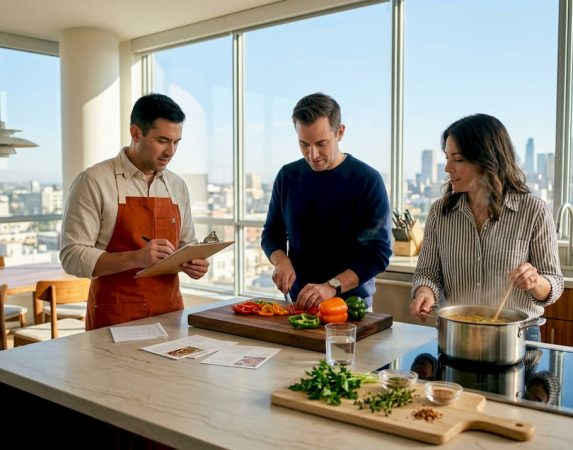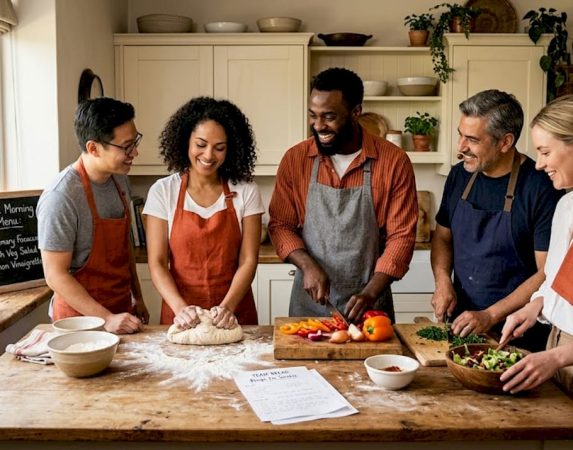
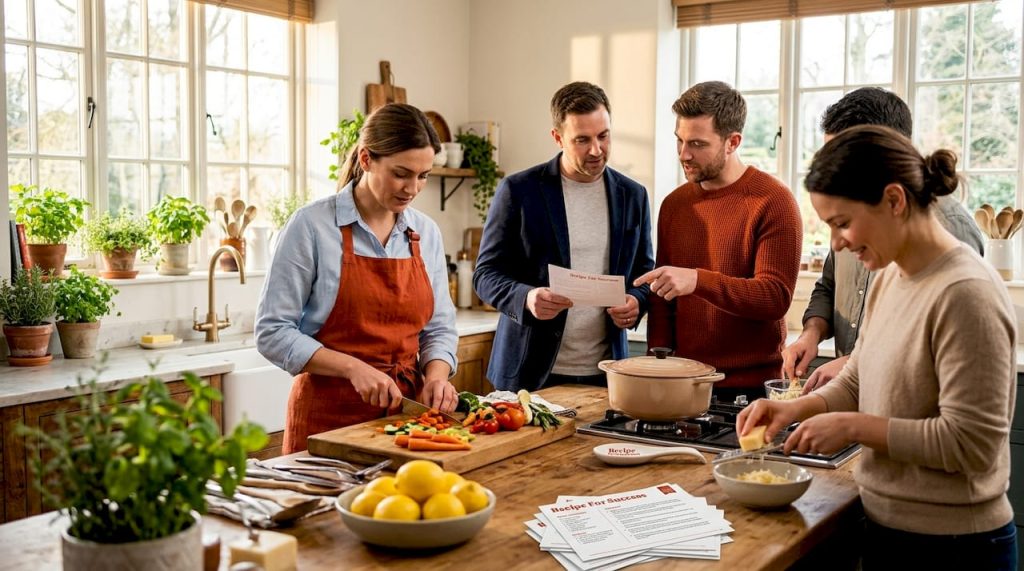
Finding a team-building activity that actually works is harder than it looks. Most options feel forced, forgettable, or just plain boring. The in-person cooking workshop process flips that script entirely. Instead of passive ice-breakers or generic seminars, your team gets their hands dirty, literally, solving real problems together in a kitchen. This guide walks you through every phase, from setting objectives to wrapping up, so you can plan a culinary experience that builds genuine collaboration and leaves your team energized rather than eye-rolling.
| Point | Details |
|---|---|
| Define clear goals | Setting specific objectives aligned to your team’s needs ensures a focused and effective cooking workshop. |
| Plan logistics early | Start venue and vendor coordination at least eight weeks in advance for smooth execution. |
| Follow timeline phases | Structure activities with clear timing for welcome, cooking, tasting, and debrief to maximize engagement. |
| Prioritize food safety | Implement hygiene, separate raw and cooked foods, and monitor temperatures to prevent contamination. |
| Cooking boosts collaboration | Hands-on workshops encourage real-time teamwork, problem-solving, and improve productivity by up to 25%. |
Before you book a venue or hire a chef, you need to know what you are actually trying to achieve. A cooking skills workshop can serve very different goals: improving cross-department communication, helping a newly merged team bond, or simply rewarding high performers with something memorable. The clearer your objective, the better you can shape the cooking class experience to deliver it.
Team-building cooking activities increase productivity by up to 25%, which makes the case for investing in this format. But productivity gains do not happen by accident. They come from workshops that are thoughtfully designed around specific team needs.
Start your planning process with these questions:
Exploring culinary team building ideas early in your planning process helps you match the right format to your team’s needs and culture. A competitive cook-off feels very different from a collaborative sushi-rolling class, and that difference matters when your goal is specific.
With your objectives clear, the next step is organizing the practical logistics to ensure your cooking workshop runs smoothly.
Logistics are where the best intentions go sideways. A poorly chosen venue or a chef who shows up unprepared can derail even the most thoughtfully designed program. Vendor coordination for a cooking challenge should start 8 weeks in advance, giving you enough runway to handle the inevitable surprises.
Here is a practical timeline for organizing your in-person cooking course:
Use this table to keep your planning organized across the key areas:
| Planning area | Key task | Deadline |
|---|---|---|
| Venue | Book kitchen-equipped space | 6 weeks out |
| Chef and facilitator | Hire and brief on goals | 6 weeks out |
| Menu | Finalize dishes and accommodations | 4 weeks out |
| Participant comms | Send info and reminders | 1 to 2 weeks out |
| Equipment check | Confirm tools and supplies | 1 week out |
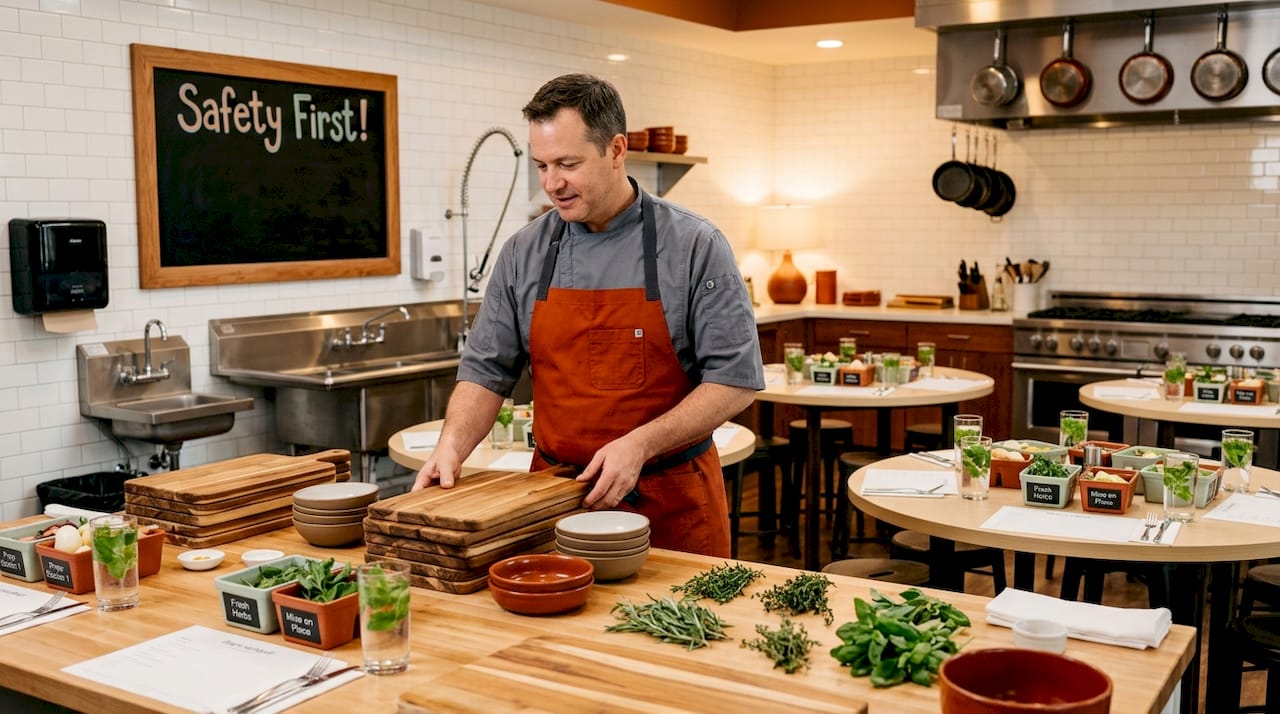
When organizing culinary workshops, one detail that teams often overlook is the physical space layout. You want kitchen stations that keep sub-teams close together but allow the full group to gather for demonstrations. A space that is too spread out kills the energy.
Pro Tip: When confirming dietary needs, go beyond the basics. Ask specifically about texture sensitivities, cultural preferences, and religious restrictions. A one-size-fits-all “vegetarian option” often leaves people feeling like an afterthought. Thoughtful accommodation is one of the most effective ways to build team bonds before the event even starts.
Having a well-coordinated plan and venue, you can now focus on designing the workshop structure itself.
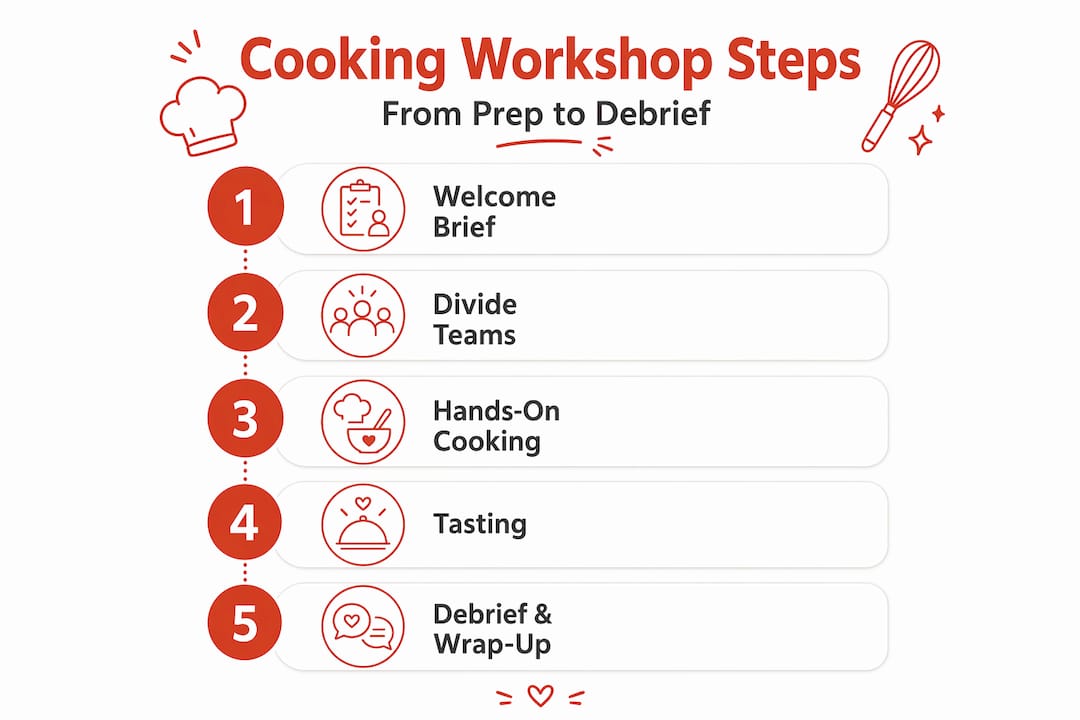
A well-paced interactive cooking session does not happen by accident. The flow of the event determines whether your team leaves feeling energized or exhausted. Team cooking challenges can be completed in roughly 2 hours when structured around clear phases. Here is a timeline that works for most corporate groups:
Assigning clear roles makes the whole event run better:
Here is how a standard format compares to a competition-style format, so you can choose what fits your team best:
| Feature | Standard collaborative format | Competition-style format |
|---|---|---|
| Team dynamic | Cooperative, low pressure | Energetic, slightly competitive |
| Best for | New teams or post-conflict groups | High-performing teams seeking challenge |
| Outcome focus | Connection and communication | Problem-solving and leadership |
| Judging involved | Optional | Yes, central to the format |
The culinary challenge timeline on our culinary challenge schedule page can help you adapt these phases to different group sizes and objectives.
Pro Tip: Build in a two-minute buffer between each phase. Kitchens get noisy and transitions take longer than expected. That extra cushion keeps the experience feeling relaxed rather than rushed, which directly affects how much genuine collaboration actually happens.
Once the timeline and team roles are clear, ensuring safety and hygiene is essential before and during the event.
This is the section that often gets skipped in team-building planning guides, and that is a mistake. A group of enthusiastic non-chefs working in a shared kitchen can quickly create food safety issues if no one sets expectations upfront.
The four core principles to follow during any hands-on culinary workshop are:
“Adopting a ‘clean as you go’ mindset is one of the most effective ways to maintain a sanitary workspace during high-energy group cooking. It also keeps the kitchen functional when multiple teams are working simultaneously.”
Implementing these standards does not require a food safety certification, but it does require one person, usually the chef, to own this responsibility clearly. Knowing the basics of workplace cooking safety is something every HR professional organizing a culinary event should review before the day.
Pro Tip: Brief participants on food safety expectations at the very start of the welcome phase, not as a lecture but as a quick, friendly “house rules” segment. Framing it that way keeps the tone light while ensuring everyone understands the expectations.
With safety ensured, effective execution completes the workshop experience and maximizes team benefits.
The live event is where all your planning either pays off or exposes its gaps. Cooking challenges encourage delegation and problem-solving during the cooking phase, directly mirroring the dynamics teams face in the workplace every day. That parallel is what makes this format so valuable.
Here is what effective execution looks like in practice:
Pro Tip: Ask participants to name one teammate who stepped up unexpectedly during the cooking phase. Public recognition during the debrief reinforces the collaborative behaviors you actually want to see back at work.
Here is an opinion you may not expect: most traditional corporate team-building formats fail not because the activity is wrong, but because the outcome is entirely intangible. You do the ropes course, you have a laugh, and three days later nobody can articulate what changed. Cooking solves that problem in the most literal way possible. You made something. You can taste it.
The in-person cooking workshop process works on a different level because it mirrors the pressures of real work without the political baggage. When your team is racing to plate a dish on time, they have to delegate and problem-solve under real constraints. There is no way to fake it. Either the sauce gets stirred or it burns.
Cooking also engages senses that most office work ignores. Smell, taste, texture, sound. That sensory richness creates stronger memories and more emotional connection to the people you cooked with. Research on experiential learning consistently shows that people retain information and feelings tied to multi-sensory experiences far better than those tied to passive ones.
The inclusivity angle is worth emphasizing too. A well-designed culinary training class with customizable menus means no one sits on the sidelines. The team member with a gluten intolerance, the colleague who does not drink, the person who has never chopped an onion before — everyone has a role. That universal participation is rare in corporate activities and genuinely valuable. The food-based team building benefits go well beyond the kitchen, showing up in how teams communicate and support each other long after the aprons come off.
You have got the blueprint. Now imagine handing the entire process to a team that does this every day.
At Recipe for Success, we design culinary team building events specifically for corporate groups, with experienced chefs who know how to draw out the best in a team, not just the best in a dish. Whether you want a friendly cook-off or a collaborative meal, our culinary challenge team building formats are fully customizable to your team size, dietary needs, and company goals. We handle logistics, vendor coordination, and safety so you can focus on what matters: watching your team connect over something real. Explore our food-based team building options and find the right format for your next event.
Most workshops run between 2 to 4 hours, covering cooking, tasting, and debrief activities. Cooking classes at Pike Place Market, for example, last 3 to 4 hours including a market tour, cooking session, and shared meal.
Menus are built around participant needs from the start. As Pike Place Market’s program demonstrates, menus are created at the beginning of class by accounting for dietary preferences and allergies so everyone participates safely.
The four essentials are handwashing, separation of raw and ready-to-eat foods, monitoring cooking temperatures, and refrigerating leftovers within two hours. Handwashing with soap for at least 20 seconds and using separate cutting boards are the most critical steps for preventing contamination.
Companies report measurable performance improvements after cooking workshops. Team-building cooking activities increase productivity by up to 25% by strengthening collaboration, communication, and problem-solving skills across the team.