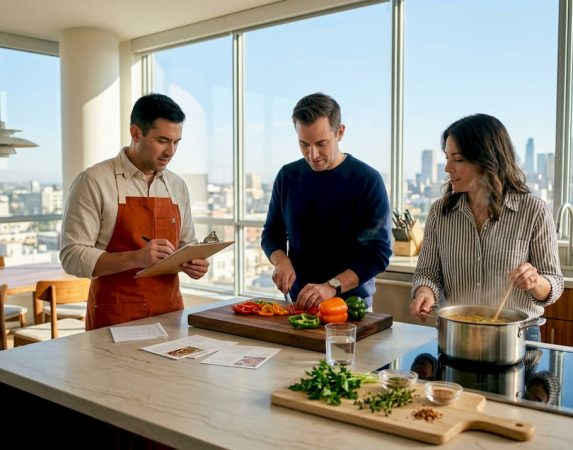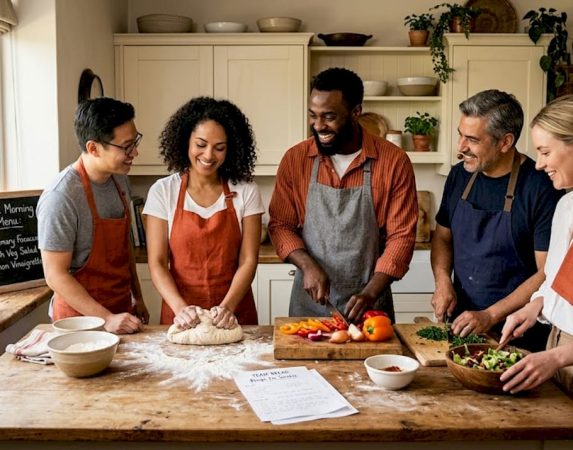
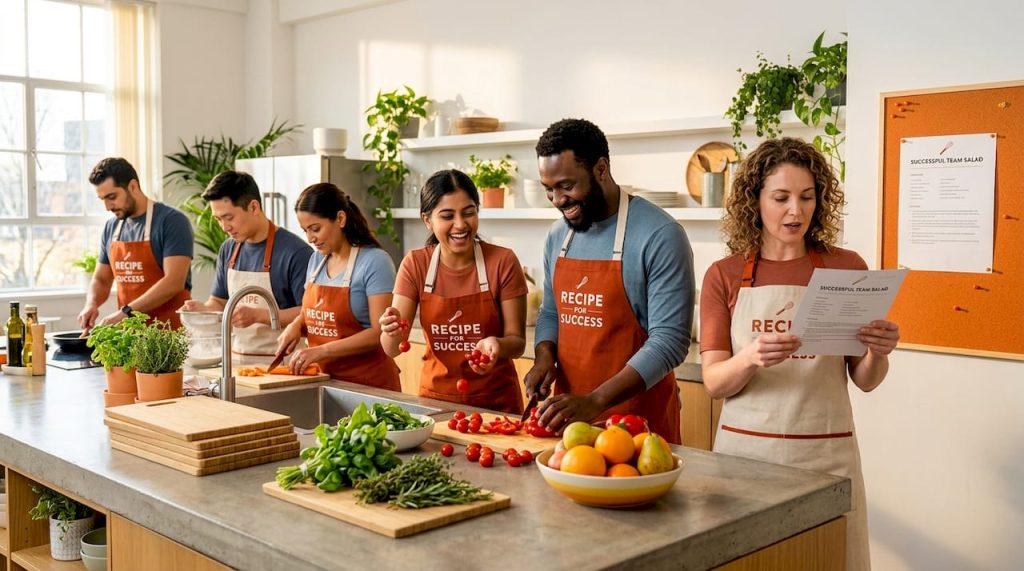
Most team-building activities share a familiar pattern: a rented conference room, a facilitator with a PowerPoint, and a room full of colleagues doing their best to look engaged. It rarely sticks. If you’re an HR manager or team leader searching for why choose cooking workshops, you already sense there’s a better way. Cooking workshops flip the whole model. They get people on their feet, working side by side, solving real problems with real ingredients, and sitting down together to enjoy the result. That’s not just more fun. It’s genuinely more effective.
| Point | Details |
|---|---|
| Active participation | Cooking workshops engage teams through hands-on involvement, making team building more effective and memorable. |
| Tangible teamwork skills | Kitchens mimic workplace collaboration, teaching communication, coordination, and accountability through clear roles. |
| Social bonding | Sharing meals during workshops creates meaningful social connections that enhance wellbeing and team morale. |
| Balanced structure | A mix of recipe frameworks and creative freedom keeps engagement high while fostering problem-solving skills. |
| Flexible scalability | Workshops can be tailored to various corporate sizes, cultures, and dietary needs, ensuring inclusivity and relevance. |
Traditional team-building events often ask people to “communicate better” in the abstract. Cooking workshops make communication unavoidable. You can’t chop, sauté, and plate a three-course meal without talking, listening, and adjusting in real time. That’s the core advantage of why cooking workshops work where so many other formats fall flat.
The format itself does a lot of the heavy lifting. Live cooking stations encourage movement and mingling, creating far more conversation opportunities than a sit-down catered dinner ever could. People flow between stations, bump into colleagues from different departments, and bond over shared tasks instead of forced icebreakers. And if you understand why cooking is great for team building, you’ll recognize that the kitchen environment naturally dissolves hierarchy in a way that meeting rooms simply don’t.
Here’s what sets interactive cooking event benefits apart from other formats:
The cooking workshop advantages here go beyond entertainment. You’re engineering the conditions for genuine connection.
It’s easy to assume cooking workshops are just a fun outing. The research says otherwise. Teaching kitchens combine cooking instruction with nutrition education and behavior-change strategies, functioning more like learning laboratories than recreational classes. When people cook together with a clear goal and expert guidance, they’re practicing focus, patience, and adaptability at the same time.
The social dimension is equally powerful. Sharing meals is linked to greater wellbeing, which means the sit-down moment after a cooking workshop isn’t just a reward. It actively reinforces the bonds built during preparation. This is one of the most underrated benefits of culinary workshops: the meal itself becomes a ritual that cements what the activity started.
“Cooking together blends mindfulness, creativity, and teamwork into a single experience. It’s not a metaphor for collaboration. It is collaboration.”
The benefits of cooking workshops also show up in how people relate to each other afterward. Understanding culinary workshops and teamwork reveals that the shared memory of a cooking experience gives teams a common reference point, which is something that a trust fall exercise simply doesn’t provide.
Key research-backed reasons to take cooking classes as a team include:
A professional kitchen is one of the most efficiently coordinated environments on earth. Every role is defined. Every task has a dependency. If the sauce isn’t ready when the protein is, the whole plate falls apart. That pressure, when applied in a low-stakes workshop setting, teaches real skills fast.
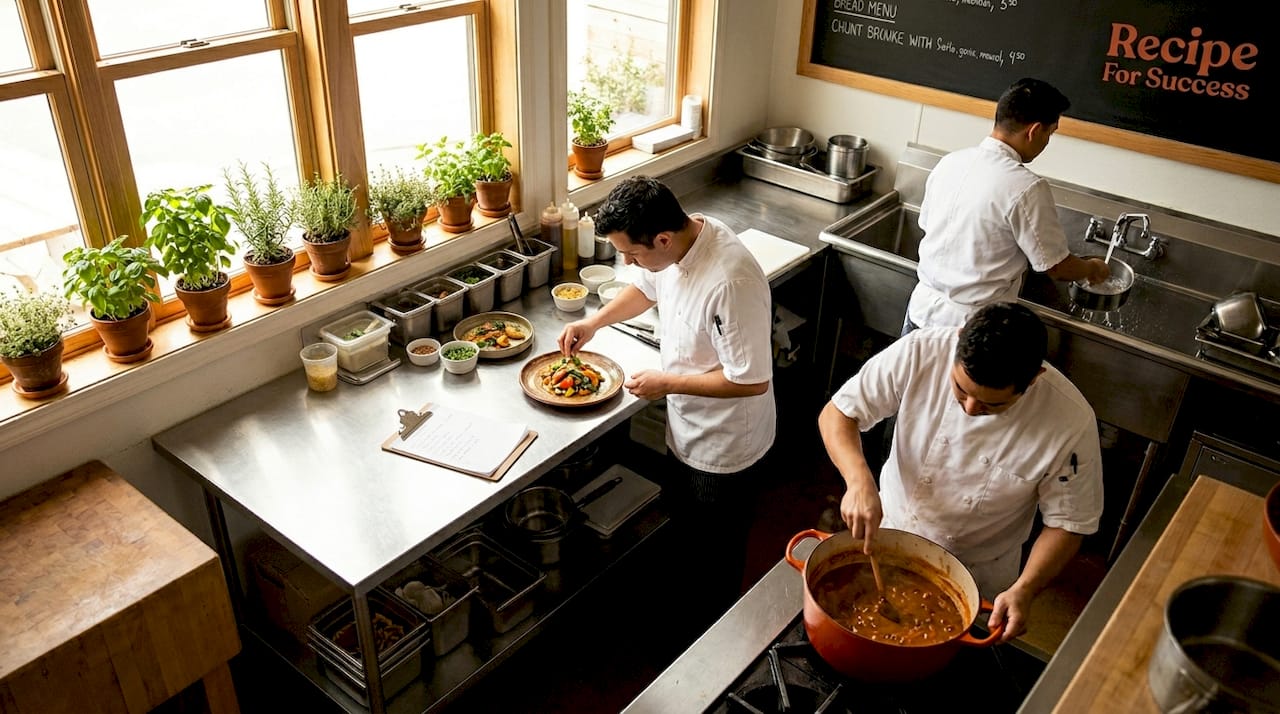
Kitchens require coordinated roles and timing, which builds communication, turn-taking, and feedback habits within a structured environment where the outcomes are visible and immediate. You don’t have to wait for a quarterly review to know whether your team communicated well. The dish tells you.
Here’s how the kitchen mirrors the workplace step by step:
Pro Tip: Assign roles that differ from each person’s usual workplace function. Put the manager on chopping duty and the quietest team member on coordination. You’ll uncover leadership qualities you didn’t know existed.
Exploring how you can build team bonds through cooking is really about understanding that a kitchen gives you a live simulation of every core teamwork challenge, with zero career risk attached.
One of the smartest cooking workshop advantages is how well-designed programs balance rules and freedom. Too much structure and participants disengage. Too little and chaos replaces collaboration. The best workshops use recipes as frameworks, not scripts.
Successful cooking workshops use recipe frameworks that allow controlled creativity, maintaining clarity while encouraging iteration and problem-solving. Think of it like a sprint in project management: you have a fixed time, a clear goal, and just enough freedom to solve problems your own way.
Here’s how structure and creativity each serve the experience:
| Element | Structured component | Creative component |
|---|---|---|
| Recipe | Fixed ingredients and technique | Seasoning, flavor balance, garnish |
| Plating | Standard portion and layout | Personal presentation style |
| Timing | Set course schedule | Pace within each station |
| Team roles | Assigned tasks | How each person approaches their task |
| Final outcome | A complete, shareable meal | Individual flair on every dish |
This balance is deeply relevant to what corporate teams face every day. Budgets, deadlines, and processes are the recipe. How your team innovates within those constraints is the creativity. A cooking workshop practices that exact dynamic in a context where experimentation feels safe and even encouraged.
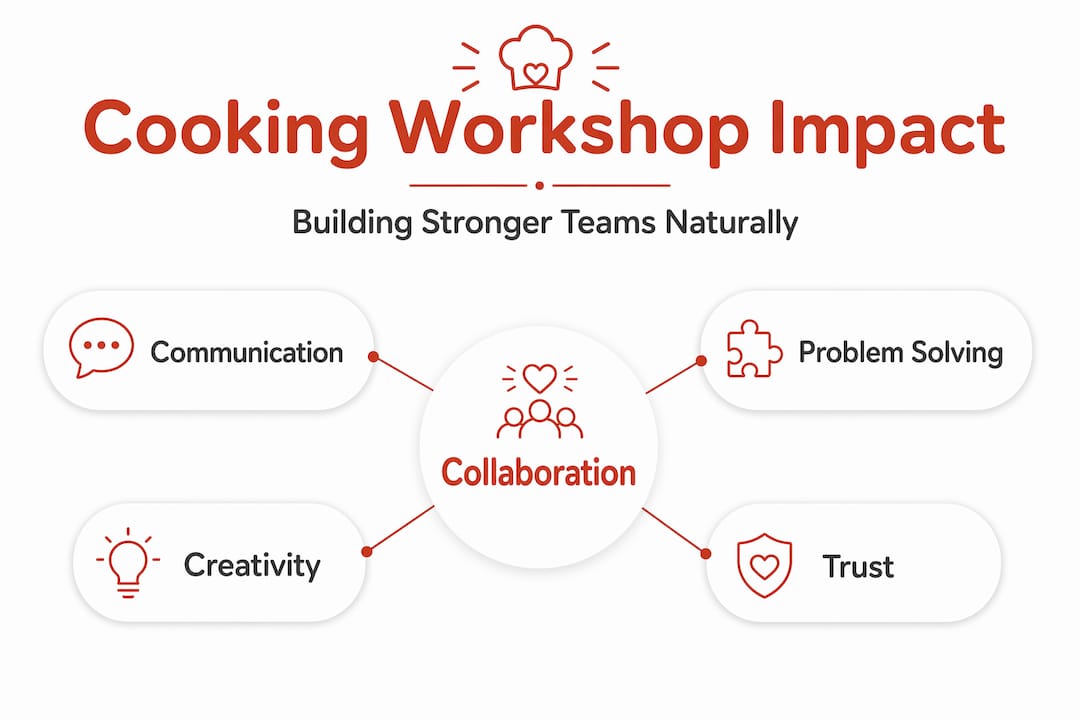
Pro Tip: Ask your facilitator to build in a “freestyle round” at the end where teams can plate a dish however they choose. That ten minutes often produces the most memorable conversations, and the most revealing ones.
Digging into the essential elements of effective workshops shows that thoughtful program design is what separates a genuinely impactful experience from a fun but forgettable afternoon.
Knowing the benefits is one thing. Putting them into practice takes a bit of planning, but it’s far more flexible than most HR managers expect. Here’s what to keep in mind as you consider integrating cooking workshops into your calendar.
Live cooking stations adapt to various event sizes, venues, themes, and budgets, which means you’re not locked into a specific format. A team of 12 working on a pasta-making session feels just as purposeful as a company-wide event with multiple stations running simultaneously.
Practical planning checklist:
| Goal | Recommended format | Expected outcome |
|---|---|---|
| Onboarding | Beginner-friendly cook-along | Immediate rapport among new team members |
| Cross-department collaboration | Rotating station challenge | Stronger inter-team communication |
| Leadership development | Head chef role rotation | Identification of natural leaders |
| Morale and recognition | Celebration dinner event | Increased motivation and loyalty |
| Creative problem-solving | Mystery ingredient challenge | Boosted lateral thinking skills |
Browsing team building ideas for your company can help you match the right cooking format to your specific team moment, whether that’s a quarterly kickoff or a post-merger integration event.
Here’s what most articles about team-building activities won’t tell you: the problem isn’t that teams lack trust. It’s that most activities never show you what your team’s actual dynamics look like under light pressure. You don’t find out who steps up, who goes quiet, or who naturally coordinates others by talking about it in a workshop. You find out by doing something together.
Cooking workshops are one of the rare formats where collaboration becomes visible and measurable rather than self-reported. Role clarity and interdependence make the invisible visible. You can watch your team in action.
What’s even more interesting is what gets revealed about people outside their job titles. The quietest analyst might turn out to be the most decisive leader when someone needs to decide whether to add salt. The senior manager might be genuinely terrible at delegating when it’s pasta instead of PowerPoints. That’s not just fascinating. It’s useful information for anyone building high-performing teams.
The controlled pressure of a kitchen is also meaningfully different from the artificial pressure of an escape room or a trust fall. In cooking, the pressure is real but the stakes are low. Nobody loses their job if the soufflé falls. That combination, real consequences without career risk, creates exactly the kind of environment where people experiment, try new behaviors, and surprise themselves. That’s where workplace cooking classes genuinely build teams rather than just entertain them.
The advantages of cooking workshops over abstract communication exercises come down to one thing: you can see the results. A shared meal is tangible proof that your team built something together. That matters more than a post-event survey.
Ready to bring your team together over something real? Recipe For Success designs culinary challenge team-building experiences built specifically for corporate groups, with every detail tailored to your team’s size, goals, and culture. Our chef-led sessions prioritize collaboration, communication, and genuine fun, not just a nice afternoon out.
Whether you’re planning a small department workshop or a company-wide celebration, our programs flex to fit. From mystery ingredient challenges to plated dinner experiences, every format is designed to deliver the food-based team building outcomes you’re looking for: stronger connections, better communication, and a team that’s genuinely excited to work together. Build team bonds that go beyond the kitchen and show up in every meeting, project, and challenge your team faces next.
Cooking workshops provide active participation with tangible outcomes, fostering real-time communication and collaboration rather than passive or artificial exercises. Live cooking stations convert passive attendees into active participants engaged in preparation and natural networking.
Teams practice giving and receiving immediate feedback during meal preparation, synchronizing tasks and solving problems together in a clear, structured environment. Kitchens require coordinated roles and timing, which builds communication and feedback habits that transfer directly to the workplace.
Yes, live cooking stations allow participants to customize meals to their preferences and needs, including vegetarian, vegan, gluten-free, halal, kosher, or allergy-specific diets. Live stations offer flexibility for diverse dietary requirements by letting guests create personalized dishes.
Absolutely. Sharing meals is associated with greater wellbeing, which means the team meal that follows a cooking workshop actively strengthens the social bonds built during preparation, not just wraps up the event.
These workshops easily scale from small executive teams to large corporate events with adaptable formats, menus, and station setups. Live cooking stations adapt to various event sizes, venues, themes, and budgets to suit any organizational need.