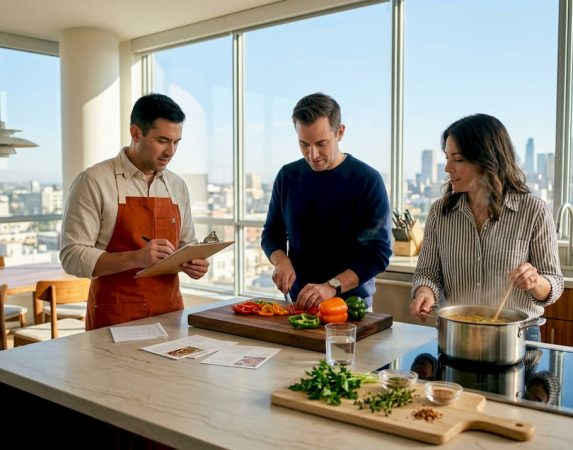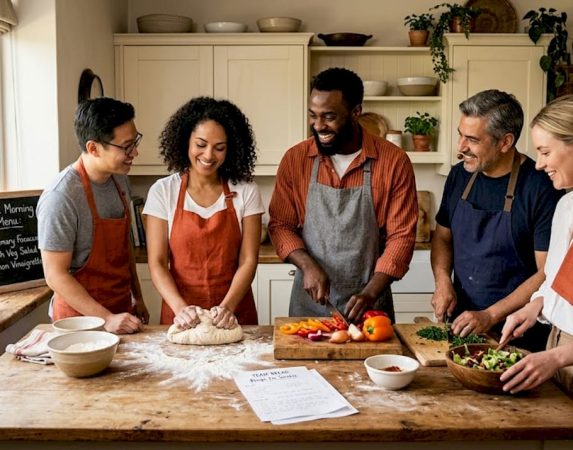
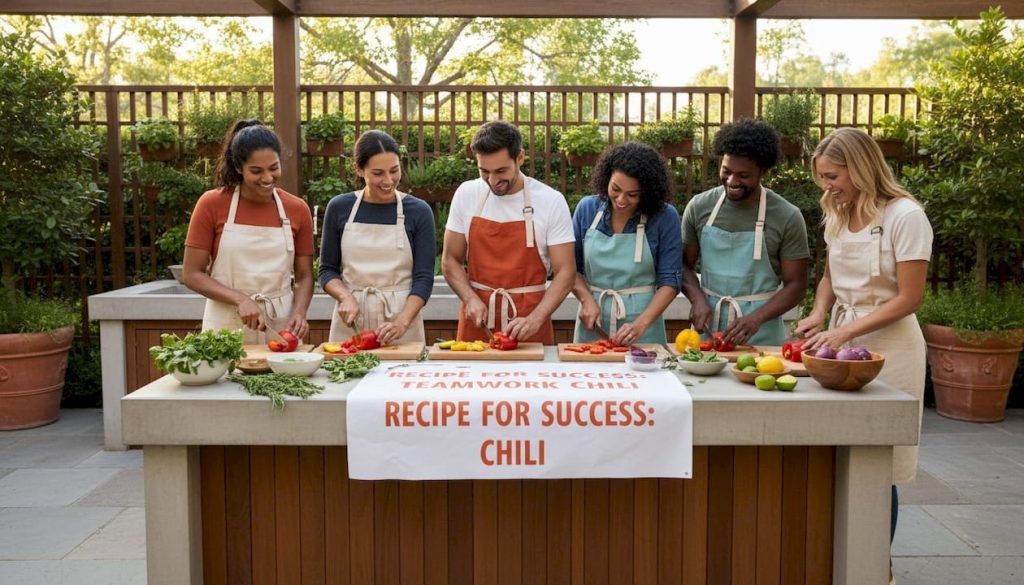
Team building activities can boost productivity up to 25%, yet most companies still default to happy hours that fewer than half their employees actually enjoy. International cuisine changes the entire equation. When your team gathers around a wok, rolls sushi, or kneads fresh pasta dough together, something meaningful happens beyond the cooking itself. This guide breaks down exactly why global culinary experiences outperform traditional formats and how you can design events that genuinely connect people, celebrate diversity, and create momentum that lasts well beyond the event itself.
| Point | Details |
|---|---|
| Cultural appreciation | Cooking international dishes promotes understanding and respect across diverse teams. |
| Structured event flow | A well-designed session follows sequential phases to maximize engagement and collaboration. |
| Inclusive participation | Events are adaptable for dietary needs, skill levels, group sizes, and remote teams. |
| Measurable impact | Culinary activities boost productivity, attendance, and employee wellbeing. |
| Beyond the kitchen | Long-term benefits include improved workplace relationships and sustained engagement. |
Happy hours give people a drink and a reason to stand in the same room. International cuisine gives them a shared mission, a story, and a skill. That’s a fundamentally different experience.
When your team cooks a Moroccan tagine or assembles Korean bibimbap together, they’re not just following a recipe. They’re stepping into a different culture’s kitchen. The flavors, techniques, and traditions that come with each dish create natural conversation starters that break down the small talk barrier almost immediately.
“International cuisine focus uniquely promotes cultural appreciation by immersing teams in global recipes, stories, and techniques, ideal for diverse workforces to build mutual respect and break hierarchies.”
This matters enormously for teams that include employees from different backgrounds, countries, or generations. When someone from Vietnam teaches a colleague how to roll a fresh spring roll correctly, the usual workplace hierarchy quietly disappears. The title on someone’s business card means nothing at the cutting board. What matters is technique, curiosity, and a willingness to try.
Here’s what makes international cuisine particularly powerful for diverse teams:
You can build team bonds through culinary experiences that carry a depth traditional formats simply can’t match. A team that cooks together tends to communicate better, trust each other more, and collaborate with greater ease in the weeks that follow.
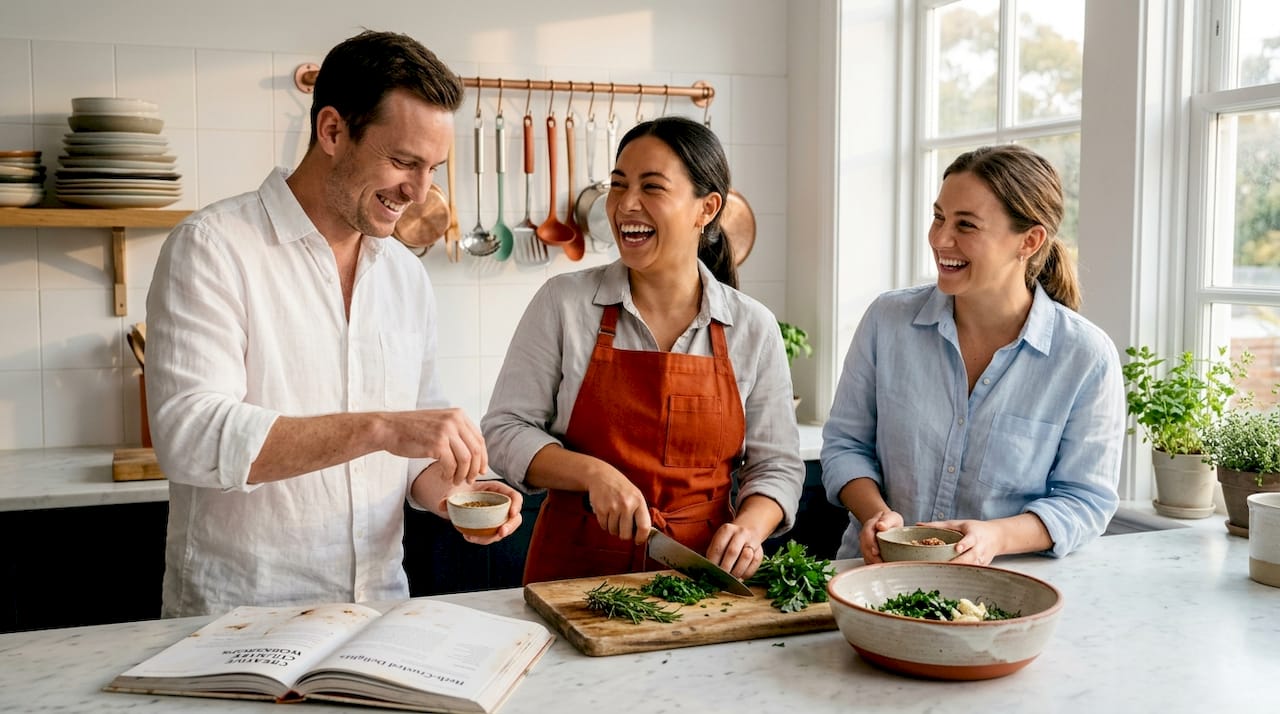
Understanding the structure of a well-run culinary event helps you set expectations, pitch the idea to leadership, and choose the right provider. These sessions are carefully designed to maximize both engagement and genuine teamwork.
A typical international cuisine event runs 2 to 3 hours, moving through clearly defined phases that build energy progressively and then bring it to a satisfying close. Here’s how a standard session unfolds:
| Phase | Duration | Primary goal |
|---|---|---|
| Welcome and team formation | 10 to 20 min | Set tone, form teams |
| Cooking | 60 to 90 min | Active collaboration |
| Tasting and judging | 20 to 30 min | Celebration and recognition |
| Debrief | 10 min | Workplace connection |
The role of the chef facilitator is critical. A skilled culinary host does far more than demonstrate techniques. They read the room, nudge quieter participants into leadership moments, and gently resolve tensions that can arise when personalities clash under time pressure. That guided dynamic is what separates a truly effective team-building session from a simple cooking class.
Pro Tip: When selecting a provider, ask specifically whether their chef facilitators are trained in group dynamics and facilitation, not just culinary arts. The best events require both skill sets working together.
Choosing a theme also plays a bigger role than most HR managers expect. Japanese street food, Peruvian ceviche, or Indian curries each bring unique techniques and varying difficulty levels. Matching the cuisine complexity to your team’s general comfort with cooking keeps frustration low and participation high. You can explore top corporate cooking events to compare formats and find the right fit for your group.
One of the most common concerns HR managers raise is whether everyone on the team will feel comfortable and included. The good news is that international culinary events are among the most adaptable team-building formats available. With the right planning, no one gets left behind.
Dietary restrictions are a starting point, not an obstacle. Menus can be tailored to accommodate allergies, vegan and vegetarian preferences, gluten-free requirements, halal and kosher needs, and more. The key is capturing dietary information well in advance, ideally during the registration or RSVP process, so the kitchen team can prepare appropriate substitutions without disrupting the event flow.
Skill level anxiety is also a real barrier for some participants. The good news is that well-designed culinary events require no cooking pressure. Team members who feel uncomfortable near a stove can take on equally valuable roles such as ingredient prep, plating, timing coordination, or team presentation. Every contribution counts, and that’s exactly the message a great culinary event reinforces.
Here’s a quick comparison of in-person versus virtual culinary event formats:
| Feature | In-person event | Virtual event |
|---|---|---|
| Group size | 10 to 40 participants | Flexible, any size |
| Interaction | High, face-to-face | Moderate, screen-based |
| Equipment needed | Venue kitchen setup | Pre-shipped ingredient kits |
| Cultural immersion | Full sensory experience | Visual and taste-based |
| Best for | Office teams, offsites | Remote and hybrid teams |
Virtual culinary events have grown significantly as remote and hybrid work arrangements became standard. Ingredient and equipment kits are shipped to participants’ homes ahead of time, and a professional chef leads the session live over video. The shared experience of cooking the same dish at the same moment, even across different time zones, creates a surprisingly strong sense of connection.
For larger organizations, breaking a big group into smaller cooking teams of four to six people works best. This size keeps communication manageable, ensures everyone contributes, and mirrors the kind of small cross-functional teams that organizations rely on every day.
Pro Tip: For hybrid teams where some people are in-office and others are remote, run parallel cooking stations in the office while remote participants use their home kits. A split-screen setup allows everyone to see each other and compete in the same challenge simultaneously.
Explore workplace cooking classes designed specifically with team inclusivity in mind to find options that fit your workforce’s unique needs.
Let’s talk about results. HR managers need more than anecdotes to justify event budgets. The data behind culinary team building is genuinely compelling, and it tells a consistent story.
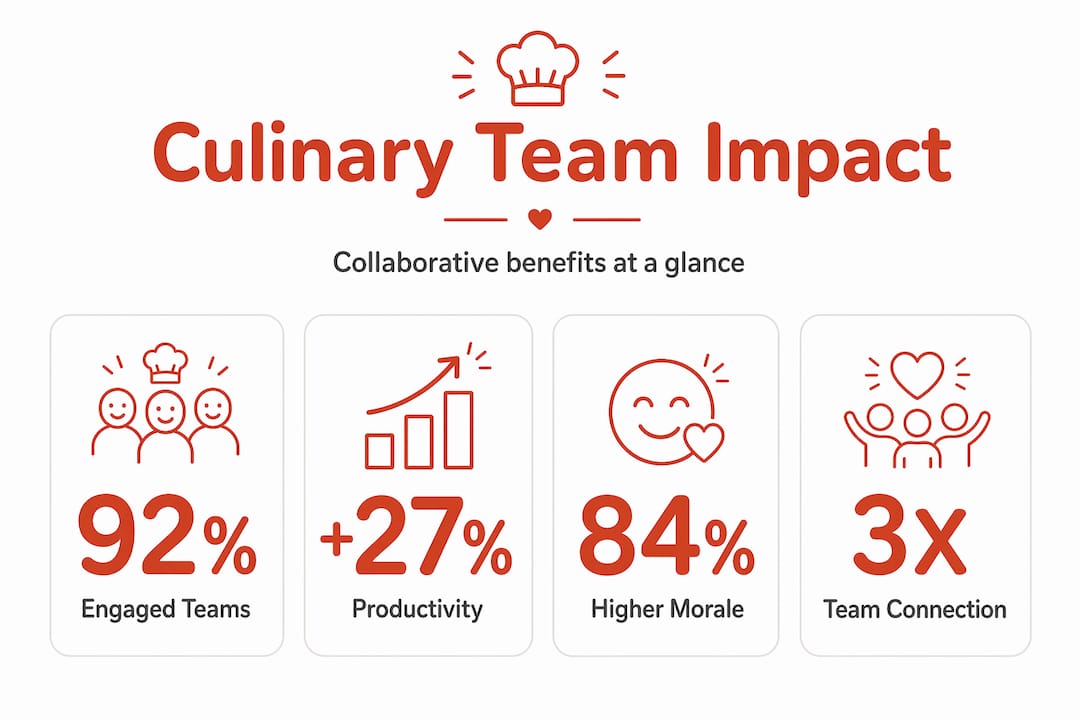
Starting with attendance and cost, morning shared meals generate 3x higher attendance compared to after-work happy hours, and they do it at roughly 50% of the cost. That’s a significant return on your events budget before you even factor in the team-building value.
Here are the key evidence-backed outcomes that make culinary events worth the investment:
Food-based collaboration works because it activates both cognitive and emotional engagement at the same time. Unlike a workshop that asks people to think and discuss, a culinary event asks them to feel, create, and celebrate together. That combination is what makes the impact stick.
You can also use culinary events strategically to spark creativity with culinary team building as teams problem-solve with limited ingredients, improvise under time pressure, and present their interpretations to peers. These are real creative muscles that matter in everyday work, and cooking together is one of the most enjoyable ways to exercise them.
Here’s an honest take that most articles and vendors skip over entirely. The cooking itself is not the most valuable part.
Yes, kneading dough and perfecting a stir-fry together is genuinely fun. But the real ROI for organizations comes from what happens in the weeks after the event. The new relationships formed between people who never would have spoken in a conference room. The way a junior team member suddenly earns respect from a director because they knew how to debone a fish correctly. The inside jokes that become shorthand for trust and shared experience.
International culinary events do something that most corporate programs struggle to achieve: they give people a shared identity. Your team cooked Peruvian food together. That’s now part of your team’s story.
We’ve seen this pattern repeat consistently. Teams that come in with tension, poor communication, or simple unfamiliarity walk away with a different relationship to each other. Not because they talked about their feelings in a structured activity, but because they problem-solved over a hot stove, helped each other plate a dish under time pressure, and laughed over a burned sauce together.
What HR leaders should take seriously is the post-event momentum. The event creates an opening. What you do with it determines whether the benefit lasts a week or a year. Use the debrief to surface real insights. Follow up with a team discussion about what the experience revealed about how you work together. Keep the cultural thread alive by incorporating global cuisines into regular team lunches or rotating “culture of the month” food themes.
The organizations that get the most from culinary events are the ones that treat them as catalysts, not one-off activities. Culinary workshops explained in detail can help you plan a sequence of events that build on each other rather than standing alone.
Culinary team building also carries a powerful signal to your workforce: your organization values joy, culture, and the whole person, not just the employee. In a talent market where culture is a genuine differentiator for recruitment and retention, that message matters more than most leaders realize.
If the evidence has you thinking about your next team event, we’d love to help you cook up something memorable.
At Recipe for Success, we design chef-led culinary team-building experiences that bring teams together through the joy of global cooking. Whether you’re looking for a culinary challenge team building event that sparks friendly competition, or a more relaxed experience focused on boosting collaboration through cooking, we have formats to fit your team size, goals, and budget. Our programs are designed for both in-person and virtual teams, with fully customizable menus and professional chef facilitators who know how to bring out the best in every group. Explore how we use culinary creativity for team building to deliver experiences your team will genuinely remember. Let’s get cooking together!
Menus are tailored to meet a wide range of dietary needs through advance planning with professional facilitators. Communicating requirements during registration ensures every participant has a safe and enjoyable experience.
Yes, virtual kits for remote teams make it possible for distributed teams to cook the same dish at the same time from their own homes. A live chef facilitator keeps the energy high and the experience genuinely connected.
Most activities are designed for 10 to 40 participants, ensuring that everyone can actively contribute within a manageable team structure.
These events are inclusive for all skill levels, with roles available in prep, plating, timing, and presentation for anyone who prefers not to cook. Every role contributes equally to the team’s success.
Sessions run 2 to 3 hours, including structured phases for cooking, tasting, judging, and a team debrief that connects the experience to real workplace dynamics.