Picture this: you’ve booked the venue, hired a chef, and rallied the whole department for a team cooking event. Then it starts. Half the group stands at the back, unable to eat most of what’s being prepared because nobody asked about allergies or dietary preferences. The energy dies fast. What was supposed to spark connection instead creates awkwardness and frustration. Picking the right recipes for team events is not just a culinary decision. It’s the backbone of every successful group cooking experience, and getting it right requires intentional planning, inclusive thinking, and a clear process from start to finish.
| Point | Details |
|---|---|
| Start with dietary needs | Understand all allergies and preferences before deciding on any recipes or themes. |
| Choose flexible formats | Batch-cooking, build-your-own stations, and diverse menus ensure everyone feels included. |
| Balance and organize your menu | Mix proteins, veggies, grains, and treats, and use structured signups to keep things on track. |
| Prioritize participation | Assign and rotate team roles and create interactive food stations to boost engagement. |
| Leverage expert help | Consider professional culinary team building services to make events seamless and memorable. |
Before you even glance at a recipe book, you need to know who’s walking through that door. This step is the foundation of every great culinary team-building experience. Skip it, and you risk turning an exciting event into a logistical headache where someone ends up eating plain crackers while everyone else digs into a beautiful dish.
Start by gathering allergy and dietary restriction information from every participant. This means asking about:
Do not rely on assumptions or guesswork. Use a simple pre-event form or digital sign-up sheet to collect this data at least two weeks before the event. That window gives you enough time to source specialty ingredients, adjust recipes, or find appropriate substitutions without scrambling at the last minute.
Beyond allergies, ask about food preferences. Does your group love bold, spicy flavors? Are they adventurous eaters who want to try something new, or do they lean toward comfort food classics? Understanding general flavor preferences helps you choose recipes that excite the whole room. For ideas on formats that work well, take a look at the top corporate cooking events to see what tends to land best with corporate groups.
Headcount is equally critical. Cooking for 15 people requires a very different recipe strategy than cooking for 80. Large groups need recipes that can scale without losing quality, while smaller groups can handle more intricate, hands-on techniques. Your ingredients list, equipment needs, and station setup all flow directly from knowing your numbers upfront.
“Account for dietary restrictions early and build inclusivity into the menu so people are not left out due to allergies or preferences.” — The Future of Workplace Dining
This is one of those principles that sounds obvious but is genuinely overlooked more often than you’d expect. If you want to explore more fresh angles on what makes team events work, browsing team building ideas can spark great inspiration for pairing food experiences with other engagement activities.
Pro Tip: Create a short, friendly pre-event survey and send it with the event invite. Include a free-text field for dietary notes so people can share anything unusual that a checkbox might not capture. This takes about ten minutes to set up and can prevent real problems on the day.
Once you know your group inside and out, the real fun begins. This is where you filter your recipe ideas through a practical lens. Not every dish that tastes amazing works for a team event. The best recipes are the ones that invite participation, flex to meet dietary needs, and create genuine moments of collaboration.
There are three core formats to consider:
| Format | Best for | Pros | Challenges |
|---|---|---|---|
| Batch-cooked dishes | Large groups, quick service | Consistent output, less chaos | Less individual involvement |
| Interactive stations | Most group sizes | High engagement, dietary flexibility | Needs more planning and space |
| Potluck-style assembly | Smaller or hybrid teams | Personal contribution, variety | Risk of unbalanced menu |
Interactive stations consistently win for team-building purposes. When small groups rotate through a taco bar, a fresh pasta station, or a dessert assembly line, every person has something to do. There’s no waiting around. There’s no passive observation. People are chopping, seasoning, tasting, and laughing together.
For large groups, crowd-pleasing, diet-flexible options and batch-prep components reduce day-of friction significantly. Think grain bowls with a variety of toppings, build-your-own wraps, or mezze spreads where guests combine elements to suit their own preferences. These formats naturally accommodate the full dietary spectrum without requiring separate “special” dishes that can make people feel singled out.
Here’s what to prioritize when filtering your recipe shortlist:
When you’re planning around a calendar moment like a holiday celebration, reviewing guidance on planning office holiday parties can help you match recipe themes to the season without losing the inclusivity thread.
Pro Tip: When in doubt, build-your-own bars are your best friend. They are inherently flexible, visually impressive, and naturally encourage conversation. Whether it’s a slider bar, a sushi hand-roll station, or a charcuterie board-building challenge, these formats put choice in every participant’s hands.
Choosing great individual recipes is one thing. Building them into a coherent, balanced menu is another skill entirely. Poor menu organization is one of the most common mistakes in team cooking events. You end up with four pasta dishes and nothing green, or three desserts and no protein, and the energy at the table goes sideways.
Here’s a structured approach to building a well-rounded event menu:
A helpful resource for thinking about structure comes from potluck-style event management, which recommends using a sign-up system that categorizes dishes and sets limits per category. This prevents the classic potluck problem of eight macaroni salads and zero appetizers.
For team cooking events, you can adapt this same logic. Assign cooking teams to specific categories: appetizers, mains, sides, desserts. This naturally distributes the work and ensures balanced representation across the meal. It also gives each small group ownership of their contribution, which is exactly the kind of investment that drives real teamwork.
“When running cook-ahead or potluck-style structures, use a signup and categorize dishes; set limits per category to avoid imbalances and collect allergen information upfront.” — Potluck Signup Sheet Ultimate Guide
A structured approach to step-by-step meal prep can also give your teams a shared framework to follow, reducing confusion and keeping things moving efficiently on the day.
Here’s a simple reference table for menu balance by group size:
| Group size | Suggested recipe count | Courses to include |
|---|---|---|
| 10 to 20 people | 4 to 6 recipes | Starter, main, side, dessert |
| 20 to 50 people | 6 to 10 recipes | Two starters, two mains, two sides, dessert |
| 50 to 100 people | 10 to 14 recipes | Full spread across all courses, station-based |
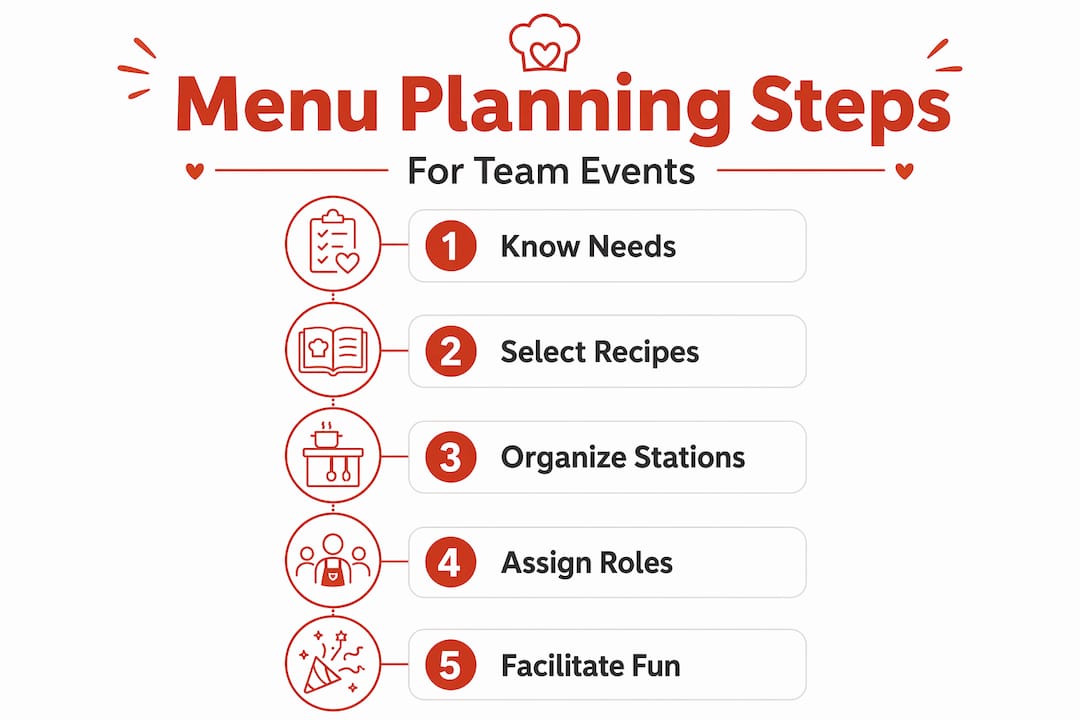
A beautifully designed menu means nothing if the event structure leaves people standing around watching someone else cook. The physical flow of the event, how people move through space and engage with each other, is where recipe selection meets event design.
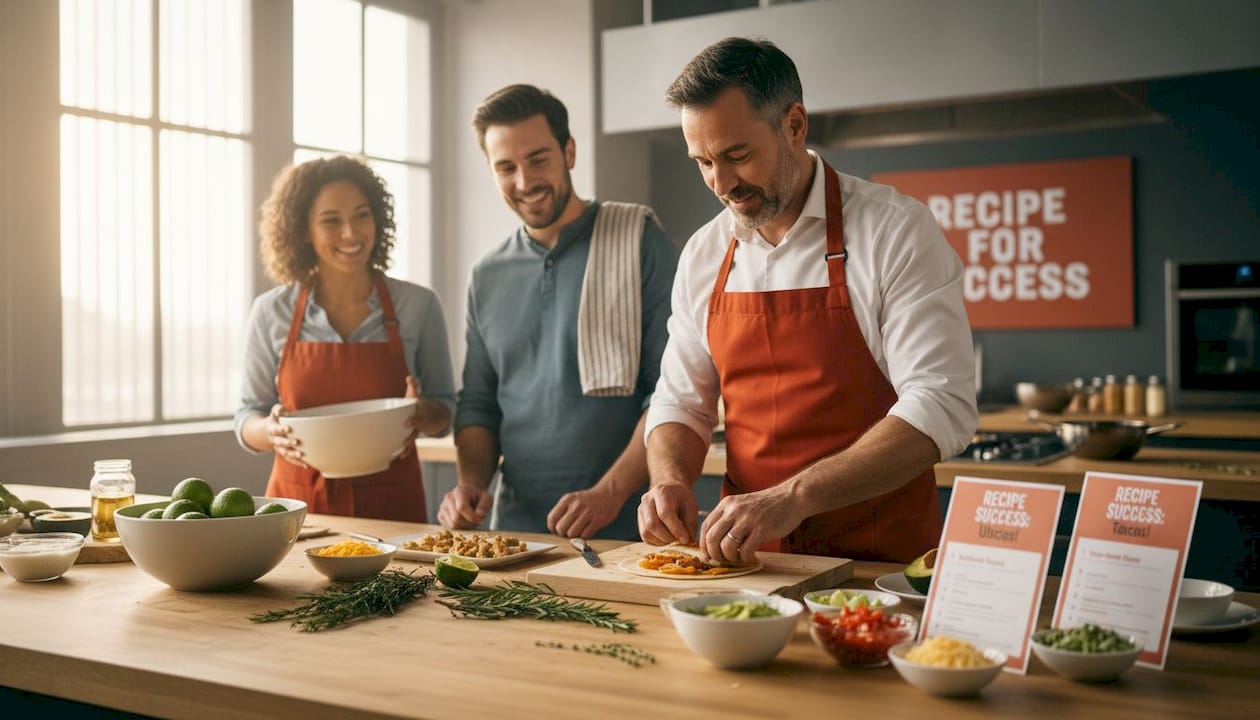
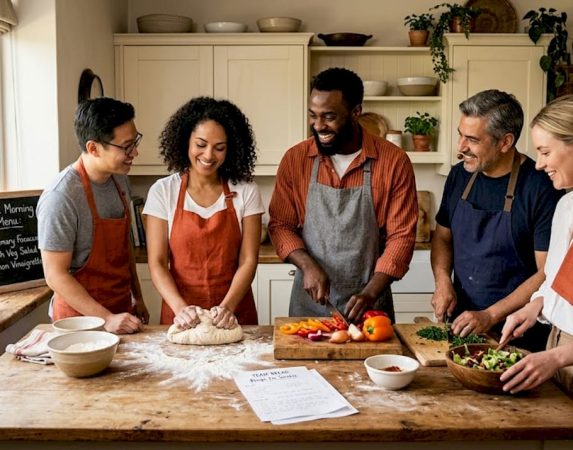
Interactive cooking stations are proven to increase individual engagement. When you break a large group into teams of four to six people and assign each team a station, you create focused bursts of collaboration. Each station becomes its own mini kitchen with a specific recipe goal. Smaller batches and interactive stations preserve social connection far better than funneling everyone toward a single large centerpiece dish.
Assign specific roles within each team to give everyone a clear purpose:
Rotating these roles partway through the event mixes things up and gives people the chance to connect with colleagues they might not normally interact with. That cross-pollination is exactly what gourmet team building is built on. It is not just about the food. It’s about the dynamics that emerge around it.
If energy starts to dip, lean on fun ice breaker games that tie directly into the cooking theme. A quick “guess the spice” challenge or a blind taste test between two sauces can reset the room and spark fresh energy between cooking rounds.
Pro Tip: Build a short “team challenge” into the recipe instructions. For example, ask each station to create a themed name for their dish and present it to the group before eating. This tiny addition transforms a meal into a memory.
Here’s something we’ve learned from working with dozens of corporate groups: the recipe itself is almost never the thing people remember. What they remember is how they felt. They remember laughing over a burnt sauce. They remember a colleague they’d only ever emailed unexpectedly knowing exactly how to fold a dumpling. They remember feeling seen because there was a dish that actually worked for their dietary needs.
Most planners focus heavily on logistics, which is important, but they underestimate the cultural weight of food choices. When you select recipes that reflect a diverse range of traditions, spice levels, and textures, you’re quietly telling your team that you see them. That signal matters more than people consciously realize.
We’ve also seen what happens when recipe selection creates invisible divides. At one event, a team of 40 had two people at one end of the table eating plain salad because every prepared dish contained dairy or meat and no alternatives had been planned. Those two people did not feel like part of the group. They felt like an afterthought. That’s not a small thing. It lingers.
The most powerful team cooking experiences we’ve facilitated are the ones where the recipes were chosen to celebrate what the group has in common, while making space for everyone’s differences. That’s why cooking unites teams in a way that trust falls and conference room icebreakers simply cannot. Food is universal. The act of making something together bypasses professional hierarchy and creates a level playing field.
Our genuine advice: stop treating recipe selection as a catering task. Start treating it as a culture-building opportunity. The time you invest in choosing the right recipes is an investment in your team’s sense of belonging. That return lasts well beyond the event itself.
Planning a team cooking event that truly connects people takes thought, time, and a solid recipe strategy. But you don’t have to figure it all out on your own.
At Recipe for Success, we specialize in turning these challenges into extraordinary culinary experiences. Our food-based team building programs are designed from the ground up with inclusivity, engagement, and your team’s unique needs in mind. Every event is customized, chef-led, and crafted to make every single participant feel like an essential ingredient. Whether you want to boost team creativity through a hands-on cooking challenge or build deeper connections over a shared meal, we handle every detail so you can focus on your people. Ready to start cooking up something special? Let’s talk.
Collect dietary and allergy information early through sign-up forms, then select or adapt recipes so no one is excluded. As highlighted in The Future of Workplace Dining, building inclusivity into the menu from the start is far easier than retrofitting it later.
Batch-prepared dishes and build-your-own components like taco bars, grain bowls, or salad stations are the strongest options because they are crowd-pleasing and diet-flexible for most large groups.
Use a categorized sign-up sheet with limits per dish category and request allergen information upfront. The Potluck Signup Sheet Ultimate Guide recommends this structure to prevent imbalanced menus and last-minute surprises.
Interactive cooking stations with rotating team roles consistently outperform passive formats. Research on interactive stations and social connection confirms that smaller, active group setups foster better engagement and genuine connection than single large-scale cooking setups.