Most team leaders assume a cooking event is just a fun outing. Good food, some laughs, and back to the office. But the data tells a very different story. Creative work positively and significantly affects team performance alongside communication and cohesiveness, according to an empirical study of 75 culinary organizations. When you intentionally design a cooking experience around creativity, you stop planning a party and start building a genuinely stronger team. This article unpacks the evidence, gives you practical frameworks, and shows you exactly how to turn the kitchen into your most powerful team building environment.
| Point | Details |
|---|---|
| Creativity fuels collaboration | Teams engaged in creative cooking activities communicate better and produce more innovative solutions. |
| Leadership amplifies creativity | Empowering leaders and smart role assignments boost team creativity by over 30 percent. |
| Diversity drives idea generation | Multidisciplinary cooking teams yield 5x more sellable ideas and solve problems more creatively. |
| Frameworks maximize impact | Using structured frameworks and chef practices turns ordinary cooking events into creativity engines. |
| Measure and grow outcomes | Tracking feedback and new ideas reveals the lasting value of creative culinary team building. |
Here is a number worth pausing on. Teams generate 5x more sellable ideas per session when working collaboratively, and multidisciplinary teams solve problems 17% more creatively than homogeneous groups. Those numbers do not come from a brainstorming room. They reflect the kind of dynamic, hands-on problem solving that naturally happens when people cook together.
“Multidisciplinary teams solve problems 17% more creatively, and collaborative teams generate 5x more ideas per session than individuals working alone.”
The reason creativity and cooking pair so well comes down to structure. A kitchen has clear goals (finish the dish), defined roles (who chops, who plates, who seasons), and constant feedback loops (taste, adjust, taste again). That structure does not stifle creativity. It actually enables it, because people feel safe to experiment within guardrails.
Food-based team building accelerates this even further when the event is designed with intention. Simply eating together builds rapport. Cooking together builds creative trust.
Here is a quick comparison of creative output between culinary team building and standard approaches:
| Metric | Standard team building | Creative culinary team building |
|---|---|---|
| Ideas generated per session | Baseline | Up to 5x higher |
| Problem solving effectiveness | Baseline | Up to 17% more creative |
| Team communication improvement | Moderate | Significantly higher |
| Cohesiveness score post-event | Moderate | High |
| Participant engagement | Variable | Consistently high |
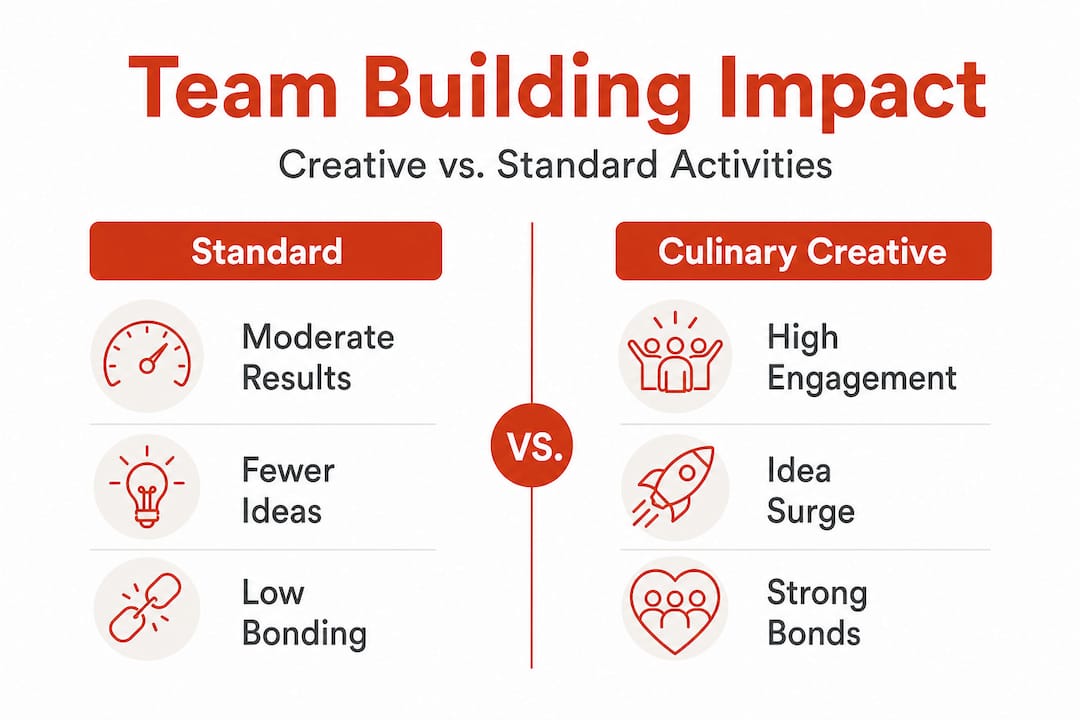
The gap is clear. Standard team building activities like trust falls or personality quizzes produce moderate results. Creative culinary experiences, especially those with diverse team compositions, push those numbers significantly higher.
You can also look at creative food design ideas as a way to understand how visual creativity and functional problem solving overlap. The same cognitive muscle that designs a great food product is the one your team stretches when plating a dish together under time pressure.
Building culinary team bonds is not just a nice side effect. It is the core mechanism that drives sustained performance improvement after the event ends.
Now that we’ve seen the measurable benefits of creativity, let’s break down how culinary activities specifically foster collective innovation and teamwork.
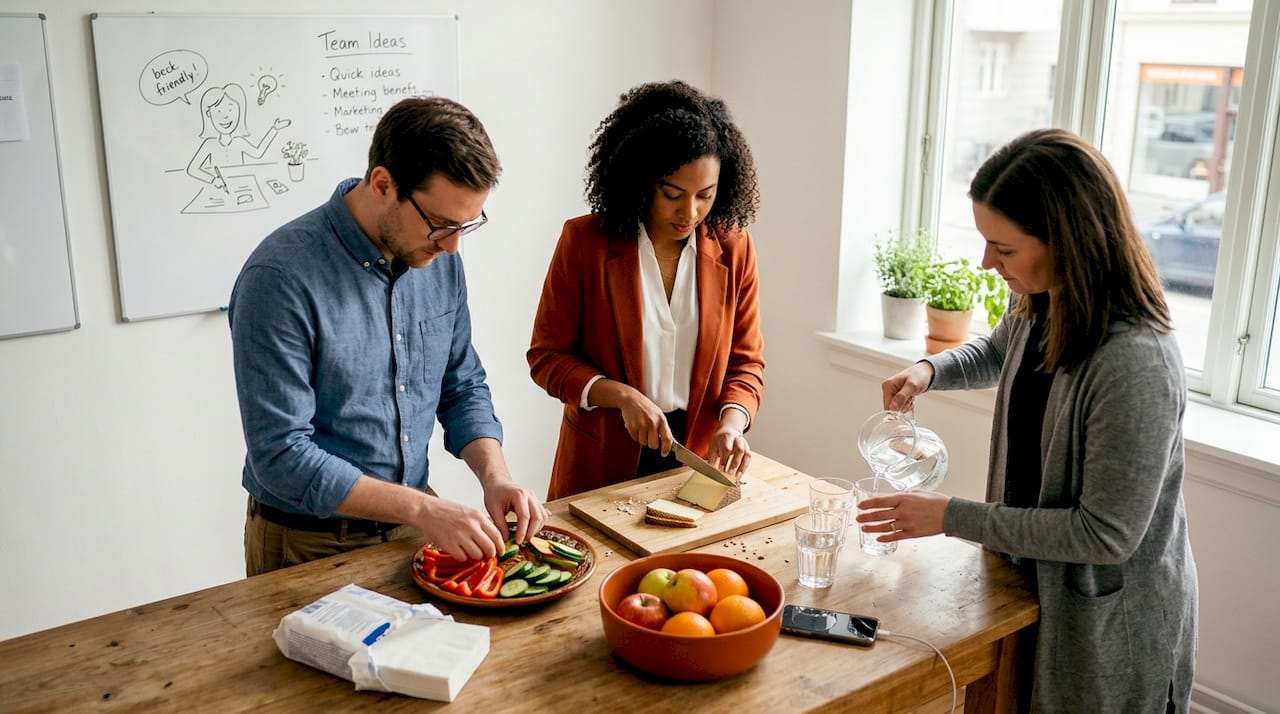
Empowering leadership increases team creativity by 32%, and team building activities that involve active participation improve communication by 15%. Both of those outcomes happen naturally inside a well-run cooking session, because a kitchen demands both leadership and collaboration at the same time.
There is also something fascinating about team composition. Dyadic teams with complementary traits, specifically those pairing high agency individuals with high communion individuals, produce higher creative output. The mechanism is informational exchange. When someone who naturally leads is paired with someone who naturally connects, they share more information and generate better ideas. A cooking event gives you a low-stakes environment to test and strengthen exactly these kinds of partnerships.
Here is what teams typically experience when they work through a collaborative cooking challenge:
Each step mirrors a real workplace project cycle. The difference is that in a kitchen, the stakes feel lower and the feedback is immediate. That makes it much easier to practice creative risk-taking.
Culinary challenge events use this exact structure to build genuine creative habits. When teams compete to plate the most inventive dish from a shared pantry, they are actually practicing innovation, prioritization, and rapid iteration.
Workplace cooking classes take a more instructional approach, giving teams shared language and technique before unleashing their creativity. Both formats work well, and choosing between them depends on your team’s current communication culture.
For teams that want a more boutique experience, private cooking classes can be tailored to specific themes or cuisines, adding another layer of creative focus.
Pro Tip: Assign roles based on individual skills before the event starts. Put your most analytical thinkers on timing and recipe structure. Give your expressive communicators the plating and storytelling role. This alignment accelerates creative synergy rather than waiting for it to emerge on its own.
With the principles of culinary creativity established, here’s how to apply frameworks and expert strategies to design successful creative team cooking events.
Research on creative leadership in kitchens reveals that professional chefs do not just cook. They actively facilitate diverse contributions, integrate ideas from multiple sources, lead by example, and assign roles according to individual strengths. These are not soft management skills. They are structured practices that consistently produce creative output. You can borrow every one of them for your corporate cooking event.
Here are the highest-impact frameworks you can use when designing your culinary team building program:
Culinary leadership training applies many of these same frameworks in a more extended format, which is ideal for leadership teams that want sustained development rather than a one-off event.
For teams who are earlier in their planning journey, reviewing team building ideas can help you understand where culinary experiences fit within a broader talent development strategy. And if you want to understand the structural elements that make groups succeed, building effective teams covers the core principles that underpin any great team building investment.
Good planning tools also make a difference. Resources like meal planning tools can help organizers think through timing, ingredient logistics, and session structure well before the event day arrives.
Pro Tip: Integrate idea-sharing rotations into the middle of your cooking event, not just at the end. When teams pause to share their approach while cooking, they generate better ideas for the second half than groups who only debrief after the event.
Once events are underway, it is important to measure creative progress and team development. Without measurement, even the most energetic culinary event becomes a fun memory rather than a recognized business investment.
The most effective metrics connect directly to the outcomes research already validates. Multidisciplinary teams solve problems 17% more creatively and generate far more ideas per session. Your measurement framework should be designed to capture whether those shifts are actually happening in your team.
Here are the key metrics worth tracking before, during, and after your culinary team building event:
The carryover metric is often the most revealing. Teams that experienced genuine creative pressure in the kitchen tend to bring more idea-sharing behavior back to their regular meetings. That is the true return on your investment.
Top corporate cooking events are specifically designed to produce trackable outcomes, not just memorable moments. When you align your event format with your measurement goals from the start, you give yourself a much clearer picture of the impact.
Here is the uncomfortable truth we see regularly. Most team leaders book a cooking event because it sounds fun and different. They focus almost entirely on logistics. Great venue, good food, a friendly chef. And they end the night thinking it was a success because everyone smiled and ate well.
But fun is not the same as transformative.
The real opportunity in culinary team building sits in the intentional design of creative pressure. When you hand a team a recipe and tell them to follow it exactly, you are running a coordination exercise. That has some value. When you hand them a set of ingredients and a challenge, you are running a creativity exercise. That is where the deeper team development happens.
Most leaders treat cooking as entertainment because it is easier to plan that way. Choosing a recipe is simpler than designing an open-ended creative challenge. But the research is clear. Culinary team bonding that incorporates genuine creative latitude produces significantly better outcomes for communication, cohesiveness, and team performance than structured, low-risk cooking activities.
The other pitfall we see is failing to facilitate idea integration. Professional chefs who lead creatively do not just watch their teams cook. They actively bring ideas together, highlight connections between what different people are doing, and encourage experimentation when a team is playing it too safe. That facilitation is a skill, and it makes a real difference.
Our perspective is this: the best culinary team building does not feel like training. It feels like genuine creative play. But behind the apron, there is real structure driving every moment. That combination of structured freedom is what separates a good time from a genuine team transformation.
Encourage your teams to move beyond the familiar. Push them to experiment with flavors they would never normally combine. Give them permission to fail and try again. That willingness to experiment in the kitchen is exactly the mindset you want them carrying back to their next project kickoff.
You now know that creativity, not just cooking, is what drives real team growth. The question is how to put that into practice for your organization.
Recipe for Success designs culinary challenge team building experiences that are built around creative pressure, structured facilitation, and genuine connection. Every event is chef-led and purposefully designed to stretch your team’s communication and collaborative thinking. Whether you are planning a mid-size team session or a large corporate event, our experiences are tailored to your goals. Explore all our culinary team building events to find the right format for your team. If you want to dig deeper into the research behind food-based team building, we have resources to help you make the business case internally. Start Cooking!
Creative team cooking sharpens communication and problem solving because it forces real-time coordination under pressure. Research confirms that creative work significantly affects team performance, communication, and cohesiveness in measurable ways.
Data shows that multidisciplinary teams produce 17% more creative solutions and generate five times more sellable ideas per session compared to homogeneous groups working on the same challenge.
Yes. Empowering leadership raises creativity by 32%, and research on creative kitchen leadership practices shows that assigning roles by skills and actively integrating diverse ideas produces the strongest creative output.
Track the number of new ideas generated, quality of peer feedback, communication frequency during the event, and role flexibility. Teamwork data confirms that well-measured creative sessions produce significantly higher output than unmeasured ones.
The biggest mistake is treating the event as pure entertainment rather than a structured creative experience. Failing to assign roles by skills or neglecting idea-sharing moments are also frequent pitfalls, as creative kitchen leadership research makes clear.